Showing posts with label evidence based. Show all posts

Wednesday, February 25, 2026

Where does the time go?!

 Hello Blog Readers - Long time, no see!

In the past few weeks, two queries came my way related to some of my older blog posts. I found myself dusting off the Abby's World cobwebs to share those prior experiences. A PT student asked about my time volunteering in Tanzania and my clinic aide, who aspires to be a physician, asked me for articles that could provide a basic overview about central sensitization, so I shared what I had written about a chronic pain course with Morten Hoegh at the San Diego Pain Summit which included several related articles. 

Once I returned to these old stomping grounds, a wave of nostalgia hit me. I re-read the last post I wrote, where I announced that I'm writing a book! The book is still in progress, and it has been an awesome learning experience. I can't believe how difficult it is to write a book! I took a few months off from writing while I prepared two talks for the APTA (American Physical Therapy Association) CSM (Combined Sections Meeting) talks. The conference talks are only 90 mins long, but they take many more hours across several months to prepare. I got to read a bunch of articles and meet with my awesome co-presenters as part of the planning to make sure we were well organized. I'm pretty sure that's where my dedicated writing time went. In the immortal words of Congresswoman Maxine Waters, "I'd like to reclaim my time."

While re-reading my last post from a year ago, I saw that I was missing writing in this way, and I still do.  Blogs help me to organize what I'm learning and process my thoughts. While I have still been writing articles for The IX Sports occasionally, that's also different. In 2025, I wrote an article about the inaugural sensory friendly University of Washington Women's Basketball game and another about the recently launched associations for the WNBA medical providers.  All in all, I've been writing... but not sharing... and while it's still awesome, it eliminates the opportunity for conversation, which is part of what I like. 

I probably should have decided what comes next before writing this post. Should I be using substack more? Will my blog topics continue to revolve around sports medicine and pain? Do I need to be organized or can I stay random? While I debate my blogging future, I decided to write about a post I saw on social media this morning that prompted me to seek out an article to read and then which I directly applied to my patient care.

I saw this post on instagram this morning.  It's from Dr. Dan Cobian at the University of Wisconsin Badger Athletic Lab. He was describing his research from this article, "Knee Extensor Torque Steadiness and Quadriceps Activation Variability in Collegiate Athletes 4, 6, and 12 months After ACL Reconstruction." (open access, Orthopedic Journal of Sports Medicine, 2024). 

I had never heard of torque steadiness, so my initial thought was - is this what I'm seeing when my patient's leg shakes while they're straightening their knee? We see shaky post-surgical legs in the clinic all the time. The article didn't include a description of the visual presentation of the athletes, and neither does Dr. Google, but I'm going to assume that if the measurements indicate a movement isn't steady, this could be visible in some patients/athletes. The article does, however, explain how electrodes are applied to specific locations on the muscles and these can measure Athletes who underwent an ACL Reconstruction showed decreased torque steadiness at all three post-surgical timepoints.

A few hours later, I was in the clinic working with my post op ACL patient who could easily hold an isometric knee extension on her non-surgical limb, but then on her surgical limb, the leg was shaking right from the start. Concentric contractions are difficult and eccentrics are even harder. Her surgical limb is weaker than the other one and her leg is atrophied. She's working hard, but sometimes the shaking scares the younger patients and they ask a lot of questions about it...

Per usual, whenever I read an article, I come out with more questions than I went in. Is it a reasonable assumption to use my patient's visible leg shaking as a proxy for torque steadiness?  How long after the visible leg shaking resolves would there still be EMG findings of torque unsteadiness and quad atrophy? The article points out study limitations which makes me wonder if the outcomes would differ in a pediatric population or with more quad tendon grafts, because it primarily examined bone-tendon-bone grafts, which aren't what I'm seeing in the clinic. 

It's good to put my questions out into the world... great article.  I hope the researchers repeat with a bigger sample... and maybe they can tell me if my observation of shaking legs is a useful tool in the clinic. 


Monday, February 27, 2023

San Diego Pain Summit: Through The Years

This is the first post in a three-part series about the San Diego Pain Summit.  You can find part two here and part three here (coming soon).  This initial post is a summary review of the San Diego Pain Summit Talks prior to 2023. My first time attending was in February 2023, so I decided to watch as many of the previous years' videos as possible in the months leading up to the event.  My brain still hurts. Many of the talks led me to read research papers and as I moved through the work, a beautiful web was created as many of these presenters have connections to other presenters. The pain neuroscience and pain management world, it seems, is far-reaching, and also quite small.  Having nearly completed watching all the previous videos, and most of the ones listed below  multiple times, I've compiled the most impactful pieces (in my opinion), organized into three themes: pain neuroscience, pain management, and special topics. You can watch any - or all - the previous San Diego Pain Summit recordings here.

I originally started watching videos from the San Diego Pain Summit in order to learn Pain Neuroscience. Yep... NERD ALERT! Lately there has been debate on social media about the utility of teaching pain neuroscience to patients. The theory was that if patients understood how pain worked, they might be better able to tolerate it and potentially even have reduction in symptoms.  I have read numerous books and written posts about them including Explain Pain and Explain Pain Supercharged in the past, but  I don't actually teach most patients pain neuroscience.  I do, however, find continued benefit as a clinician understanding the neuroscience so that I can better apply it to the interventions I'm choosing.  The level of scientific research presented was impressive, and I’d be lying if I said I understood all this work, but I took away many interesting pieces that inform my patient care.  

Pain Neuroscience

Let's start with animals. In the 2016 Summit, Dr. Robert Sapolsky’s lecture was not recorded, but he permitted his Q&A session to be shared.  Dr. Sapolsky is a Neuroendocrine Researcher who studies stress at Stanford University and who also examined behaviors of baboons and other animals in Africa.  For this he reminds me of my childhood hero, Jane Goodall, though she studied chimpanzees. He is the author of several books, including "Why Zebra’s Don’t Get Ulcers,” which I recently read, and he shares a fun anecdote about how zebras tend to be very social creatures with short memories of their stresses. A zebra could be running away from a lion and once it's free, quickly return to eating grass, seemingly not perseverating on its recent close encounter with a lion. Their stress levels don't persist the same way human stress levels do.  If I can't find my keys in the morning, it's going to keep my stress levels high through lunch time, much longer than the zebra who just avoided imminent death. Dr. Sapolsky describes social grooming - when animals groom one another, removing parasites and eating them off one another - and how this behavior is a stress reliever with associated decrease in heart rate and cortisol (stress hormone) levels.  He explains that each person's level of optimal stress varies from the person next to them. Cortisol, when sustained at elevated levels during a chronic stress state, can lead to illness.  

Dr. Jeffrey Mogil talks mice and rats
Then in 2017, Canadian Neuroscientist Dr. Jeffrey Mogil discussed his research in mice and rats and the concept of translation: conducting studies in animals with the intention of extrapolating information to humans. A big problem in scientific research was exposed because the majority of studies were conducted using either one type of mouse or one type of rat to generalize concepts to all humans.  There have been studies which show that different types of mice reacted differently to the same pain stimulus - so if some mice respond and others do not, the outcome of an experiment would be entirely dependent on which type of mouse was used in the study. This same problem occurs with sex - a single type of mouse, and only males of that type, were studied and then conclusions were applied to middle-aged women, but men and women are not the same! This, he explains, is how pharmaceutical companies could lose millions of dollars.  Testing done with success in a male rat and then later tested on a human woman would show medication that doesn't work and the drug will never make it to market.  At the time of his presentation, microglia: immune cells in the nervous system that impact development of brain networks, were a newer area of study in pain research.  It was determined that microglia might contribute to pain in males, but not in females, who may instead use t-cells: white blood cells of the immune system from stem cells in bone marrow. Women experience chronic pain more than males – doesn’t it seem plausible that the underlying processes may differ? Thanks to protections for human subjects in research, animal studies and use of translation are necessary to better understand the cellular level activities, but understanding the limitations of the work is also vital. I have a new appreciation for the value of rigorous research methods. 

Also in 2017, Dr. Melissa Farmer, Clinical Psychologist and Co-Founder/CEO of Aivo Health, shared her work based on animal models she created to represent some of the patients she had treated.  She talks about memory: the capacity to encode, store, retain, and recall information and engrams: the brain's physical changes that represent a memory. Memories induce changes in your brain and this doesn't occur in a single location, but rather it exists in a network throughout the brain. When you think back to a moment that makes you very happy, perhaps you can link together what you saw, the sensations on your skin, smells and sounds and even how you felt, all different brain areas mapped together from that event. You can also have these memory maps for pain. She described synaptic efficacy: a nervous system pathway becomes more efficient at transmitting information when it is repeated, so in the case of a person experiencing chronic pain, the brain pathways are being used repeatedly and become more efficient at experiencing pain. Memories are based on learning and she also describes a key retention window within the four hours following education where there is opportunity to enhance memory through various approaches such as caffeine or incorporating multiple senses. Her presentation also illuminates research from Dr. Apkurian's (below) lab indicating how the limbic system, the brain’s emotion center, is involved in chronic pain. Dr. Farmer demonstrates how fear can create a memory that can be reversed through training via a dramatic video of a patient overcoming his fear of tarantulas.  


Stages for Chronic Pain
Dr. Farmer works with Dr. Apkurian. In 2018, Physiologist  Dr. A. Vania Apkurian shared his research on the underlying genetic predisposition for chronic pain that can be activated by injury. This slide from his presentation shows that some patients have a genetic predisposition to chronic pain related to their limbic system that, when triggered by injury, would induce transition from acute to chronic pain. The limbic system is the "older" part of the brain which houses behavior and emotion - and this bridges research between animals and humans as mice show these limbic system changes with pain, too. Acute pain is different from chronic pain in the brain. The brain re-organizes when chronic pain occurs, specifically with cortical and emotional changes and these may be partially reversible. The brain changes appear to imitate patterns seen with addictions and may indicate that a person experiencing chronic pain is addicted to nociception: the sensory nervous system's reception of stimuli which are capable of inducing pain.

The 2019 Keynote Speech by Dr. Antonio Damasio, a Neuroscientist at University of Southern California was a great talk about emotions and feelings and how animals have emotive processes but not all animals possess a mind to experience the consequences of feeling those processes. Thanks to Google helping me better understand the terms with an article that quotes Dr. Damasio, emotion: "a brief episode of coordinated brain, autonomic, and behavioral changes that evoke a response to an event; these are a lower level response." and feelings: a higher level response which provide a mental and perceptual representation of what is physically happening inside our bodies."

His talk brings us farther away from animals and into the human experience of feelings and pain. He states, "All living creatures exist, act, and behave... all living creatures share the imperative of regulating their life processes (homeostasis) such that life can persist, flourish, and project itself into the future..." In some (single cell) animals, the nervous system is not necessary for homeostasis where endocrine, immune, and circulatory systems are sufficient. Many sea creatures do not have brains and are still capable of survival. Animals regulated life long before the nervous system evolved but once you have a nervous system, you can have a mind and regulate life in a novel (and better) way.  The nervous system allows us to be conscious of behaviors, provides a mind that analyzes emotions to interpret feelings as good or bad. I think I particularly connected to Dr. Damasio's talk because of his explanations for the physiological underlying features of how we have pain from emotions such as grief.  When a loss occurs, there are internal physiological processes (just like if you were physically injured) that occur and which can be expressed as pain. 
Brain regions in emotions, pain, and pleasure

Dr. Damasio shares these anatomy images of the subcortical brain and describes the role of various structures in emotions and also production of pleasure or pain. I already discussed that there is an emotional component to pain involving the limbic system - and the amygdala is part of that system, responsible for fear and involved in pain. The nucleus accumbens is involved with pleasure. And the hypothalamus runs the endocrine system which interacts with the other components. As we need a mind to have feelings, we also need it to have pain as it is an experience, not an anatomical feature of the body. 

Pain Management 

IASP Pain Classification Guidelines


Moving more into pain mechanisms and management  is the 2021 talk by Dr. Annie O’Connor, Founder of A World of Hurt, discussing nociception and pain classifications.  She shared the IASP Pain Classification Guidelines which are referred to in the more recent Summits as the definition of pain was updated in 2020. This paper, written by a task force including Dr. Mogil (above), and Dr. Kathleen Sluka (see part three of this series) describes the changes made from the 1979 definition to 2020 with important notes that clarify meaning. These categories of pain: nociceptive, nociplastic, and neuropathic pain are further discussed in part two of this blog series and are mentioned in several Pain Summit Presentations.  Having classifications for patients based on their underlying pain mechanisms is a fundamental start to pain management. 

So much science! Sorry, but I'm not sorry for rambling about all this amazingness.  I've always enjoyed using my blog as a place for me to organize my thoughts and what I'm learning and this was just such a huge undertaking… hence, three parts! I’m personally fascinated by the neuroscientists, and even more-so, I'm amazed by their knowledge and their willingness to share where the limits of our science exist.  Each talk includes a Q&A session and there were multiple questions where the research hasn't been done in that area yet and so the answers were unknown. That's really refreshing and demonstrates how (relatively) new a lot of this understanding is and why it's important for clinicians to learn and understand it more.  Interestingly, I don't really find this information to be very useful for my patients, particularly because most of my patients are teenagers. Even if they were adults, I'm not sure they would need to understand this to help improve their pain or quality of life. So how can I apply this knowledge to help patients feel better? Numerous therapeutic approaches have also been discussed throughout the Summits, and I won’t include them all here, but I will point out the ones that resonated most with me and which more directly impact my own patient care. 

New Zealand Occupational Therapist Dr. Bronnie Lenox Thompson’s 2016 talk described Motivational Interviewing (MI) as a communication structure for patient care to be a partnership based on clinicians guiding patients with compassion and by evoking motivation for them to pursue their own goals. She includes three related concepts: cognitive dissonance: inner drive to hold all of our beliefs in harmony, but when a patient's beliefs are contrary to our beliefs, we may have to act in a way that opposes what we believe. This is a conflict in our own thought practices as we think but act in opposing ways. Self perception theory: we like to behave according to what we say and believe. In this theory, our emotions are related to our actions and behaviors.  Interpersonal warmth: being a nice, warm, supportive, listening person to encourage others to go along with what we say.  With these concepts in mind, giving your patient autonomy in deciding how to improve their condition considering your guidance is an ideal therapeutic alliance approach. 

Alison Sim demonstrates CBT
In another 2016 talk that considers communication and a psychologically informed approach, Australian Osteopath Alison Sim presented about Cognitive Behavioral Therapy.  She uses a great example of burnt toast to demonstrate the different ways a person could react to this event with different thoughts, emotions, and behaviors.  In the first scenario, the person burns toast, thinks "bummer!" and maybe feels indifferent, following with the behavior of toasting another slice of bread.  As the emotions and thoughts escalate to more negative, you reach the final scenario where the toast is burnt, the thoughts are "even the toaster has it out for me" and the emotions are angry with behavior kicking the cat. (I think we're talking about feelings rather than emotions, here, but I'm not here to pick it apart.) Patients who are more distressed and disabled may need a more intensive program than CBT, so she reminds us to match our treatments to the patient in front of us. I just received Alison's book "Pain Heroes" and am looking forward to reading it!  

Social Communication Model of Pain
I'm a physical therapist who STRONGLY believes that the words we use with our patients matter and that communication and therapeutic alliance are essential skills for optimal care. I particularly liked this quote from Physical Therapist and University of Florida Clinical Associate Professor Dr. Joel Bialosky’s 2022 presentation quoting Wambold 2017, “Some therapists consistently achieve better outcomes with patients than other therapists – and these differences are not due to random error, patient characteristics, or other systematic sources of error.” The amount of an observed outcome is attributed to something inherent to the therapist. Therapeutic Alliance is repeatedly mentioned in talks.  It comes up in Physio, Consultant, and Mentor Dr. Devra Joy Sheldon's 2020 talk along with the Social Communication Model of Pain, reminding us of the importance of social contributors to reduce shame in pain management and that we are inextricably linked to our patients' pain experiences. Also in 2022, David Poulter presents his talk about therapeutic alliance and patient-centered care, which come up in several other talks over the years and repeatedly reinforces the importance of clinician and patient relationships. He reminds us that We need to change before our patients can change. 

You may notice that nothing I've mentioned has been physical yet. And I'm a physical therapist. The Pain Summit includes occupational therapists, massage therapists, chiropractors, mental health providers, physicians, and patients as attendees, so the talks cover many different perspectives.  All the providers would need to move beyond communication and into their specialized interventions.  In 2017, Cor-Kinetic Owner and Physio Ben Cormack from London talked about exercise and movement. The numerous benefits of exercise - like improved respiration and cardiovascular endurance, increased strength, and reduction in pain, are all discussed. He describes the need to guide patients so they transfer from an external to an internal locus of control and help them to form new memories that are positive instead of the negative pain memories they've associated with movement. In 2018, Canadian Biomechanist, Physio, Chiro, and Strength and Conditioning Specialist Greg Lehman shared "When Biomechanics Doesn't Matter." These guys are really great presenters, but it's probably harder to make neuroscience funny where it's a bit easier to make exercise a bit comical.  Both of them demonstrate that specific exercises like the ones we frequently provide in physical therapy practice aren’t the necessary target for intervention – but more so getting patients to participate in the activities that bring them joy is a more optimal approach. I've previously written about Dr. Lehman's "Reconciling Pain Science and Biomechanics" course and here he negates numerous concepts learned in PT School about movement patterns and biomechanics that research does not support. It’s not that form and posture and movement patterns never matter, it’s just that for the general population, most of the time it is unlikely to be the driver of pain.  So yes, exercise is helpful for management of chronic pain.  The exercise probably doesn't need to be specific and is one piece of a more complicated puzzle. 

Body-Wide Symptoms of Long Covid
Which brings me to the special topics. I think these are really important and deserve far more attention than I’m providing here, but for my 12 subscribers to this blog, they’re key considerations for patient care. First, the 2022 talk by Physio and Athletic Trainer Dr. Daria Oller and also presentation from Physio and Professor at University of the Pacific Dr. Todd Davenport regarding Long Covid, Post Exertional Malaise, Myalgic Encephalitis, Autonomic Dysfunction, and Chronic Fatigue Syndrome are essential viewing for anyone treating patients with these diagnoses.  Dr. Oller and Dr. Davenport are both involved in Long Covid Physio which is an incredible resource for patients and clinicians. Our typical approach using progressive overload exercise for patient care is contraindicated for these patients and we need to spread the word that a pacing approach is indicated, otherwise you are doing harm.  It’s incredibly likely that if you are a physical therapist, you’re going to have a patient with post viral illness or chronic fatigue, even if it isn't Long Covid.  Take the time to watch these talks so you can be better informed.

And last, but very certainly not least, I encourage all healthcare providers to watch the 2022 talk from Dr. Lisa VanHoose entitled "Your Pain Evaluation Is Incomplete Without a Zip Code Assessment." where she goes into great detail about your personal biases and how zip code data can give you a lot of context and is easy to get.  This link (after you scroll down to "Discover the Power of Data") gives you the chance to enter a zip code and see numerous data points including household income, cost for medical insurance, how many people live in that neighborhood, diversity, and demographics. The data will be presented as averages and needs to be confirmed along with the story from the patient in front of you.  Understand that two patients could live a mile away from each other, and one have limited access to medical care, physicians, pharmacies, schools, green spaces, public transportation, grocery stores, and more – all of which impact their lived experienced and their health.  If you can't watch the full hour of her talk or you're not convinced, here's the five minute video "A tale of two zip codes" Dr. VanHoose shared that starts you thinking.  I found this talk eye opening and highly recommend it.

There were so many additional excellent speakers, many of whom I’ve gotten to know in some capacity, others who are juggernauts in the field. Some of the topics, such as pelvic health, are incredibly important but are a very small percentage of my patient population, so I couldn't relay the important pieces from those talks in a way that would help others. If you're working with patients experiencing chronic pelvic pain, I highly encourage you to go to the Pain Summit YouTube Page and check out the videos there. Other talks stood alone like the presentation from Dr. Sandy Hilton and Dr. Mark Milligan on clinician burnout, which is a really important topic and relevant, but is less specific to patient care.  I had to draw a few lines, and it left out amazing speakers. I’m sorry to leave everyone else out of this post.  Your work and your knowledge have impacted me, and I’m so grateful.  

Stay tuned for Part Two coming soon!

Thursday, September 23, 2021

The CALU Summit

Hey followers!  It's been a little while. How are you all doing?  Have you checked in with yourself to make sure you're taking time to relax, breathe, eat, sleep, and move?  If you have any nurses or doctors in your life, send them a nice note or bring them a coffee because they're working so much harder than they've ever had to.

Today I'm writing about the CALU Summit which I recently attended virtually.  The name CALU comes from the combination of Clinical Athlete and The Level Up Initiative. I've attended A LOT of continuing education courses over the past seven years as a PT and I'm certain this was the most fun learning I've ever experienced.  This was my first CALU Summit - their second time holding the event - but I have interacted with both groups in different ways for many years.  In the past, I went through the Level Up Initiative's mentorship program and then served as a mentor and am planning to again. I've previously written about them here. Clinical Athlete puts out podcast episodes that I've listened to and I've participated in some of their journal clubs.  Both groups have loads of social media worth following and are led by super smart physical therapists who believe in educating healthcare providers.  These two networks have impacted my patient care and helped me develop as a physical therapist. In my opinion, both groups are MUST FOLLOW accounts for physical therapists, strength coaches, athletic trainers, and any new grad healthcare provider - but would also be great options for sport coaches, athletes, and parents of athletes to check out! (Specific names to search for on Instagram include: @thelevelupinitiative @clinicalathlete @zakgabor.dpt @stephallen.dpt @quinn.henochdpt @jared.unbreakablestrength @rebuild_stronger - sorry if I missed anyone!) Here are some of my favorite take-aways from the Summit! (Disclaimer - this is what stood out to me, not direct quotations.)

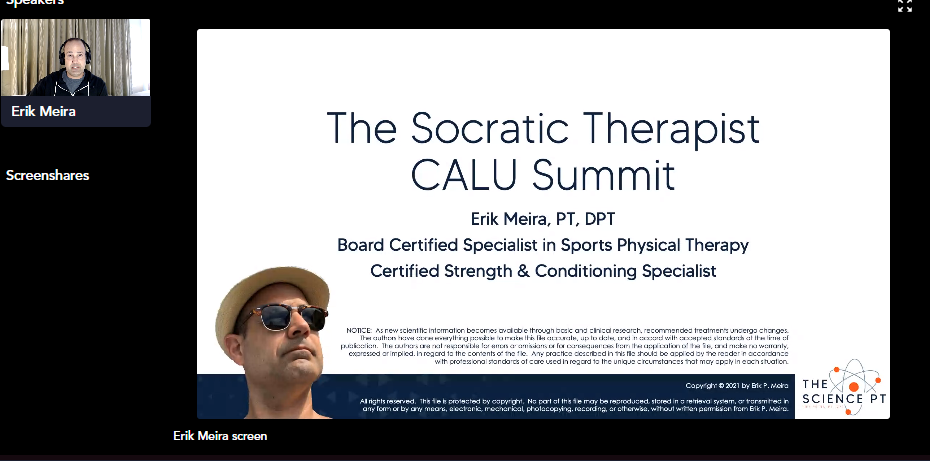
Each day of the Summit had a theme: barbell athletes, endurance athletes, and ACL rehabilitation, with two presentations on each topic.  There was key focus on the biopsychosocial approach, communication, and on case study discussion. The keynote speaker kicking off the weekend was Erik Meira, The Science PT whose talk was "The Socratic Therapist." He quoted Socrates, "What I do not know, I do not think I know," starting us off with philosophical thinking and the understanding that healthcare providers who dedicate themselves to continuous learning are simply working to be "Less Wrong" every day.  None of us can really ever know for certain that what we're doing is the absolute best option for our patients, but with scientific experimentation and consideration of evidence, we can get closer to being right by increasing our knowledge. There were several moments during the course where I had the chance to think back to how my practice has evolved based on what I've learned.  This was the first instance of that reflection. Erik offers his own courses, both online and in person, one of which I'm about to start after I finish ACL Study Day (there aren't enough hours in the day!).  Definitely check him out.  (IG: @erikmeirapt)

Day 1: The Barbell Athlete:  

Presenter  #1 was Stefi Cohen - a super strong woman, competitive powerlifter, and physical therapist who founded the Hybrid Performance Method and coauthored the book Back In Motion.  She described her experience with a low back injury with consultations from from both Stu McGill and Greg Lehman - well known Canadian practitioners in the rehab space who have different approaches despite Greg having been a student of Stu's.  Stefi shared the outcomes and her take-away understanding from those providers.  She discussed that she spent four hours doing special tests with Stu McGill and ultimately was in a lot of pain for an extended period of time after her examination and that his approach to avoid certain movements and take time away from her sport didn't resonate with her - but that she appreciated his estimate on the amount of time it would take for her to get back to her previous level of competition.  His timeline turned out to be fairly accurate, from what Stefi described.  In contrast, she saw Greg Lehman virtually and found a rehab approach that aligned with her own beliefs and with the understanding of finding safety in movement and progressing from there.  

Presenter #2 was Quinn Henoch - founder of Clinical Athlete, competitive weight lifter, podcaster, presenter, coach, and physical therapist.  Quinn's talk, "A process to help barbell sport athletes get back to those gainzzzzz" described a roadmap to coach/rehab barbell athletes.  The path has bookends starting from where an athlete's current physical function is and working towards what's "done" for them. Initiation of the plan requires the physical therapist (or coach) to define their role and set expectations based on the stated goals of the athlete.  Completion of training needs to be valuable to the patient - not the therapist.  For some clients, "done" with a program is able to complete 1 activity or task or be able to tolerate a certain position or load.  When an athlete has a specific goal in mind, we as practitioners should understand the target and guide to that.  It's just like all the kids are saying these days: "Understand the assignment."  It doesn't matter what I think "done" should be for my patients - if they haven't reached their goal, I've missed the mark.  I definitely have fallen into this trap in the clinic where I've wanted someone to be capable of doing something that they're not interested in doing.  Or, right now, I'm working with a teenager whose parent wants them to start running after an injury, but the kid wants nothing to do with running at all. Done for this patient is walking, going up and down the stairs, and participating in PE without pain.  The approach has to fit the goals of the patient - not their parent and certainly not what I think matters.   
Throughout the weekend, there was an ongoing chat that allowed participants to interact with each other.  I particularly enjoyed the witty banter between the powerlifters and the weightlifters throughout the weekend.  As a person who likes to deadlift but who is fearful of destroying my living room if I try to snatch in my home gym, it was easy to see which side of those discussions I was on.  

Day 2: The Endurance Athlete
Presenter #3: was Ellie Somers (IG: @thesisuwolf), owner of Sisu Physical Therapy and Performance,  physical therapist, coach for running, strength, and businesses, and I'm proud to say, my friend, whose talk was "Communication with the Endurance Athlete." She previously worked at Seattle Children's Hospital. Ellie paired her own wit with the wisdom of Ted Lasso.  Ellie also emphasized the need to have a plan with a specific purpose that is meaningful to your clients and encouraged practitioners to highlight the strengths of their patients.  Too often in medicine we look at our patients and find all the things that are wrong with them.  That has to change!  Why can't we look at our patients and observe all the things that are great and empower them?  I've emphasized this approach in my patient care and loved the quote she shared "You're not in pain because you're weak, but getting stronger can help change your pain."  

Ellie also shared this article "The enduring impact of what clinicians say to people with low back pain" which I've read in the past and which is essential for young clinicians to read.  It's a 2013 study from New Zealand summarizing open-ended interview questions regarding healthcare interactions and beliefs from 12 patients with acute low back pain and 11 patients with chronic low back pain.  One theme was that patients had high trust in their clinicians and their beliefs were strongly influenced by what their medical providers said.  However, some patients did not find their clinicians to be competent or found the medical message to be a mismatch to their beliefs and rejected what the medical providers advised.  Almost subtle, a heartbreaking anecdote is a response from a study participant who shared that so many providers kept telling her back pain came from a weak core, she had an abortion because she thought she was too weak to carry and deliver a healthy baby. 


Presentation #4 was Chris Johnson, owner of Zeren Physical Therapy, triathlete, presenter, running coach, and physical therapist who performed a spoken word presentation which was a unique alternative to typical presentations.  Talking about running injuries, he dropped some true gems like "Tendons love tension; tendons take time (to rehab/heal)"  He talked about bone stress injuries with clinical pearl: Pain with unloading the leg should evoke a high index of suspicion for a bone stress injury (BSI) and when BSI is a potential diagnosis, no progression to running should occur until walking is pain-free. Another pearl was to stop worrying so much about footwear and foot strike position with running and consider other variables such as the sound of running instead.  I'll be very honest - I'm not an auditory learner, so I'm looking forward to re-reading the presentation when it gets sent out so I can further internalize the key messages and expand even further.  

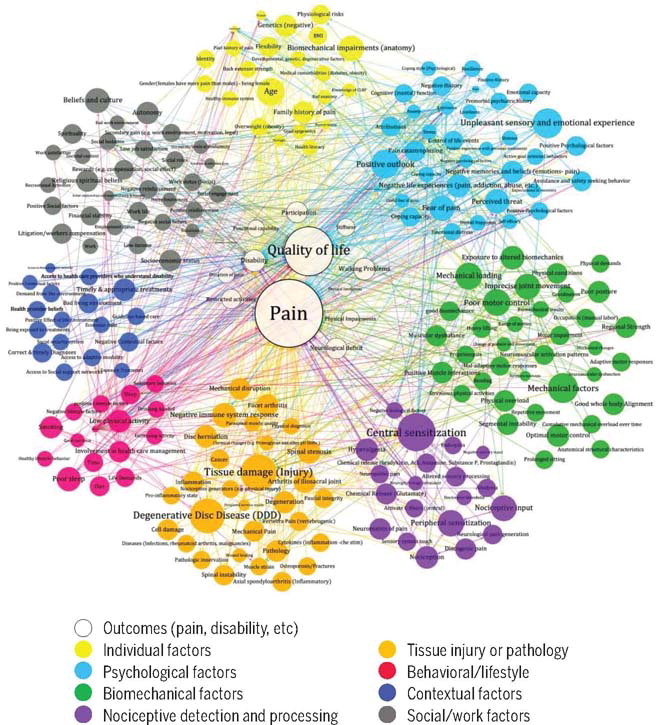
Throughout the Summit, this same image appeared three times.  Isn't it nice that the presenters were so like-minded that this could happen?  The picture shows contributors to low back pain (and likely applicable to most pain) from this JOSPT paper from 2019. Too hard to read?  Doesn't that emphasize the point that pain is incredibly multi-factorial and the orange colored tissue-related factors are a relatively small contributor when you consider the big picture?  

In my opinion, the virtual format was excellent because no travel was needed, however that does lose some of the in-person benefits like networking events and dinners.  The organizers tried to combat that with a virtual Happy Hour on Day 2 where many clinicians hung out and chatted about whatever we wanted - which of course included the sports teams we support, where we're all at in the world, and lots of other interesting topics. 

Day 3: ACL Injury and Rehabilitation

Presenter #5 was Derek Miles a physical therapist with Barbell Medicine who is well known for his posts about pieces of meat (representing the human body) being poked, prodded, needled, scraped, taped, or treated with other common rehab approaches to demonstrate how some of these approaches are not doing what we think they are. (IG: @derek_barbellmedicine).  Derek kicked off day three's focus looking at the biopsychosocial approach for ACL injury.  He reiterated the need to have a plan with rehab, outlining that the first step after an injury is to get the patient back to being a human, then an athlete, and last should be consideration for their specific sport.  Walk, then run, then play basketball.  How do we achieve this? Post ACL injury or surgery, there's a long list of things that people can't do. Patients should know that, but clinicians can direct their attention and focus on all the things they CAN do.  Keep your athletes around their teams and with their teammates as much as possible.  Send them to practice with clear understanding of what they are able to participate in.  It's hard because there's a lot of discussion about what they shouldn't do, but make the injury an opportunity to learn the sport in a different way. 

Early ACL rehab may be boring, but it's the foundation to the later steps and often these athletes can do more than they think they can.  The ACL injury only directly impacts one limb... but there is another leg, two arms, a torso and a head that all need to continue functioning and training and should not be ignored.  If your clinic doesn't have sufficient equipment to load these athletes and get them stronger, sufficient space to get them moving, and have a way to test the athlete - you probably don't have enough to adequately rehab an ACL injury. The key takeaway: LOAD HEAVIER!  As Erik Meira so eloquently puts it, "It's the quad until it's not the quad."  Derek said he tells his athletes to do quad sets ALL THE TIME and then, when you hate them, do 5 more, and repeat again tomorrow.  No reps and sets.  Just constant.  I think I'll just writing 1,000,000 sets on my Medbridge HEP sheets from now on!

Presenter #6 was Laura Opstedal, owner of Build Physio in Montana who does lots of ACL Rehab and research and also previously worked at Seattle Children's Hospital. Laura reiterated Derek's points about quad strengthening and how important that is to athletic movements as well as the importance of testing athletes who have had an injured ACL prior to allowing them to return to activity.  For me, one particular quote stuck out from this presentation. "Look at your entire ACL rehab program as preventing a hip strategy and forcing a knee strategy.  Keep the trunk upright." I know I valued quad strength and testing before seeing this presentation, but I definitely was not doing a sufficient job avoiding the hip strategy.  In fact, I've been guilty of encouraging it sometimes, but Laura addressed the inferior patella pain that some patients feel with a knee strategy that I previously was avoiding, acknowledging that sometimes these athletes are going to have a little bit of pain and we need to know when that should matter and when it's ok to continue. ACL hip strategy study. It's only been two weeks and I've already changed this in the clinic. Also encouraged were achieving passive terminal knee extension within 10 days of surgery, having at least an 80% LSI before returning to run, don't ignore calf strengthening in our patients with knee injuries, and do more open chain knee extension. There were considerations for the slow stretch shortening cycle compared to the fast stretch shortening cycle and training them separately... yup, I never thought of my rehab in those terms before, though I do have some drills I like that focus on both, the new perspective is going to make a big difference for my patients. 


I definitely didn't do these presenters justice, but hopefully this "small" taste will encourage those of you who are rehab providers to start following some new clinicians and those of you who aren't in rehab who, for some reason, like to see what I have to say, hopefully learned about the complexity of pain and can gain some appreciation for the effort that any of your medical providers are putting in to maintain their licenses through continuous education and growth.   

One final note: "When a measure becomes a target, it ceases to be a good measure."  Using certain tests which are meant to be used to show progress and not to show culmination of progress is not the best approach.  I know I often feel like my return to sport tests are the end of my rehab.  This might be fine for some injuries like an ankle sprain where the athlete has been playing their sport without issue and I'm looking for a way to determine if symmetry has been restored.  But in the case of an ACL injury, the RTS testing often occurs to allow the athlete to start playing their sport.  This isn't good enough - and it's another chance to be less wrong tomorrow. 


Thursday, April 30, 2020

To Clam, or Not to Clam

As the battle to annihilate the coronavirus continues, everyone is faced with new realities. For me, those realities include chatting with my teenage patients on the phone, transitioning to Telehealth, and only seeing "high priority" kids while covered head to toe in PPE. The patients are still the most important part (and my favorite), but the volume is dramatically reduced so the majority of my time has been spent learning. I've also been working on the Seattle Children's Sports Physical Therapy Journal Club, summarizing papers to share with the department on a monthly basis.  The May topic, coming out tomorrow, is a collective look at these four gluteal muscle electromyography (EMG) papers:

1. DiStefano LJ et al, “Gluteal muscle activation during common therapeutic exercises.”  JOSPT 2009.
2. Boren K et al, “Electromyographic analysis of gluteus medius and gluteus maximus during rehabilitation exercises.” IJSPT 2011.
3. Macadam P et al, “An Examination of the gluteal muscle activity associated with dynamic hip abduction and hip external rotation exercise: A systematic review.” IJSPT 2015.
4. Bishop BN et al, “Electromyographic Analysis of Gluteus Maximus, Gluteus Medius, and Tensor Fascia Latae during therapeutic exercises with and without elastic resistance.” IJSPT 2018.  

Why this topic? I believe it is imperative for clinicians to be lifelong learners and that reading research is one approach to improve your skills as a clinician.  I also think it's really hard to do this, which is why I stared writing this blog - a place where I could store things I've learned and write out my thought processes.  The impetus behind this particular topic of learning boils down to two key points.

Key point number one: The Clamshell Debate.

If you've ever gone to outpatient orthopedic physical therapy, you've likely done the clamshell exercise.  It's very common and frequently patients will say they've done them in the past.  Thanks to Seattle Storm Sports Performance Coach Emily Blurton for her video demonstration:

Early in my PT career, I frequently recommended this exercise.  I had pre-made exercise programs that I used repeatedly for multiple conditions.  Now I make every program for the patient in front of me, often updating them at every session, and this exercise rarely appears. To me, the clamshell doesn't look like anything a person does in daily life or in sports. Maybe it looks like you're lifting your leg to get into a car.  But that's standing up, so maybe not.  Even worse, a lot of patients do them incorrectly and find them boring and too easy.  I don't create exceptionally difficult exercise programs, but it's a lot easier to convince someone to work on something that's challenging than on something that's simple and mundane.  And most of the time I don't really harp on having proper form - but with this exercise, is there any benefit to doing it wrong?  Biomechanically speaking, an "incorrect" squat will still give you some strength gains, but potentially not where you may want to target them.  I don't think shooting for the moon, missing, and landing amongst the stars is actually meaningful in this scenario. 

The circumstances under which I will recommend the clamshell are very specific: the patient needs to 1) have a restricted weight bearing status from the physician due to a surgery or fracture and is therefore unable to do the exercises I prefer but would still benefit from strengthening or 2) have a significant deficit in their active hip external rotation movement with available passive mobility that I want them to purposefully control. (Translation - they're too weak to do any of the other exercises I like better, but I never actually tell patients they're weak!)

I share many of my patients with coworkers who like this exercise, so we've had conversations about clamshells for years.  The biggest discussion came when I had a student who I practically forbade from assigning clams without excessive clinical reasoning of why they were a good choice for that patient. Now that I have some extra time to dig into the research, I'm looking to prove myself wrong.  Does the evidence oppose my clinical bias? And how do you explore the efficacy of an exercise?  

Point Number Two:  What research should I be reading?  


Levels of Evidence - Creative Commons CC BY-NC 3.0
In case you're not familiar with the Levels of Evidence for scientific materials, here's a very basic overview.  Certain types of research can be "trusted" more than others, particularly when you're trying to generalize data to a larger population than was actually studied.  Here's an example: Let's say that tonight at dinner, you ask your child if they likes peas.  If they say no, can you now conclude that this single case of your own observation applies to all the kids of the same age in the USA?  Of course not. But it is your expert opinion that your own kid does not like peas and you understand how that data applies in your household.  Now what if you took a survey of your kid and your two next-door neighbors houses who happen to have seven more kids, asking all of them if they like peas.  You have more information about kids in your neighborhood and their feelings about peas, but still shouldn't make wide-spread assumptions about the whole country based on your small sample.  This would be closer to a small case study moving up the pyramid. If you surveyed your neighbors and then three other researchers did a similar study in different cities, asking fifty kids in second grade and then the same kids again in sixth grade and maybe one researcher also asks about carrots, the number of data points continues to increase and your ability to generalize information across a bigger group improves.  Now you've moved up into more of a cohort study.  

This is a very simplistic demonstration, but sometimes simple demonstrates a major point.  Right now with the Coronavirus Pandemic, small studies are being smeared all over the media without sufficient data and with incorrect descriptions.  It's a good time to point out that you need to be cautious about how you interpret what you read.  Notice at the top of the pyramid sits "systematic review." A systematic review takes multiple research papers into account to accumulate more data points to try to make conclusions.  It is based on a researcher compiling data from other researcher's published works.  Each individual study may not have done the same research, but their data overlaps and new conclusions are drawn from having more data points. I DID NOT USE SCIENTIFIC RIGOR in my collection of resources for this blog post and I have minimal experience in data analysis, so I'm certain there are flaws in what I've found by summarizing these four papers.  However, I basically (unintentionally) created a mini systematic review by reading four different papers (including one which was also a systematic review!). 

I collect articles to read in the future. This collection was one reason behind starting a journal club! I've previously written about the anti-library where you collect resources to learn about the things you know you don't know here. Along with my anti-library, I also have folders of papers I've previously read. I had already read Dr. Lindsay DiStefano's Glute EMG paper (the first in the list) which was probably the nail in the coffin for clamshells for me. Imagine assuming that all kids don't like peas because one kid said they didn't?  I've basically assumed that clamshells are a poor quality exercise based on the findings of one paper that studied 21 participants doing 12 exercises.  Dr. DiStefano was my research advisor in PT School so I almost always read her publications, or have them saved for the future. (Bias Alert!)  So I need more data points! I searched for more recent Glute EMG papers to compare to hers and found three more, intentionally choosing papers that included the clam shell exercise and ultimately including one with a somewhat contrary view.  Now the data I'm considering reflects over 500 participants and many more exercises including multiple variations of the clamshell.

EMG studies are used to understand muscle activity during movement.  Not only are these papers valuable, but they can also influence patient care by helping to better understand what exercises target which muscles.  I've previously hinted at reading EMG studies with regard to the shoulder here, and for sure that knowledge changed my PT practice for post-op shoulder patients. EMG studies aren't perfect, but by looking at a collection of them, you can assume similar risk of error for each study.  Participants in these papers were first assessed for their maximal volitional isometric contraction (MVIC) (aka how strong they were for a specific muscle).  Then, by placing sticky electrode sensors on the skin at certain locations, measurements of muscle activity were taken with each exercises and compared to the maximal strength possible for that person. For an exercise to improve strength, the exercise must elicit at least 40-60 % of maximal strength (MVIC) for gains to occur.  

Here's what the papers found:
DiStefano et al: The top exercises for glute medius based on % MVIC were side-lying hip abduction (81%), single limb squat (64%), lateral band walk (61%) and for the glute maximus were single limb squat (59 %) and single limb deadlift (59%). Clamshell exercises (depending on hip flexion position) were shown to have glute medius activation of: 38-40% MVIC and glute maximus activation of 34-39% MVIC.  (Clamshells don't pass the 40% minimum cut point which has been my rationale to discontinue using them in the clinic). Other exercises were examined in the study, but since they did not cross the 40% MVIC threshold, they are omitted here.

The Boren study used a cut-point of 70% MVIC as the minimum acceptable for strengthening and examined a larger variety of exercises. Glute med
 exercises with >70% (MVIC) were the side plank with hip abduction (103.11% bottom leg, 88.82% top leg), single leg squat (82.86%), clamshell variation #4 hold top leg in full hip extension while internally rotating (76.88%), and prone plank with hip extension (75.13%).  For the gluteus maximus, plank with hip extension (106.22%), glute squeeze (80.72%), side plank with hip abduction top leg (72.87%), bottom leg (70.96%) single leg squat (70.31%).  This paper suggested that the best exercises to target both glute med and glute max were the prone plank with hip extension, side-planks with hip abduction, and single limb squats.

The clamshell exercise had four variations in the Boren paper. Of these variations, #4 described above was the only option to reach their defined threshold of >70%.  If you use the criteria of 40-60% outlined in the DiStefano paper, all the clamshell variations would meet that target as sufficient for strenghtening for the glute med, but only the standard clamshell works for the glute max at 53.10% with other variations all below 30% MVIC.

The Systematic Review by Macadam et al reviews multiple papers and breaks down exercises by body position.  The cross-over step up and lateral step up had the highest average glute max and glute med % MVIC.  Pelvic drop, sidestepping with hip internally rotated and band at the ankle, standing hip abduction variations, rotational single leg squat and transverse lunges all had glute med % MVIC over 40%.  Standing hip abduction, rotational single leg squats and transverse lunges also had % MVIC over 40% for glute max. 

In sidelying, side planks with hip abduction had the highest average glute max and glute med % MVIC. (That exercise is really hard, though, and wouldn't actually be appropriate for the majority of my patients.)  The paper examined 13 clamshell variations including the standard hip external rotation and others.  In one study, three clam variations (not the standard hip external rotation) had average glute med % MVIC over 60% but other studies had clamshell averages in the 30% range.  From this paper, I can start to ease up on my thoughts that patients do the clamshell incorrectly - and more that they're just creating their own variation.

And finally, Bishop et al compared glute med and glute max EMG to tensor fascia latae (TFL) EMG creating a "Glute to TFL Index."  The TFL and gluteus maximus both insert on to the iliotibial band and contribute to hip abduction.  The TFL is sometimes considered to be a contributor to low back and lower extremity pains and/or injuries and may increase in tone or "tightness" to compensate for gluteal deficits.  Bishops "Glute to TFL Index" findings were that the clamshell with resistance was 99.54 and the clamshell without resistance was 87.89 meaning that the gluteal muscles were selectively used for these exercises much more than the TFL.  The clamshell exercises far surpassed all the other tested exercises in this study with the next best exercise being the bridge with resistance at 48.86 and prone hip extension with 48.57, both about half of the clamshell values.  Thus, this paper recommends use of the clamshell exercise as a glute-targeting exercise that does not incorporate the TFL.  To these findings, I'll add another dose of bias. Does this really matter?  Does the Glute to TFL Index have clinical meaning?  I'm not sure because I don't know if I really want to "turn off" the TFL. I'll let the clams have this one. 
In the end, I haven't been convinced.  A healthy dose of confirmation bias potentially sprinkled with some self-serving bias may contribute to that decision, but to me, the evidence seems clear. Maybe I'll be nicer to those who know that the clamshell has the higher glute to TFL index, but without that rationale, these papers suggest many other glute strengthening exercises.  For sure, I'm open to hearing alternative opinions. Are you team clamshell?  Or team ANYTHING ELSE!  I use prone glute squeezes more often than I use clamshells.  And I'm incredibly grateful for my coworkers who challenge me to think about these topics. 

(Again - this is an abbreviated summary of the results sections of the papers.  More information looking at the discussions and limitations and other aspects of the research is available if you'd like more!  For the full written summary for Seattle Children's Journal Club, go ahead and email abby.gordon@seattlechildrens.org and I can send it any time). 

Tuesday, February 18, 2020

Book Alert: Graded Motor Imagery Handbook

How is it already mid-February?  I swear each year flies by faster and faster... and yes, I realize that's a cliche thing to say.  I did some really fun volunteering earlier this month that took up my usual blogging hours, so I'm long overdue for a post today.  I'll be writing about those experiences soon, but today I've got a Book Alert on the Graded Motor Imagery Handbook, by Lorimer Moseley, David Butler, and their crew with the NOI Group.   The NOI Group is the Neuro Orthopedic Institute of Australasia that teaches a variety of topics related to neuroscience and pain.  I've previously written about their books Explain Pain and Explain Pain Supercharged as well as my experience meeting Lorimer Moseley here. You might call me a NOI Group Superfan at this point since I think I've read all their books, but not their research articles because there are hundreds of those.  Working on it.  This topic was fueled by my work with the Seattle Children's Hospital Pain Management Team, and every time I read one thing, I identify tons more to learn about.  Definitely falling down the chronic pain rabbit hole over here.

The Graded Motor Imagery (GMI) Handbook was on my list of six books I wanted to read in 2020 which I'm tracking on the right side of the blog for the year.  One down, five more to go!  Now that I've read it, I've already started incorporating the concepts into practice, and if you're a physical therapist, I highly recommend you read this, particularly if you treat patients experiencing chronic pain or CRPS, but also this probably should be considered with more of our patients. This topic, as are all the topics that come from the NOI Group, is complicated, so I'm trying to share my understanding of what I read.

I've chosen one example to use to demonstrate the concepts of GMI throughout this post.  GMI can be applied to injuries anywhere in the body, though.  I've used it more in extremities than in the spine, but I also don't treat many patients with chronic neck or back pain in the clinic.  Let's say you sprained your left ankle playing soccer yesterday.  It hurts.  You've just injured it!  It is reasonable to have pain right now and the amount of pain seems appropriate based on the mechanism you experienced. Tissues may have some damage - maybe your anterior talofibular ligament has a few fibers that were damaged.  This is the most commonly injured ligament in an ankle sprain and you've probably already hurt it before if you're playing soccer.  Maybe you see some bruising, swelling, and are having a little difficulty walking.  The XRAY says you didn't break anything.  The doctor at urgent care puts you in a boot and tells you that you can do as much activity as you can tolerate and that you can wean out of the boot in a week or two. 

In this acute phase of a recent injury, your brain is processing many inputs from your injured ankle and it does so in the "typical" way.  The brain processes the sensory inputs from the ground and the boot and produces your pain experience.  Maybe you don't have much pain because the injury has occurred and ended, no additional threat is perceived, and you know that you've had this experience before and that things will recover quickly.  You think you'll be ready for the soccer tournament next month without any issues.  This is when you think, "phew, it's not broken and it's not really even hurting that much.  I'll just wear this boot and be back to normal soon."  You probably won't even see a physical therapist, though I've previously written here why you should, even if it's just a minor ankle sprain. 

But what happens if, for a variety of possible reason(s), the pain doesn't go away, or maybe even worsens. Your simple ankle sprain from playing soccer persists longer than you think it should.  You find yourself unable to wean out of the boot after several weeks of wearing it and you've gone back to the doctor who does an MRI that says there's some mild damage but your pain level has remained higher than it should be.  You've finally gone to your physical therapist and they have been able to get you walking a bit more, but you still can't really tolerate activities and pain is worse than what you expect.  Maybe swelling persists and you're still having trouble walking a few weeks later. Sometimes you could even experience a cold, sweaty, purple foot with weird growth of your leg hair or toenails on that side.  You've stopped playing soccer and are spending less time out with your friends because that's where you would typically see them.  Maybe you've declined invitations to hike and are even losing sleep sometimes because your ankle hurts.  Your job is being affected because your work requires you to stand for extended periods of time and you can't tolerate that because your ankle still hurts.  All of this from a little ankle sprain that isn't healing the usual way.

The research in the GMI Handbook (of which there is A LOT) explains that people who experience chronic periods of pain sometimes lose their ability to differentiate between their right side and their left side.  The brain is affected by your ankle injury.  In some patients, you might even start feeling pain on the other ankle.  If you're thinking what I was thinking when I first read about this, you might be thinking "No way!?!?!?! How?!?!"  That's how I felt, at least.  

Now that I've started using GMI assessments and treatment tools in the clinic, I can actually see that patients have difficulty doing this. I wouldn't have believed it if I hadn't seen it for my own eyes.  Ive worked with patients, particularly with foot/ankle injuries, who haven't put their foot on the ground in months.  MONTHS!  They're spending time on crutches or even worse - in wheelchairs.  They exhibit fear towards walking, standing, or even having their feet touched.  The brain is processing input signals - maybe even caused by being in a boot - for far too long and starts to understand the input signals differently.  Not only does your brain start to confuse things, but it also starts to react to stimuli in new ways.  Things that wouldn't typically hurt most people, like the feeling of your sock on your ankle, now hurt. This is called allodynia: a central pain sensitization in which neurons exhibit increased response to normally non-painful stimuli.  Basically - you experience pain to a stimulus which typically would not be painful.  I see allodynia frequently in the clinic and have actually experienced it for myself.  About eight years ago, I badly cut my finger on one of those apple corer things while helping my sister cook Rosh Hashanah dinner for our family.  Sometimes even now if I touch that old cut, I might feel a sharp pain and pull my hand away, but usually I don't even notice it.  Patients who have had chronic pain sometimes cannot tolerate me touching their foot with my hands or even a towel because it feels too painful. They pull away or shout or cry or sometimes even kick me (unintentionally, I'm sure), and they recognize that their response to what I'm doing doesn't make sense.

Graded Motor Imagery is a tool to try to restore the brain's proper understanding of left versus right while exercising the brain.  The book outlines a series of steps starting with understanding left versus right, followed by imagined movements where the patient concentrates on their injured ankle while mentally picturing themself doing activities like walking, followed by the use of mirror therapy to almost trick the brain into thinking that their injured limb is moving without pain while you're moving your non-injured limb while looking into a mirror.  

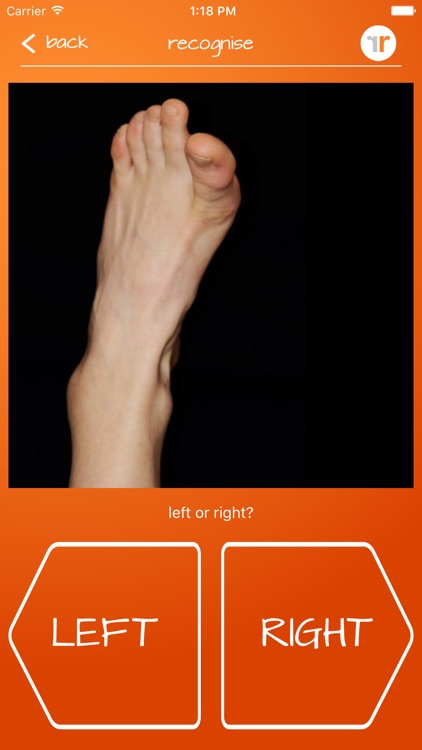
From the Recognise App
When I see a patient experiencing chronic pain of their ankle, I'm using an app created by the NOI Group called "Recognise Foot" (yes, spelled that way, because they're Australian and they don't like the letter Z).  The app shows you pictures of a foot and you have to identify if it is a left or a right one.  (They have apps for several different body parts).  You can change the settings to start with fairly simple images like this one --> with a black background in typical positions to more complex images with varied backgrounds that are covered in paint or wearing a cast or flipped upside-down and it's basically like playing a game to see how fast you can identify the side of the body and how accurate you are.  I've tested out the app for the hand (Recognise) and the app for the foot (Recognise Foot), each of which are $5.99 at the App Store.

A normal result would be at least 90% accuracy and symmetry between sides as well as response time of less than .2 seconds.  The app will tell you your scores and you can use it to assess the patient's ability to discriminate between left and right as well as treat them using the app. I've been adding this as a home exercise program component to patients who have been experiencing chronic pain and having them "play the game" several times per day in addition to doing some activities to try to get them moving towards less pain. 

A word of caution: the GMI Handbook does say that some people will experience pain just from using the app. This is not something I have experienced yet, but if it does occur, there are ways to change the settings on the app so the patient has more time to respond or less images. Also you can actually regress from this to watching other people move, focusing on the other person's body.  For example if your ankle pain was increased just by using the app, you could go to the mall and watch people walking and focus on their ankle instead.  There's science to support this regression and the book talks discovering this using monkeys who would watch people eat and some of their own brain cells that would be activated if they were eating would "light up" as if they were doing the activity themself. It's a less intense way for your brain to process information, watching someone else do an activity, because of the ways the sensory and motor cortexes of the brain are uniquely used with watching versus participating in activity.

Ultimately, GMI is a science that is still developing.  There is research to support some of the claims, but not all of them and the NOI group points out where there are holes in the evidence.  There is evidence to support using this treatment in specific patients, such as those with CRPS, and less evidence for others.  Some of my colleagues are using this treatment more frequently and with patients in more acute pain states.  Some colleagues don't use it because they don't know anything about it - like myself only a few months ago. The app is actually pretty fun and if you don't have pain doing it, who wouldn't benefit from some brain training?  I'm tempted to see if the basketball players I work with have any change in their reaction time by using this sort of brain training to try to use if for performance enhancement, but again, I have no evidence to support that thought and can't usually use them as guinea pigs.  I'm curious to know who else is using GMI in their clinical practice, how often, for what conditions, and what others have found with using it.  And I highly recommend that PTs read this book to learn about where we are on this type of patient care right now and to see if it might help some of your patients.