Showing posts with label resources. Show all posts

Wednesday, January 1, 2025

2024: The Year I Didn't Blog

Happy New Year! 2024 has come and gone seemingly in the blink of an eye. Somehow I managed to read far more this year with audio books on faster speeds during my commutes and travels. I read so much – and wrote a little bit in other places – but I didn’t write any blog posts here! I’ve missed my blog and hope to return more in 2025, but I'm also planning on writing a book! Now that I'm sharing that with everyone, hopefully this will keep me committed to the goal. 

My first book will be "It depends." Anyone whose gone through PT School - or probably any professional medical education - will likely tell you stories of how they asked questions in school only to be repeatedly told, "it depends." Though frustrating, with the hindsight of a decade of clinical practice, it's now a lot easier to recognize that this is the best answer, and now I can come up with a whole host of considerations that the question would depend on. This is a chance to tell some clinical stories to shed light on why working in healthcare is so complex, and also highly entertaining. So hopefully I'll be able to write the book while keeping up with my blogging!

Early in 2024, I was invited to give some talks at different conferences, so I dedicated the early part of the year to a lot of reading and developing those presentations. The biggest talk was alongside colleagues Dr. Karen Litzy and Dr. Devra Sheldon at the American Physical Therapy Association Combined Sections Meeting in Boston about Complex Regional Pain Syndrome. I also spoke at the TRIA Orthopedic and Sports Medicine Conference in Minneapolis about Rehabilitation for the Adolescent Athlete thanks to an awesome colleague recommending me for the job. In 2025, I'm working on giving a talk at the Seattle Children's Hospital Rheumatology Conference where I'm partnering with a physician and we're talking about differentiating between rheumatological conditions and chronic sport-related pain in young athletes. 

My writing in 2024 was limited, but looking back it was all fun. I wrote three articles for The Next Hoops and some blog posts for Pain Geeks. The Next publishes everything you could ever want to read about women's basketball. They're fantastic. If you're a fan of the WNBA or any college team, I highly recommend you check them out and subscribe. My articles for them included coverage of last year's Apple Cup where University of Washington played Washington State University, something that will be more difficult to achieve as the college conferences were realigned heading into this current season. 

I also teamed up with fellow physical therapist and writer Lucas Seehafer where we reviewed the 2023 WNBA injury stats heading into the 2024 season.  I'm excited to continue to partner with Lucas in the future as more data is collected and hope that next year, the League manages to stay healthier! 

My final piece for The Next was an exploration of how the WNBA medical staffs have been expanding as the League has been growing. It included spotlights on several of the medical providers around the League.  It gave me a chance to meet new athletic trainers, physical therapists, and strength coaches working in the WNBA as well as to catch up with some of the providers I have known for more than 15 years. They're an awesome group of people and it was really fun giving them the spotlight, though most of them are pretty happy being behind the scenes. 

For Pain Geeks, I was invited to lead their fall book club discussion choosing the book, "When Breath Becomes Air" by Paul Kalanathi. For this I wrote two blog posts leading up to the meeting. Part 1 and Part 2. The book is gut wrenching and heart breaking while simultaneously beautiful and inspiring. I rarely read books twice, but I really felt that this one deserved discussion and it was fun chatting about it with the other Pain Geeks. PT pals - if you're working with patients experiencing chronic pain and want to really grow your community of medical providers, the Pain Geeks are all over the world and our group meetings continue to make me a better clinician. Check them out. 

I guess since I've mentioned a book I loved in 2024, I'll also write about what I read last year. Thanks to audio books, I broke personal records completing 76 books! Incorporating a bit more fiction seems to make me read faster, and I read more of those than usual because several people kept telling me to jump into Sarah J. Maas's books. Let me just get this out of the way: I liked the "A Court of Thorns and Roses" Series. I did not like the "Throne of Glass" series and didn’t finish it. I like other genres far more than these and don't know if I will read any romantasy in 2025... but if that's your jam, please do enjoy it! I can already feel the daggers coming from some of my friends who thought these books were  life changing. Sorry, friends!

What books did I like the best in 2024? 

I listened to several biographies or memoirs and also read a few. In a lot of cases, the narrator was also the author and I love when that happens. Incredible athletes like A’Ja Wilson who shared her relationship with her grandma alongside her basketball journey made me want to root for her even though she’s not on the team I cheer for. I felt like The Terminator was sitting in the car right next to me as Arnold Schwarzenneggar described his childhood and how he ended up in body building. It was so much better than hearing my own internal monologue. Dancer/actress Kelly Bishop’s tales of her life and career on stage as the main character in A Chorus Line before she became Emily Gilmore, matriarch in Gilmore Girls. I learned a lot and as a Gilmore Girls fan was so glad she read it herself. My heart broke learning about Britney Spears and how she was basically tortured by her parents and also hearing Matthew Perry describe his ongoing battles with drugs. And there were several others that were all really fantastic, but these were the most memorable from that genre.

I read several books about Israel, Gaza, antisemitism, Judaism, and Hamas. In the wake of the October 7, 2023 massacre at the Nova Music Festival, I found myself involved in numerous conversations about the Middle East, a place I have been, a place  I lived and worked as an Emergency Responder, and a place that is very important to me. "Israel" and "Uncomfortable Conversations with a Jew" both were filled with detailed history of the conflict, but I thought it was important to read from a different perspective. For that, I read “Son of Hamas” and “I Shall Not Hate” as well as some graphic novels about the Middle East.  

In the past, I primarily read non-fiction books, but I do love fiction and my temporary commitment to
flying faeries was fun for a while. I think my brain needed somewhere to chill out after all the journal articles and novels helped me recover. My favorite non-fictions this year came from Emily Henry and Taylor Jenkins Reid and I've been working my way through another Greg Iles book that's super long but I love his work. I also liked, "Everyone in my family has killed someone" by Benjamin Stevenson.

And my favorite non-fictions this year were "Rare Gems," by Howard Megdal - Minnesota Women's
Basketball History at its finest, "Unreasonable Hospitality," by Will Guidara - which aligns with my commitment to therapeutic alliance with my patients and going out of my way to make others feel special. Though it fits as a memoir, Kate Fagan's "All The Colors Came Out" where she talks about her basketball life along with the relationship it facilitated with her father was perhaps the best book I read all year. Tears and laughter. 

So there's 19 of my favorite books from last year... and it was even hard to choose those! 

What am I most excited to read in 2025? 

Biographies: Maya Moore's Love and Justice and Brittney Griner's Coming Home

Fiction: the new prequel for the Hunger Games that explores the back story of Haymitch - Sunrise on the Reaping - by Suzanne Collins and novels by Abby Jimenez

Non-Fiction: Jay Shetty's 8 Rules of Love and Louis Gifford's Aches and Pains series. 

I like to read a classic and/or banned book and this year I think it'll be Brave New World

Beyond that - here's to lots of fun 2025 travels and meet ups with friends with outings planned in Maui, San Francisco, and Austin already... but more for sure to come.  Who wants to get together?  Let's make some plans! I'm sure there will be plenty of basketball games to attend, hopefully some more Goo Goo Dolls concerts, and fun adventures around the PNW.  Happy New Year, all!


Monday, September 25, 2023

San Diego Pain Summit 2023

Kathleen Sluka: Unnerved
This is the last of a three-part series about the San Diego Pain Summit. You can find the first post here which reviewed the video recordings of the previous years' summits and the second part is here, which described my experience at the 2023 Pre-Conference "Applied Neuroscience" Course with Dr. Morten Hoegh. 

This final installment, long overdue, and perhaps too verbose in content, was an opportunity for me to re-watch all the 2023 presentations, dive into the cited resources, and review my notes from the conference several months after the fact. I didn't read every paper that was referenced and some talks more closely relate to my patient care, so I dove into that content a bit more than others. A two-day course filled with so many incredible speakers left me with more questions about pain mechanisms and management, tons of new resources, a broader network that I'm so grateful for, and numerous tidbits of knowledge and paths to follow for further growth. Overall, I highly recommend watching the YouTube videos that San Diego Pain Summit Founder/Owner Rajam Roose has generously posted online for everyone (2023 Summit to be made available in November 2023).

Keynote Speaker: Dr. Kathleen Sluka
Keynote Speaker Dr. Kathleen Sluka kicked off the weekend talking about "The Science of Exercise: Basic Mechanisms and Clinical Implications." She shared, “We have known about the value of exercise for over 100 years. This paper (Wainwright 1921) is said to be the first known paper published in Physical Therapy, and what you can see is that physical therapy showed 25% decrease in disability and saved the hospital $4000 a year which is a ton of money 100 years ago. Exercise is cost effective and reduces disability.” She continued, there are "numerous randomized controlled trial studies that show that exercise is effective for almost every pain condition."

Kathleen Sluka: Muscle Fibers

It was entirely by accident that I started part one of this blog series describing animal studies used to explore pain, as I didn't realize Dr. Sluka was going to share research from her lab about pain in rodents. Pain does increases during activity in people and animals - but over time, exercise helps reduce pain. This is often a battle we face in the clinic - where patients are hesitant to exercise because the acute bout of activity is uncomfortable and needs to be repeated for the cumulative impact of pain reduction. Consistent participation in activity is the key for pain management, and it is not a simple task to convince those who have suffered to push through the early days to achieve that long-term outcome. Dr. Sluka described experiments where they compared pain responses in sedentary and exercising rodents to demonstrate underlying mechanisms for how pain reduction occurs. 

As a physical therapist with a degree in exercise physiology, I've read about exercise and pain before, but I considered a macroscopic level for why it works. Concepts like exercise facilitates blood flow and circulation of nutrients or waste in the body, increases GI motility, reduces brain fog and increases concentration, stimulates appetite and improves sleep, and enhances psychological and sociological well-being. Dr. Sluka commented on many of these macro mechanisms, but she studies the microscopic level, and explained how exercise reduces pain at this deeper level.

source
Exercise is multi-modal, preventing and improving pain through multiple mechanisms, It impacts the central and peripheral nervous systems as well as having an impact on immune function. Exercise can increase endogenous opioids in the central nervous system, increase serotonin availability which reduces pain, reduce central excitability, increase the presence of receptors and block others known to impact pain, and more! Dr. Sluka and her team researched these physiological processes and she shared how they studied each mechanism. 

Dr. Sluka described an experiment studying the impact of resistance training on pain in rats in which weights were attached to their tails while climbing ladders. Typically, aerobic exercise is more commonly studied for pain reduction, but this study found strength training to be beneficial as well. The image of rats climbing ladders with weights on their tails made me laugh... it puts the concept of a gym rat into a whole new context, right? So what exercise is most effective? Almost everything works, so the choice should depend on patient references, therapist training, and cost effectiveness. If the patient doesn't do it consistently, it won't work. 

Who else spoke? The lineup included researchers and clinicians from different backgrounds and countries with unique perspectives. Bios for all the speakers

Dr. Nathalia Costa
Dr. Nathalia Cordeiro da Costa talked about “The Ubiquity of Uncertainty: Learnings from the Low Back Pain Context.” Dr. Costa said, "Rather than resisting uncertainty, navigate it alongside your patient as if you’re on a journey together. Where clinicians do embrace uncertainties, they provide care in a way in which they can collaboratively and continually attempt to attune knowledge to complex lives, attending to emotions that emerge and exploring ways of shaping a good life in a non-linear manner." Dr. Costa cited one of her papers co-authored with fellow 2023 presenter Dr. Karime Mescouto, which I enjoyed reading because the paper shares how uncertainty in practice can contribute to clinician burnout.  The paper described interviews with 22 clinicians of varied backgrounds, all of which worked with patients with low back pain, summarizing various ways that uncertainty appears in low back pain management.  

I sit with uncertainty in my patient care pretty frequently and it's a topic of discussion with coworkers particularly with more complex medical conditions. We typically discuss the selection of interventions for the patient, but we don't discuss how we deal with the uncertainty ourselves or if we address it with the patients. Since hearing this talk, I have found myself sharing my uncertainty more directly with some patients and I've noticed that in those cases, patients are more willing to help choose their treatment pathways and also to speak up if they want to make a change to their approach.  "Uncertainty is a necessary stance that pushes clinicians to remain open to other possibilities rather than to paralyze or ossify their practices." 

Dr. Nathan Hutting
Dr. Nathan Hutting was next with "Person-focused self-management support in people with musculoskeletal pain conditions." Dr. Hutting discusses the importance of the biopsychosocial approach in patient-centered care in an effort to encourage patient self-management. He emphasized therapeutic alliance and an understanding of problem-solving skills and behavior change approaches in patient care, and then provides two definitions of self management:

“The ability to manage the symptoms, treatment, physical and psychosocial consequence and lifestyle changes inherent in living with a chronic condition.” Barlow 2010.

“Interventions that aim to equip patients with skills that allow them to actively participate in and take responsibility for managing their persistent condition so they can function optimally.”  Jonkmen 2016. 

Self-management is the idea that patients with chronic conditions need to take an active role in their treatment.  This isn't easy to do and it certainly goes against a lot of the usual patient care that we provide - but I think it's an essential practice that we should be encouraging patients to partake in, particularly when they are likely to need ongoing self-care. How did I apply this to clinical practice? A few months ago, I sat down with a new patient experiencing chronic pain who could hardly tolerate getting out of bed. Her pain had taken over her life. Self management for this patient included the patient deciding that the pain couldn't be in charge anymore. She started by deciding what activities she wanted to do even when she had pain. This approach isn't possible for everyone - but it was possible for that patient. I don't think her progress would have been the same if we had just started with a home exercise program like our usual approach. She needed some motivational interviewing and behavior change and some autonomy over her day to day activities. 

Dr. Morten Hoegh
Next was the return of Dr. Morten Hoegh, this time focused on "Low Back Pain and what to do about it in 2023." I already wrote about Morten in part two of this series, but this was a different talk, also very excellent, so I'll share one key take away from him here. "Just because you have pain, doesn't mean you need pain management." This directly aligns with two key papers and ideas he shared. First - the presence of pain is something that occurs because we're human. What if, instead of looking at low back pain as a problem, we looked at it as the normal occurrence that it is, since most people will have it at some point in their lives?  Does it always need treatment if it's normal?  

And second - imaging for pain often takes us down the wrong path and can be quite harmful for patients. In fact, many patients who have MRIs taken have worse outcomes than those who do not. This paper discusses the negative impact of having imaging conducted too soon. He shared this clinical practice guideline for non-specific low back pain from 2018 which has three key recommendations: 1) triage patients with low back pain and group them into subtypes, only pursuing imaging if serious pathology is suspected. 2) "In acute low back pain, patient education, reassurance about a favorable prognosis, advice on returning to normal activity, avoiding bed rest, and use of NSAIDS and use weak opioids for a short time period" are recommended treatment. 3) "In chronic low back pain, patient education, exercise therapy, psychological interventions, NSAIDS, and anti-depressants when necessary are the recommended treatment." Morten is speaking again soon (Oregon Pain Summit October, 2023), and it's a huge bummer that I can't attend that conference

Dr. Tran & Mistress of Ceremonies Dr. Sarah Haag

Dr. Mai Huong Ho-Tran talked about "Creating Patient Safety." This was a discussion including breath work and mindfulness strategies. She outlined the six core processes of ACT (Acceptance and Commitment Therapy, which uses mindfulness and acceptance along with commitment and behavior change processes to increase psychological flexibility. 

She cited BJ Fogg who studies behavior change at Stanford and wrote Tiny Habits, which explores the premise that if you tie a behavior to something that already exists in your routine, it can act as a cue for the patient. The example she used was to have a patient do a heel raise every time they go to the bathroom. I personally do my heel raises while I'm pumping gas. 


Next we come
 to Dr. Devra Joy Sheldon's “Intruding on the Intruder.” Dr. Sheldon has graciously mentored me with complex patient cases and is a brilliant human and neurology specialist PT. We're presenting a talk about Complex Regional Pain Syndrome along with Dr. Karen Litzy at the Boston APTA Combined Sections Meeting in February 2024 together! Want to have your mind blown? Watch this presentation when it comes up on YouTube. Neurology is an area in which my knowledge is immensely limited. I heard her talk in person in San Diego and watched it twice more since then, reading several of the papers she cited as my neurons slowly exploded from being overwhelmed. I had never heard many of the words in her talk prior to the San Diego Pain Summit, and I can't imagine I'm doing them justice here, but alas...

Dr. Devra Joy Sheldon
Dr. Sheldon describes chronic pain as an intrusion on living life, an interruption of thought. Pain steals attention and impacts a human's ability to multi-task. People can train their ability to complete two tasks at the same time, unless pain is present. Distraction is a common approach in pain management for some patients, used in an effort to bring attention away from the pain. An opposite to the pain intrusion is a deeply absorbing mental state called the flow state. Flow is a state of complete focus. 

Think of a basketball player's ability to tune out the fans in the arena during a game while being acutely aware of what's happening on the court. That's a flow state. When in a flow state, there is high focus and concentration, driven towards a goal, concurrent with a loss of self-reflection and awareness of the environment. It brought me back to when I attended a course in 2017 where we talked about examples of an athlete breaking their leg on a final play of a big game - and if it would hurt the same depending on if their team won or lost. 

Kathleen Sluka: Tree of Life
Dr. Sheldon cited this paper, which describes three key networks in the brain which regulate the flow state. First, the default mode network (DMN), which prevails when a person isn't engaged in a cognitive task or working towards achieving a goal. It is an internal-directed network, active when a person is thinking about themself or the impact of their own words or actions, active in social scenarios or in reflection. 

Next is the central executive network (CEN), an external-directed network that facilitates concentration and focus. With limited resources to process all the thoughts in our brain at one time, it appears that one network must dominate over the other at any given time, as we are unable to concentrate on an external task while simultaneously focusing on ourselves. 

Finally, the salience network (SN) appears to serve as the switch between the other two networks (and more networks that exist), making the determination of where attention should be directed - internally to self or externally to a task. It is the brain location where we assess self awareness taking into consideration risk versus rewards, skill versus ability, parasympathetic versus sympathetic activity, and if we are willing to put forth the effort to pursue the goal in front of us.

me & Dr. Sarah Cruser
As a fun flow state activity, Dr. Sheldon had us partner up and draw together. I sat with my friend and colleague, Dr. Sarah Cruser, at the conference, so we drew together. These brain networks for attention for flow are also involved in chronic pain. For this reason, we cannot use reduction in pain in order to help patients to feel better. We need to use opposing processes like joy, novelty, fun, play, and curiosity in order to reduce pain. This reduces prior expectation and anticipation of pain. Novel activities demand attention and facilitates reflection - which shifts us to the default mode network, which we want! Art and self expression can help improve resiliency, self-efficacy, activation of reward circuits, and improve novelty, and are another way to work towards flow state and away from chronic pain. Dr. Sheldon's talk was really incredible and definitely provided new subjects that I hope to spend more time learning. 

Dr. Ryan Shelton
To wrap up the first day's talks was Dr. Ryan Shelton, my Twitter pal prior to the Summit. Meeting him IRL was like reuniting with an old friend.  "Reimagining the role of business in healthcare: aligning our work with the needs of the community to minimize health inequalities," was a deep dive into how he built his company, PhilanthroPT, dedicated to providing physical therapy services (and so much more) to those in his community, regardless of their ability to pay for care, while still making enough money to provide for his family and his employees. He's revolutionizing physical therapy, starting in Kentucky, and I hope he'll eventually be able to revolutionize healthcare as a whole. 

Dr. Shelton reminded everyone in attendance, particularly the American physical therapists, of the APTA Code of Ethics which includes social responsibility as a Core Value. It is our responsibility to help those in our community 
APTA Code of Ethics, Principle #8

In general, my employer, Seattle Children's Hospital, provides options for payment for medical care so that no kid goes without it. I previously worked in a private practice clinic where patients were turned away if they had certain types of insurance or couldn't pay for their care. Medical care in the United States is a business, and it's a poorly run business, in my opinion. Insurance companies act as gate-keepers, limiting what services are covered, profiting at the expense of people who are sick. I think physical therapy is an important service, but at an even bigger level, I find immense appreciation for the fact that kids who need vital medical treatments can get them at my hospital. Unfortunately, they might not be able to get them elsewhere, just because their family can't pay. (It is the law, however, that US hospitals provide life-saving treatment to people in an emergency room regardless of ability to pay.) 

me & Dr. Shelton
Dr. Shelton's talk was full of great kindness. He said, "If you don't make a conscious decision to do something, you've already made a conscious decision to do nothing... I know that where I live, nobody else is going to take care of the people that I take care of. If I don't get up and do the work, nobody does the work. Every one of us has a community that we care deeply about, and have enough determination to work for. The least we can do is 'no harm.' That's the least we can do. The best we can do is advocate for justice."

He advises that you think about the niche of your patients. As an example, there are physical therapists who treat patients following an ACL injury. They need to consider if they would treat the patient with an ACL injury if they couldn't pay for their services or if they didn't have insurance? This is the case for some of my patients. They can't get care elsewhere, so they come to my facility. This is the case for a lot of Dr. Shelton's patients. He has shown that he can own a profitable business without turning these patients away with creative payment methods, and he shares these methods with others to encourage the rest of us to find ways to help our communities so everyone can have access to medical care. 

Dr. Jessica Isom
The keynote speaker leading day two was Dr. Jessica Isom, a board-certified psychiatrist whose talk, "The Urgency of Now: Disrupting Racism in Pain Management," guided us to reflect on our biases and unpack medical discrimination. She shared video clips from The Whiteness Project, a collection of short interview clips with white people sharing their understanding of white privilege or race accompanied by statistics. There were some really interesting beliefs expressed, some show understanding of the problem, others openly denying that being white comes with privilege. I highly recommend checking out a few of these clips and considering the potential implications of the beliefs that are demonstrated. If the person in the interview was your healthcare provider, would they provide optimal care to you, regardless of the color of your skin? They might not ever say the same words in a clinical visit, but how would these underlying beliefs impact the way they behave? I found these clips eye-opening. 

Dr. Isom referred to research from this 2022 paper about racism in healthcare, "The majority of healthcare providers tend to dismiss racism as existing in healthcare interactions. Racism is seen as a matter of individual experiences rather than structural." She also cited this 2019 study that asked subjects to identify pain on photographs of people's faces, which found that white participants more readily recognized pain on white faces than on black faces, and that this facial recognition of pain also carried over to the treatment recommendations made for the patients. She also included this 2021 correspondence to the Lancet that she co-wrote with my college friend, Dr. Galina Portnoy, written as a response to Trump legislation that restricted diversity training in healthcare, later rescinded by the Biden administration, outlining the importance of DEI in medicine. 

Dr. Karime Mescouto & Dr. Haag
Dr. Karime Mescouto followed with "Let’s talk about power in pain management? Thinking beyond the biopsychosocial model." This was a talk about shared decision making which requires an exchange of expertise, ultimately requiring negotiation of the balance of power. Power can play out in numerous ways in a clinical interaction. 

In January 2023, about two weeks before attending the San Diego Pain Summit, I met with a lawyer to finalize my estate plan, the legal paperwork for what happens to all my stuff if I die. The process was emotionally difficult for me, initiated solely because of the torture my siblings and I went through when our parents died suddently from COVID and their wills were not recognized in Florida. The lawyer had been incredibly kind, thoughtful, supportive, and well-organized. Her conference room was beautifully decorated in all my favorite shades of blue, but the chairs at the table did not fit my body. Not even close. The arm rests dug into my sides as I sat through our meeting, sad and distracted, struggling in a physically uncomfortable way. After all the signatures were completed, I went home, grateful I wouldn't ever need to return to that office unless I want to make changes to my paperwork.

As I was listening to Dr. Mescouto talking about power in clinical spaces, I could appreciate that the way a clinic looks or feels might not be comfortable for every patient, but I couldn't build the bridge to understand how it impacted power. She asked, "What color are the walls in the clinical space? Is there artwork or posters on the walls?" If there are pictures of anatomy on the wall, those might impact how the clinicians practice physical therapy - directing our treatment at anatomical structures. "Do the posters include people on them and are those representative of everyone who will be present in your space?" Are there diverse representations - or just white people in the posters? And then she said it. "Are the chairs different sizes, able to accommodate different bodies? A small change to the physical environment may seem minor, but they can have a big impact on who feels the power in an interaction." 

Wait a second! I emailed that lawyer while I was still sitting at the Pain Summit, thanked her profusely for how she handled my particular estate-planning circumstances, and I shared that I needed to provide feedback that could make her company's services even better: the addition of more inclusive chair sizes in their conference room. The response I got was overwhelmingly positive - gratitude from someone who loves shopping and wants her clients to feel comfortable during their work together. I no longer need to dread an update to my will, and hopefully nobody else can now avoid an uncomfortable meeting. I looked around my clinical space when I returned from the conference to make sure there are chairs and treatment tables that can accommodate everyone - and was pleased with the options in both the PT gym and in the lobby. 

Dr. Mescouto includes reference to this video clip, made with Dr. Costa, called Power and the Clinic. In this clip, a dinosaur is the patient and there are interactions discussed between a provider and their supervisor reviewing how the patient experience went. It's very cute, while also impactful. 

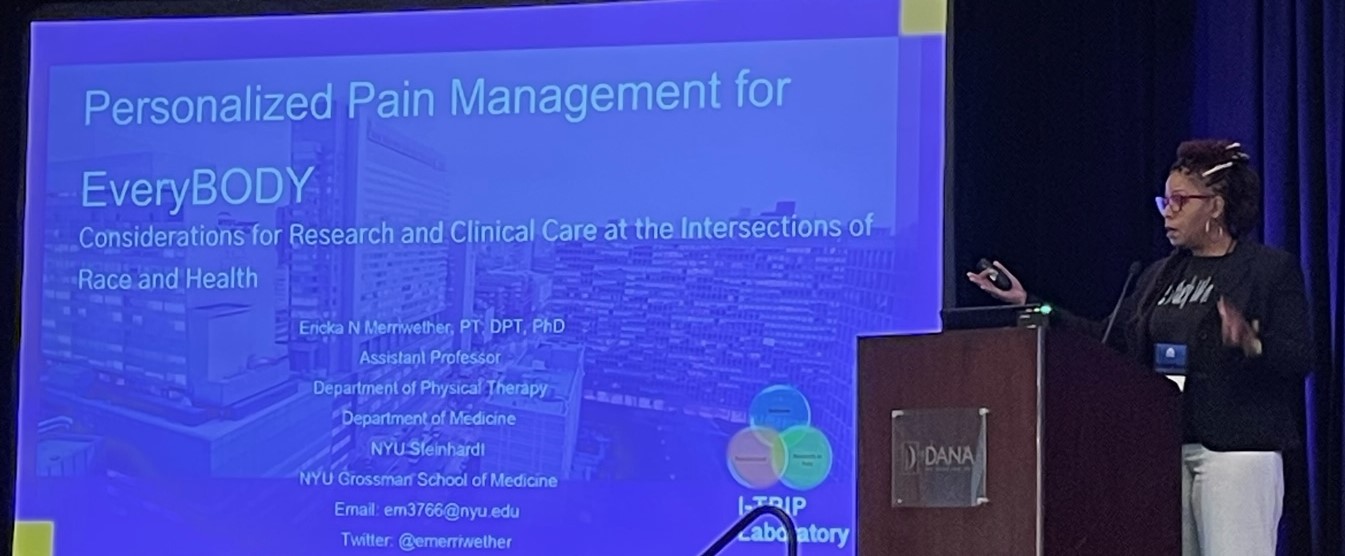
Dr. Ericka Merriwether's talk, "Personalized Pain Management for EveryBODY,"

Dr. Ericka Merriwether
presented a framework for conducting research for patients with chronic pain with consideration for the intersectionality of race and BMI. Weight and body type are assigned identities, constructs that were created by people. I've previously written about BMI, a construct I have a lot of issues with, here. One comment Dr. Merriwether made was that weight changes daily, but race does not. These labels may or may not be self-adopted, so while the world may view you as white or black, skinny or fat - you may not subscribe to those same labels. Some people are light-skinned, but have black ancestry, and thus identify as black. Just because others do not view them in that group, does not make it the case. They may benefit from the way others view them, but this goes in both directions. Identities and the interactions between them, along with who is perceiving them, all need to be considered in pain research.  

Dr. Merriwether shared Antiracism CoaliTION in Pain Research (ACTION): Guiding Principles for Equity in Reporting which described a group, formerly known as the Pain Justice League, and their work to identify racial disparities in pain research and combat them. They conducted pain research taking race into consideration, presented lectures and grand rounds to share their findings, and developed guidelines to improve EDI in publishing research specific to pain. The coalition also worked with the editorial staff of the Journal of Pain, including current Editor in Chief (and my colleague at Seattle Children's) Dr. Tonya Palermo, to implement new processes to increase EDI in research content, author and reviewer diversity, and methods for tracking EDI metrics.   

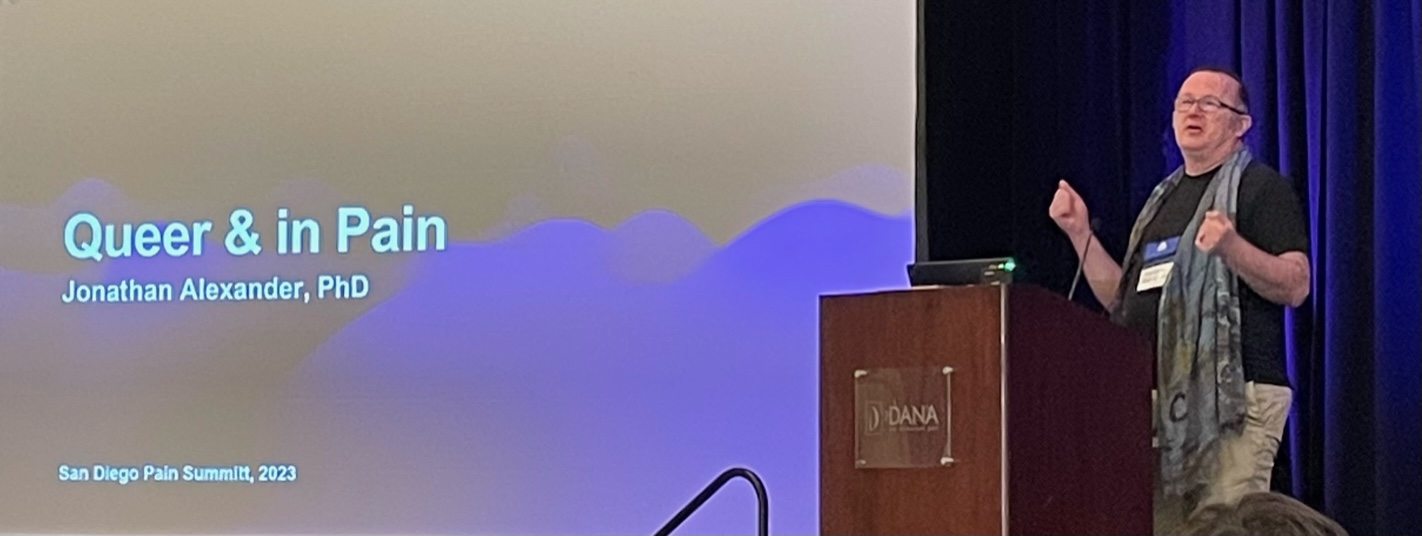
Dr. Jonathan Alexander
Dr. Jonathan Alexander spoke next in a talk titled "Queer & in Pain: the Challenges of being an LGBT Patient in the Contemporary Medical Establishment." He described The Cancer Journals, written by Audre Lorde, which describe her experience with breast cancer as a lesbian and feminist and how this work impacted his own writing journey after experiencing a mild stroke. Another resource Dr. Alexander shared was an article from The Medium that summarized US legislation emerging to restrict trans rights, including severe penalties for providing gender-affirming care in many states.  Then he provides four suggestions for how we can best serve those who are LGBT: 1) Use the name they provide and honor the pronouns they identify with. 2) Inquire kindly about your patients' sexual health needs and concerns. 3) Many LGBT patients have had family experiences that have been harmful to their physical and/or mental health. Their family may be chosen family instead of born family. 4) Keep in mind that most LGBT patients have been traumatized by past experiences with the medical establishment. My LGBT patients have certainly been suffering from the legislation and family traumas. This was a timely lecture and opened up conversation between attendees outside the conference hall.

"Persuading Change: Pointers from Conversational Cognitive Hypnotherapy" was the penultimate talk, presented by Sheren Gaulbert. Sheren's bio tells of her history with debilitating chronic pain for which she used cognitive hypnotherapy (in the US, this is called hypnosis), building a career on her lived experience. She described SnowWorld, an immersive video game during which participants throw snow balls at penguins, used with patients who have suffered from burns while they underwent bandage changes, and how this immersive experience decreased their pain experience by 35-50%. That pain reduction is comparable to the use of opiate medications! Whren I attended the 2022 NOI Group's Mastersessions, Dr. Daniel Harvey also presented data about the use of virtual reality systems in pain management, so I think we may be seeing more of this down the road in clinical practice. 
Sheren Gaulbert

A word I had never heard before came from Sheren's talk: aphantasia: the inability to create mental imagery, described in this paper. Aphantasia is a condition which impacts memory and perception, found in a very small percentage of people. About half of these people cannot dream. I don't dream and I also have no ability to imagine a map in my head, which has always frustrated me, so I found this new concept fascinating to read about. I'm stuck with two questions related to aphantasia and how it might impact pain. The first specifically relates to Graded Motor Imagery (GMI), a treatment approach where a patient visualizes their body doing an activity that they're currently having pain with. Some athletes visualize themselves performing their sport before doing it - that would be a similar comparison. A person with chronic pain of their foot who may not be able to tolerate walking might be able to tolerate visualizing themself walking as an exposure for the brain to the task. I've previously written about GMI here. Do humans use something analogous to GMI automatically for self-care? Are the neurological processes of a meditative body scan the same as those in GMI? The second question relates "The Gift of Pain," a book about patients who do not feel pain and how dangerous it was for them. Fantastic book, but in my mind, a patient who cannot feel pain is not the same as someone who cannot create mental imagery, but can these patients who don't feel pain mentally image their own body? I'm trying to discern the implications for a patient with aphantasia related to pain. Unfortunately, in my mind they're all bad, but since pain is an experience and includes memory components, I'm hopeful that perhaps there is some good that I just can't (yet) comprehend.

Sheren talked about self efficacy and locus of control. An external locus of control is a person outside ourselves, an expert to guide us. An internal locus of control is guidance from within, such as with self efficacy. One of the keys I took from Sheren's talk was the concept of ironic process: when you try to avoid thinking about something, you're inevitably going to think about that thing you're trying to avoid. She advises the room "If I asked you NOT to think of a blue elephant, what happens? You're going to think of a blue elephant!" If the patient's goal is to be pain-free, but they're thinking about pain all the time, the attention to pain is prioritized. By "starting with the end in mind," you can restructure pain care by determining what is important to the patient, re-directing the focus away from the pain and towards the functions the patient wants to be participating in. This is the common approach we use at the Seattle Children's Pain Clinic, where we focus on function rather than trying to remove pain first. It's difficult to achieve, but for many patients, this approach has proven to be optimal.

Since the San Diego Pain Summit, Sheren is one of the few presenters whose work I've actively followed online and who I've also had some continued engagement with. Her company, The Ultimate You, is where she provides patient care as well as services to educate clinicians. I recently reviewed her Burnout resource for healthcare providers and it guided me to make some positive changes in my daily routine. Physios - we need more mental health providers in our arsenal when working with patients with chronic pain. Her website has some great resources on it.

Laura Rathbone
Which leads me to the last presenter from the 2023 San Diego Pain Summit, Laura Rathbone, who I've spent the most time interacting with since February because I joined her International Reading Community, Pain Geeks. Laura's talk, "Phenomenology: the body as a place of knowing," was a fantastic conclusion to the conference. Phenomenology is the philosophical study of objectivity. I generally find philosophy to be deeply maddening as my brain seems to malfunction at such deep levels of thought, filled with big words, but Laura managed to explain these pieces in a way that both light-hearted and accessible. It certainly helped that I was able to re-watch her talk several times, looking up terms I wasn't as familiar with as I went along, reading cited articles, and thinking about what she's demonstrating.

I'd imagine that any talk about philosophy would include many terms with definitions in order to apply to the concepts. Laura started her talk with the concept of experience, which is subjective in nature. Since pain is an experience that can only be described by the person having it, it is also subjective. But remember, Laura is talking about phenomenology, which is objective, acknowleding that objectivity is difficult to achieve, influenced by bias, experience, knowledge, and assumptions. Phenomenology, defined another way, is a philosophical movement that explores human experience without preconceptions or theories. We can measure changes in pain, so to some degree there is an objective component available to us. Basically the key is that we need both phenomenology and science to best understand pain. 

This talk was so good, and goes even deeper. The Hard Problem of consciousness is "How do you explain unconscious matter giving rise to conscious experience?" Humans are made of neurons and cells and hormones - and these thigns all interact with each other in order for consciousness to occur. The Easy Problem is explaining mechanisms using science, but the hard problem persists and we don't have the answer to it. We use a phenomenological approach to acknowledge that we can't answer the Hard Problem and to understand that we don't know how consciousness happens, despite knowing that the brain is made of of components that work together in order for consciousness to occur. I'm pretty sure there was an underlying suggestion of being comfortable with uncertainty, but I don't want to put words into Laura's mouth.

Laura defines homeostasis: the state of internal steady state maintained in a living system and allostasis: the processes which occur in the living creature in order to maintain homeostasis. She continues to describe embodied cognition, a phenomenological approach to studying the human experience that looks at the whole human: mind and body together.  

She asks the group to look at a chair and decide - "What makes it a chair?" The realization that the item becomes a chair because a person can sit on top of it demonstrates the importance of understanding the relationships between things. As clinicians, we come from a position of belief. We believe the item is a chair because it can be sat upon. Would it be a chair if you could not sit upon it?
There is a need to understand our own beliefs and the beliefs of our patients. If they see the item as a chair, but you do not, how will this impact your relationship? They see their pain, but we do not - so how will this impact our relationship? Only you know the truth about yourself, and only the patient knows the truth for themself, so we must believe the accounts that are shared with us. Laura shared the article, "An Embodied Predictive Processing Theory of Pain Experience," which goes into far more detail about embodied congition, phenomenology, and maintaining homeostasis. If this wasn't Laura's attempt to make sure my brain completely exploded by the conclusion of the conference, she was successful at it anyways. A great read that I'm glad I spent my time on and I'm very grateful to have made a new friend. 

And so I've reached the conclusion of this far-too-long, many-months-delayed summary. Re-watching all the talks was worth every minute and reviewing all the papers I've linked to throughout this post maximized my learning from the conference. All this knowledge has impacted my patient care already. I would be wrong to leave out that the best part of this conference was meeting so many people who care about helping those who are experiencing pain. These speakers are brilliant and caring for patients or researching so that clinicians can do better. Many of them have served as gracious mentors, opening my eyes to the vast world that pain inhabits. So - who wants to join me at the 2024 San Diego Pain Summit? Registration is already open. I'll be there. It's sure to be a great time and the speaker list is fantastic.

Special thanks to Dr. Sluka who agreed to let me include some of her artwork in this post. It's really incredible. Here's the link to her website to see more of her art - which is for sale. I can't decide which is my favorite. It's really cool to see that journals have used her art on their covers, too! 


Monday, February 27, 2023

San Diego Pain Summit: Through The Years

This is the first post in a three-part series about the San Diego Pain Summit.  You can find part two here and part three here (coming soon).  This initial post is a summary review of the San Diego Pain Summit Talks prior to 2023. My first time attending was in February 2023, so I decided to watch as many of the previous years' videos as possible in the months leading up to the event.  My brain still hurts. Many of the talks led me to read research papers and as I moved through the work, a beautiful web was created as many of these presenters have connections to other presenters. The pain neuroscience and pain management world, it seems, is far-reaching, and also quite small.  Having nearly completed watching all the previous videos, and most of the ones listed below  multiple times, I've compiled the most impactful pieces (in my opinion), organized into three themes: pain neuroscience, pain management, and special topics. You can watch any - or all - the previous San Diego Pain Summit recordings here.

I originally started watching videos from the San Diego Pain Summit in order to learn Pain Neuroscience. Yep... NERD ALERT! Lately there has been debate on social media about the utility of teaching pain neuroscience to patients. The theory was that if patients understood how pain worked, they might be better able to tolerate it and potentially even have reduction in symptoms.  I have read numerous books and written posts about them including Explain Pain and Explain Pain Supercharged in the past, but  I don't actually teach most patients pain neuroscience.  I do, however, find continued benefit as a clinician understanding the neuroscience so that I can better apply it to the interventions I'm choosing.  The level of scientific research presented was impressive, and I’d be lying if I said I understood all this work, but I took away many interesting pieces that inform my patient care.  

Pain Neuroscience

Let's start with animals. In the 2016 Summit, Dr. Robert Sapolsky’s lecture was not recorded, but he permitted his Q&A session to be shared.  Dr. Sapolsky is a Neuroendocrine Researcher who studies stress at Stanford University and who also examined behaviors of baboons and other animals in Africa.  For this he reminds me of my childhood hero, Jane Goodall, though she studied chimpanzees. He is the author of several books, including "Why Zebra’s Don’t Get Ulcers,” which I recently read, and he shares a fun anecdote about how zebras tend to be very social creatures with short memories of their stresses. A zebra could be running away from a lion and once it's free, quickly return to eating grass, seemingly not perseverating on its recent close encounter with a lion. Their stress levels don't persist the same way human stress levels do.  If I can't find my keys in the morning, it's going to keep my stress levels high through lunch time, much longer than the zebra who just avoided imminent death. Dr. Sapolsky describes social grooming - when animals groom one another, removing parasites and eating them off one another - and how this behavior is a stress reliever with associated decrease in heart rate and cortisol (stress hormone) levels.  He explains that each person's level of optimal stress varies from the person next to them. Cortisol, when sustained at elevated levels during a chronic stress state, can lead to illness.  

Dr. Jeffrey Mogil talks mice and rats
Then in 2017, Canadian Neuroscientist Dr. Jeffrey Mogil discussed his research in mice and rats and the concept of translationconducting studies in animals with the intention of extrapolating information to humans. A big problem in scientific research was exposed because the majority of studies were conducted using either one type of mouse or one type of rat to generalize concepts to all humans.  There have been studies which show that different types of mice reacted differently to the same pain stimulus - so if some mice respond and others do not, the outcome of an experiment would be entirely dependent on which type of mouse was used in the study. This same problem occurs with sex - a single type of mouse, and only males of that type, were studied and then conclusions were applied to middle-aged women, but men and women are not the same! This, he explains, is how pharmaceutical companies could lose millions of dollars.  Testing done with success in a male rat and then later tested on a human woman would show medication that doesn't work and the drug will never make it to market.  At the time of his presentation, microglia: immune cells in the nervous system that impact development of brain networks, were a newer area of study in pain research.  It was determined that microglia might contribute to pain in males, but not in females, who may instead use t-cells: white blood cells of the immune system from stem cells in bone marrow. Women experience chronic pain more than males – doesn’t it seem plausible that the underlying processes may differ? Thanks to protections for human subjects in research, animal studies and use of translation are necessary to better understand the cellular level activities, but understanding the limitations of the work is also vital. I have a new appreciation for the value of rigorous research methods. 

Also in 2017, Dr. Melissa Farmer, Clinical Psychologist and Co-Founder/CEO of Aivo Health, shared her work based on animal models she created to represent some of the patients she had treated.  She talks about memory: the capacity to encode, store, retain, and recall information and engrams: the brain's physical changes that represent a memory. Memories induce changes in your brain and this doesn't occur in a single location, but rather it exists in a network throughout the brain. When you think back to a moment that makes you very happy, perhaps you can link together what you saw, the sensations on your skin, smells and sounds and even how you felt, all different brain areas mapped together from that event. You can also have these memory maps for pain. She described synaptic efficacy: a nervous system pathway becomes more efficient at transmitting information when it is repeated, so in the case of a person experiencing chronic pain, the brain pathways are being used repeatedly and become more efficient at experiencing pain. Memories are based on learning and she also describes a key retention window within the four hours following education where there is opportunity to enhance memory through various approaches such as caffeine or incorporating multiple senses. Her presentation also illuminates research from Dr. Apkurian's (below) lab indicating how the limbic system, the brain’s emotion center, is involved in chronic pain. Dr. Farmer demonstrates how fear can create a memory that can be reversed through training via a dramatic video of a patient overcoming his fear of tarantulas.  


Stages for Chronic Pain
Dr. Farmer works with Dr. Apkurian. In 2018, Physiologist  Dr. A. Vania Apkurian shared his research on the underlying genetic predisposition for chronic pain that can be activated by injury. This slide from his presentation shows that some patients have a genetic predisposition to chronic pain related to their limbic system that, when triggered by injury, would induce transition from acute to chronic pain. The limbic system is the "older" part of the brain which houses behavior and emotion - and this bridges research between animals and humans as mice show these limbic system changes with pain, too. Acute pain is different from chronic pain in the brain. The brain re-organizes when chronic pain occurs, specifically with cortical and emotional changes and these may be partially reversible. The brain changes appear to imitate patterns seen with addictions and may indicate that a person experiencing chronic pain is addicted to nociception: the sensory nervous system's reception of stimuli which are capable of inducing pain.

The 2019 Keynote Speech by Dr. Antonio Damasio, a Neuroscientist at University of Southern California was a great talk about emotions and feelings and how animals have emotive processes but not all animals possess a mind to experience the consequences of feeling those processes. Thanks to Google helping me better understand the terms with an article that quotes Dr. Damasio, emotion: "a brief episode of coordinated brain, autonomic, and behavioral changes that evoke a response to an event; these are a lower level response." and feelings: a higher level response which provide a mental and perceptual representation of what is physically happening inside our bodies."

His talk brings us farther away from animals and into the human experience of feelings and pain. He states, "All living creatures exist, act, and behave... all living creatures share the imperative of regulating their life processes (homeostasis) such that life can persist, flourish, and project itself into the future..." In some (single cell) animals, the nervous system is not necessary for homeostasis where endocrine, immune, and circulatory systems are sufficient. Many sea creatures do not have brains and are still capable of survival. Animals regulated life long before the nervous system evolved but once you have a nervous system, you can have a mind and regulate life in a novel (and better) way.  The nervous system allows us to be conscious of behaviors, provides a mind that analyzes emotions to interpret feelings as good or bad. I think I particularly connected to Dr. Damasio's talk because of his explanations for the physiological underlying features of how we have pain from emotions such as grief.  When a loss occurs, there are internal physiological processes (just like if you were physically injured) that occur and which can be expressed as pain. 
Brain regions in emotions, pain, and pleasure

Dr. Damasio shares these anatomy images of the subcortical brain and describes the role of various structures in emotions and also production of pleasure or pain. I already discussed that there is an emotional component to pain involving the limbic system - and the amygdala is part of that system, responsible for fear and involved in pain. The nucleus accumbens is involved with pleasure. And the hypothalamus runs the endocrine system which interacts with the other components. As we need a mind to have feelings, we also need it to have pain as it is an experience, not an anatomical feature of the body. 

Pain Management 

IASP Pain Classification Guidelines


Moving more into pain mechanisms and management  is the 2021 talk by Dr. Annie O’Connor, Founder of A World of Hurt, discussing nociception and pain classifications.  She shared the IASP Pain Classification Guidelines which are referred to in the more recent Summits as the definition of pain was updated in 2020. This paper, written by a task force including Dr. Mogil (above), and Dr. Kathleen Sluka (see part three of this series) describes the changes made from the 1979 definition to 2020 with important notes that clarify meaning. These categories of pain: nociceptive, nociplastic, and neuropathic pain are further discussed in part two of this blog series and are mentioned in several Pain Summit Presentations.  Having classifications for patients based on their underlying pain mechanisms is a fundamental start to pain management. 

So much science! Sorry, but I'm not sorry for rambling about all this amazingness.  I've always enjoyed using my blog as a place for me to organize my thoughts and what I'm learning and this was just such a huge undertaking… hence, three parts! I’m personally fascinated by the neuroscientists, and even more-so, I'm amazed by their knowledge and their willingness to share where the limits of our science exist.  Each talk includes a Q&A session and there were multiple questions where the research hasn't been done in that area yet and so the answers were unknown. That's really refreshing and demonstrates how (relatively) new a lot of this understanding is and why it's important for clinicians to learn and understand it more.  Interestingly, I don't really find this information to be very useful for my patients, particularly because most of my patients are teenagers. Even if they were adults, I'm not sure they would need to understand this to help improve their pain or quality of life. So how can I apply this knowledge to help patients feel better? Numerous therapeutic approaches have also been discussed throughout the Summits, and I won’t include them all here, but I will point out the ones that resonated most with me and which more directly impact my own patient care. 

New Zealand Occupational Therapist Dr. Bronnie Lenox Thompson’s 2016 talk described Motivational Interviewing (MI) as a communication structure for patient care to be a partnership based on clinicians guiding patients with compassion and by evoking motivation for them to pursue their own goals. She includes three related concepts: cognitive dissonance: inner drive to hold all of our beliefs in harmony, but when a patient's beliefs are contrary to our beliefs, we may have to act in a way that opposes what we believe. This is a conflict in our own thought practices as we think but act in opposing ways. Self perception theory: we like to behave according to what we say and believe. In this theory, our emotions are related to our actions and behaviors.  Interpersonal warmth: being a nice, warm, supportive, listening person to encourage others to go along with what we say.  With these concepts in mind, giving your patient autonomy in deciding how to improve their condition considering your guidance is an ideal therapeutic alliance approach. 

Alison Sim demonstrates CBT
In another 2016 talk that considers communication and a psychologically informed approach, Australian Osteopath Alison Sim presented about Cognitive Behavioral Therapy.  She uses a great example of burnt toast to demonstrate the different ways a person could react to this event with different thoughts, emotions, and behaviors.  In the first scenario, the person burns toast, thinks "bummer!" and maybe feels indifferent, following with the behavior of toasting another slice of bread.  As the emotions and thoughts escalate to more negative, you reach the final scenario where the toast is burnt, the thoughts are "even the toaster has it out for me" and the emotions are angry with behavior kicking the cat. (I think we're talking about feelings rather than emotions, here, but I'm not here to pick it apart.) Patients who are more distressed and disabled may need a more intensive program than CBT, so she reminds us to match our treatments to the patient in front of us. I just received Alison's book "Pain Heroes" and am looking forward to reading it!  

Social Communication Model of Pain
I'm a physical therapist who STRONGLY believes that the words we use with our patients matter and that communication and therapeutic alliance are essential skills for optimal care. I particularly liked this quote from Physical Therapist and University of Florida Clinical Associate Professor Dr. Joel Bialosky’s 2022 presentation quoting Wambold 2017“Some therapists consistently achieve better outcomes with patients than other therapists – and these differences are not due to random error, patient characteristics, or other systematic sources of error.” The amount of an observed outcome is attributed to something inherent to the therapist. Therapeutic Alliance is repeatedly mentioned in talks.  It comes up in Physio, Consultant, and Mentor Dr. Devra Joy Sheldon's 2020 talk along with the Social Communication Model of Pain, reminding us of the importance of social contributors to reduce shame in pain management and that we are inextricably linked to our patients' pain experiences. Also in 2022, David Poulter presents his talk about therapeutic alliance and patient-centered care, which come up in several other talks over the years and repeatedly reinforces the importance of clinician and patient relationships. He reminds us that We need to change before our patients can change. 

You may notice that nothing I've mentioned has been physical yet. And I'm a physical therapist. The Pain Summit includes occupational therapists, massage therapists, chiropractors, mental health providers, physicians, and patients as attendees, so the talks cover many different perspectives.  All the providers would need to move beyond communication and into their specialized interventions.  In 2017, Cor-Kinetic Owner and Physio Ben Cormack from London talked about exercise and movement. The numerous benefits of exercise - like improved respiration and cardiovascular endurance, increased strength, and reduction in pain, are all discussed. He describes the need to guide patients so they transfer from an external to an internal locus of control and help them to form new memories that are positive instead of the negative pain memories they've associated with movement. In 2018, Canadian Biomechanist, Physio, Chiro, and Strength and Conditioning Specialist Greg Lehman shared "When Biomechanics Doesn't Matter." These guys are really great presenters, but it's probably harder to make neuroscience funny where it's a bit easier to make exercise a bit comical.  Both of them demonstrate that specific exercises like the ones we frequently provide in physical therapy practice aren’t the necessary target for intervention – but more so getting patients to participate in the activities that bring them joy is a more optimal approach. I've previously written about Dr. Lehman's "Reconciling Pain Science and Biomechanics" course and here he negates numerous concepts learned in PT School about movement patterns and biomechanics that research does not support. It’s not that form and posture and movement patterns never matter, it’s just that for the general population, most of the time it is unlikely to be the driver of pain.  So yes, exercise is helpful for management of chronic pain.  The exercise probably doesn't need to be specific and is one piece of a more complicated puzzle. 

Body-Wide Symptoms of Long Covid
Which brings me to the special topics. I think these are really important and deserve far more attention than I’m providing here, but for my 12 subscribers to this blog, they’re key considerations for patient care. First, the 2022 talk by Physio and Athletic Trainer Dr. Daria Oller and also presentation from Physio and Professor at University of the Pacific Dr. Todd Davenport regarding Long Covid, Post Exertional Malaise, Myalgic Encephalitis, Autonomic Dysfunction, and Chronic Fatigue Syndrome are essential viewing for anyone treating patients with these diagnoses.  Dr. Oller and Dr. Davenport are both involved in Long Covid Physio which is an incredible resource for patients and clinicians. Our typical approach using progressive overload exercise for patient care is contraindicated for these patients and we need to spread the word that a pacing approach is indicated, otherwise you are doing harm.  It’s incredibly likely that if you are a physical therapist, you’re going to have a patient with post viral illness or chronic fatigue, even if it isn't Long Covid.  Take the time to watch these talks so you can be better informed.

And last, but very certainly not least, I encourage all healthcare providers to watch the 2022 talk from Dr. Lisa VanHoose entitled "Your Pain Evaluation Is Incomplete Without a Zip Code Assessment." where she goes into great detail about your personal biases and how zip code data can give you a lot of context and is easy to get.  This link (after you scroll down to "Discover the Power of Data") gives you the chance to enter a zip code and see numerous data points including household income, cost for medical insurance, how many people live in that neighborhood, diversity, and demographics. The data will be presented as averages and needs to be confirmed along with the story from the patient in front of you.  Understand that two patients could live a mile away from each other, and one have limited access to medical care, physicians, pharmacies, schools, green spaces, public transportation, grocery stores, and more – all of which impact their lived experienced and their health.  If you can't watch the full hour of her talk or you're not convinced, here's the five minute video "A tale of two zip codes" Dr. VanHoose shared that starts you thinking.  I found this talk eye opening and highly recommend it.

There were so many additional excellent speakers, many of whom I’ve gotten to know in some capacity, others who are juggernauts in the field. Some of the topics, such as pelvic health, are incredibly important but are a very small percentage of my patient population, so I couldn't relay the important pieces from those talks in a way that would help others. If you're working with patients experiencing chronic pelvic pain, I highly encourage you to go to the Pain Summit YouTube Page and check out the videos there. Other talks stood alone like the presentation from Dr. Sandy Hilton and Dr. Mark Milligan on clinician burnout, which is a really important topic and relevant, but is less specific to patient care.  I had to draw a few lines, and it left out amazing speakers. I’m sorry to leave everyone else out of this post.  Your work and your knowledge have impacted me, and I’m so grateful.  

Stay tuned for Part Two coming soon!