Showing posts with label biopsychosocial model. Show all posts

Thursday, March 9, 2023

Applied Neuroscience & the Paining Person

This is the second post in a three-part series about the San Diego Pain Summit.  You can find part one here and part three here (coming soon). Part one was a look back at all the Pain Summits prior to 2023.  Part three will share highlights from the February 2023 Summit.  

This post summarizes what I learned from the two day pre-conference workshop with Dr. Morten Hoegh entitled "Applied Neuroscience & the Paining Person."  It combines Dr. Hoegh's teachings with the tangled web my brain weaves when I try to make connections between what I'm learning and things I've thought of before.  Dr. Hoegh's bio from the Pain Summit Website along with all the other 2023 Speakers' Bios highlights that he is a physiotherapist who specializes in musculoskeletal and sports physiotherapy, has a Master's of Science in Pain: Science & Society from King's College in London, and a PhD in Medicine/Pain from Aalborg University in Denmark. (Fun fact: in Denmark, they speak Danish.  Don't be the dummy - like I was - who incorrectly thought they speak Dutch... Dutch is spoken in the Netherlands). Dr. Hoegh is an Associate Professor at Aalborg University and lectures around the world.  He also provides patient care, which I think elevates his ability to teach to practitioners, because he understands how to apply it to the people we're working with.  If you're interested in seeing his publications and learning more about his pain research, his Aalborg University Bio includes links to those. He also offers a Course on PhysioNetwork called "Pain: A Guide for Clinicians."

Morten Hoegh: humanist, skeptic, pragmatist
Dr. Hoegh started off the course by introducing and describing himself as "humanist, skeptic, pragmatic."  Here come some definitions.  Humanism: "an outlook or system of thought attaching prime importance to human rather than divine or supernatural matters. Humanist beliefs stress the potential value and goodness of humans, emphasize common human needs, and seek solely rational ways of solving human problems."  As a somewhat religious person who is constantly overwhelmed by my emotional approach at solving patient issues and occasional beliefs that a higher being has directed life, this descriptor was novel to me.  I've previously written about the collide between science and religion, evolution and creation, here. Ironically, my own therapist often tells me I'm approaching my mental health too rationally rather than emotionally, so perhaps there are parts of this system I apply to myself, but not sufficiently to my patients. 

Skeptic: "a person inclined to question or doubt accepted opinions." How self aware to know you're like this. I want to question my own beliefs and critically analyze things I'm learning rather than believe on first hearing. Perhaps I am now a wannabe skeptic. I think skepticism makes for improved clinical reasoning and evidence-based practice, supporting the ability to critique and seek alternative solutions. It's interesting to see how Dr. Hoegh exhibits his skepticism throughout his talk... with statements that really make you question your own beliefs.  I wonder who else would proudly call themself a skeptic.

Pragmatic: "dealing with things sensibly and realistically in a way that is based on practical rather than theoretical considerations." Dr. Hoegh spent time discussing how most (all?) theories are wrong AND how they can also be useful, but if you're applying a theory, you need to recognize the limitations of where the theory can be appropriately applied. If you do something and it works, you're likely to keep doing it, even if it doesn't always work. In an effort to learn more about theories, I found this article that I found interesting discussing the difference between Scientific Theories and the use of the word theory in everyday practice. It states, "A scientific theory is accepted as a scientific truth, supported by evidence collected by many scientists. Lots of data has been collected to support theories, and no data has been identified to prove theories incorrect. That does not necessarily mean that evidence does not exist against a theory does not exist, it simply means that evidence has yet to be identified." I actually think Dr. Hoegh is a philosopher, but perhaps that's too theoretical for his liking.  

It would be wrong of me to share a play by play of Dr. Hoegh's course because I will not do it justice and he gives lectures around the world worth hearing directly from him.  Instead, I'll share the big picture take-away pieces about the biopsychosocial model, the classifications of pain, and peripheral and central sensitization.  I won't touch upon descending modulation because - even though it was part of the course - I still don't understand it well enough to describe to another person.  More for me to study at a later time!

Medical Models:

Looking through the history of medicine, illness has always been connected to a specific cause. This makes it much more difficult in current times when clinicians can't identify an underlying cause of a patient's illness or pain. The evolution of Medical Models helps us to understand where we've been - where we are now - and what's still missing.  

As far back as medicine can be studied, an evil spirit or demon was thought to cause pain or illness in some religions and cultures. There was a clear separation between the body and the soul (dualism) and healing was conducted through Shaman who drove away the evil spirits to restore the body. I read this article "Judeo-Christian Concepts Related to Psychiatry," for more details, opening my eyes to the potential influences of religion on medicine and health. So, in the Beginning, there was a cause - evil spirits or sin - underlying the effect of pain or illness. With development of improved science and medicine, beliefs that other things - like bacteria or cells caused illness or that tissue damage caused pain - continued to evolve.  This cause/effect relationship is a feature of the Biomedical Model and is pervasive for those who believe that physical health is separate from mental health. (I do not believe this and have previously written about that here.) 

The Biomedical Model is a theory in which biological issues (think back to biology classes: cells, anatomy and physiology) are the underlying cause of disease. But as we know now, pain is far too complex for this reductionist thinking: "the practice of analyzing and describing a complex phenomenon in terms of phenomena that are held to represent a simpler or more fundamental level, especially when this is said to provide a sufficient explanation." Is it possible that sometimes a tissue injury results in pain for a human?  I believe it is - however there are multiple factors that need to be considered in addition to the tissue injury that impact the individual's pain experience.  The same tissue injury in multiple people will not be experienced in the same way.  Pain - and illness - require broader thinking to understand, evaluate, and treat. In 1977, George Engel wrote his landmark paper challenging the Biomedical Model and naming the Biopsychosocial Model, a more integrated approach adding psychological and sociological considerations to the biological contributions. This updated model does not remove the importance of biological contributions to illness.  Rather it expands the potential contributors to a broader picture that more wholly encompasses the patient's environment, beliefs, emotions, behaviors, body, and mind.

The biopsychosocial model is not meant to outline the cause of pain, though. We need to step away from the cause/effect relationship and think more about a complex interwebbing of multiple characteristics of our patients where it's not helpful to our patients to identify specific causes.  We need to get more comfortable being uncomfortable and sitting with uncertainty.  More and more frequently, particularly in circumstances of chronic pain, the truth is that medical providers do not know what is causing the pain.  Why?  BECAUSE THERE IS NOT ONE CAUSE!  I think the concept that had the most impact on me from Dr. Hoegh's talk was "You have pain, period" compared to "You have pain, because..."  I've now shared this conversation with two coworkers in my clinic - here's how that played out.  My coworker, also a physical therapist, was evaluating a patient with a complex chronic pain diagnosis while I had documentation time so instead of writing notes, I sat in on his session.  He looked at her mobility and strength, the patient's parent commented on their poor posture, an exercise program was provided that looked like it was meant to directly impact the patient's posture. Afterwards, I said to my coworker - "Do you think that patient has pain because of their posture?" and he said no! But the parent's expectation was that we needed to "correct" posture to "fix" the pain. No... the exercise program he provided looked very similar to what I would have done. It's really hard to dispute patient's and family's beliefs at the first meeting, but the language I would have used would have been to challenge the beliefs about posture as the because, explain that pain is multifactorial in nature, and get the patient moving. (Don't get me started on how much it hurts my soul when parents look at their children as if they're broken because they're experiencing pain.  Your kid is not broken!  Unless they have a fracture, and then, still, a piece is broken, but they're still a whole child!). 

I think the development of the biopsychosocial model is a valiant attempt to reverse the reductionism of the biomedical model.  Many medical providers still live in the previous biomedical model world where something happens to anatomy and they believe this causes pain.  However, the biopsychosocial model encourages us to look at the human as a whole, taking into consider their biology along with their psychological and sociological environments.  There are still problems with this new approach, however, if medical providers blame the biopsychosocial findings as the cause of a patient's pain. That's not how the model is intended to be used, and all too often the model is broken into it's components with each considered separately.  The patient in front of you needs to be treated with consideration from all these perspectives holistically in an effort to individualize the best possible patient care. The biopsychosocial model has been broken down into separate parts for providers trying to determine if a person's pain comes from their bio, psycho, or social, when really the biopsychosocial model is not a model of pain - but rather a model of looking at illness and health for the human as a whole person who has a unique environment and history.  The biomedical model is already a big mess for medicine, can we try to avoid the same disaster with the biopsychosocial model? That was a lot of philosophy for a Neuroscience Talk, wasn't it?!

International Association for the Study of Pain (IASP) Pain Classifications

Dr. Hoegh is really quite genius in teaching pain neuroscience.  He's currently in the process of releasing a series called "Pain Science in Practice" through the Journal of Sports Physical Therapy JOSPT, all parts so far are less than 3 pages of digestible pieces about pain neuroscience. They're great.  The course discussed the first five of these papers that have been released and more are coming soon.  I highly recommend them for the new PT and the Painiacs like me to better help understand pain mechanisms. 

Dr. Hoegh's Pain Classifications

Dr. O'Connor's Pain Classification Continuum
In part one of this blog series, I mentioned the IASP Pain Classifications as presented by Dr. Annie O'Connor. Dr. Hoegh used this image (above) to demonstrate the three classifications. Dr. O'Connor used several others, including this one (right). The three classifications are nociceptive pain, neuropathic pain, and nociplastic pain. The goal with patient care evaluations is to determine which classification the patient fits under and treat appropriately. Ready for more definitions?  

First we have nociceptive pain.  This type of pain is related to the body receiving stimuli which achieve a threshold that is experienced as pain. In Dr. O'Connor's image, nociceptive pain is on the top left of the continuum and is associated with ischemic (low oxygen) or inflammatory conditions.  In nociceptive pain, there is no damage to nerves.  Instead, receptors in the skin or inside the body are detecting signals from temperature, chemical substances, or mechanical pressure, and when that stimulus is removed, the symptoms should eventually reverse. This type of pain is typically shorter in duration, and many acute pain conditions would fit into this classification including broken bones, muscle/tendon/ligament injuries, a bladder infection, appendicitis, a heart attack, the list goes on.  

Tooth Fairy © Irina Akolzina
Next is neuropathic pain which occurs when the nerves are directly impacted. This can be tested in rats by injuring nerves in various ways and it can be measured. This commonly occurs with back and neck pain and also with peripheral neuropathies where the nerves are either being squished or they've been stretched or torn. We commonly see allodynia: when typically non-painful stimuli hurt and hyperalgesia: increased sensitivity to stimuli with these patients as the nerves are protecting the body from further nerve injury.  

The third classification, nociplastic pain, is where things get more complex. This classification isn't really a "thing." It's more like... "pain that's not the others and doesn't have a known underlying cause but we needed to have a name for it so that we could talk about it." Dr. Hoegh referred to this classification as the tooth fairy. It has a name in order for researchers and clinicians to label it and write about it and try to find underlying mechanisms and treatments and medications, but the underlying cause is unknown.  As you can see from Dr. Hoegh's Pain Classifications image, a question mark stimulus elicits a pain response. From Dr. O'Connor's image, nociplastic pain is likely to be more chronic in nature, there are behavioral (affective) considerations as we mentioned in part 1, the autonomic nervous system which regulates heart rate, respiration, and excitation may be involved.

Nociplastic pain is the category that most frequently matches the patients I see at the Seattle Children's Hospital Pain Clinic and who often require a multidisciplinary approach to their recovery - because the underlying cause is unknown. This is a great place to re-iterate, "you have pain, period, rather than you have pain, because..." It really doesn't help to provide patients with a "because" if it's wrong, if you can't prove it, if there's plenty of research saying that the "because" you're using isn't a cause of pain (like posture), or if there isn't a known treatment for that cause. There are many other images online describing the three classifications.  One other that I found and wanted to include, particularly because it resonated as some patients really present like they're in hell, I've included here. The patients know they're experiencing more than "just" pain - their lives are impacted and they're the ones who know best what's happening inside their bodies.  It goes so much deeper and we need to treat accordingly. 

Peripheral and Central Sensitization 

This is the meat and potatoes.  This is the part that I see in my patients, scratch my head, and wonder why it's happening for so long instead of going away. Both Peripheral and Central Sensitization are cases of the nervous system being sensitive. Things that wouldn't normally hurt, now might - or things that would hurt before, hurt more than they previously did. 

The Central Nervous System includes the brain and spinal cord - so the underlying mechanisms of Central Sensitization occur there. The Peripheral Nervous System is the rest of the nervous system, all the nerves that come out from the spinal cord and provide sensation and movement to the rest of the body.  

JOSPT Pain Science in Practice #3 Peripheral Sensitization

Peripheral Sensitization is sensitive to heat where central sensitization is not - so if a person was complaining of pain and you applied heat, worsening symptoms could indicate peripheral sensitization. At the time of an injury, sensitization is normal! You broke your leg - a sensitive leg reminds you not to put weight on it! The picture shows peripheral sensitization where an injury (far left) results in inflammation (all the little balls) and that inflammation is a bunch of chemicals that attach to different receptors on the nerve (blue part on the right).  If the inflammation continues to occur, the receptors on the nerve get more sensitive to them. So in a nociceptive pain situation, the injury occurs, inflammation happens, and then the tissue heals and inflammation stops.  In a nociplastic situation, the tissue heals, but for some reason, the sensitive receptors remain sensitive.  This may be related to the mast cells (purple blob) or the immune cells (brown blob) which also give out inflammatory chemicals. 


In Central Sensitization, the scenario is similar, but the location is different and the body impact is a bit different.  Now the changes occur in the spinal cord or brain. So in this schematic, the top left corner is similar to the peripheral sensitization photo described previously: injury to the body occurs and the nerve is set into action. Initially there would be inflammation at the periphery where the injury occurred, but over time and with normal healing processes, that inflammation resolves. Instead, the peripheral nerve conducts signals along it's pathway to the spinal cord nerves (right side, big blueish gray circle) and here inflammation (all the little balls) occurs, acting on receptors in the central nervous system.  When this has happened for a long time, the receptors could become more sensitive to the inflammation or more receptors could be made which makes a change in the system.  When that happens, if a feather touches the skin, which wouldn't normally hurt, the signal is passed along but since the spinal cord is more sensitive with these receptor changes, the body produces a pain experience (hyperalgesia and/or allodynia).  This is part of pain neuroscience.  I mentioned in part one that I don't teach this to patients.  It's so hard for me to understand, and I'm sure that if Dr. Hoegh ever reads this, he could point out all the areas where I've got it a bit wrong.  The big concepts about the body becoming more sensitive, however, sometimes help patients to cope.  Their bodies are actually doing what they're supposed to be doing - protecting from future damage - even though it doesn't feel good.  Both peripheral and central sensitization are features of chronic pain, but again, they're not the cause of it and they do not explain why it's happening.  
Me with Dr. Morten Hoegh

A final thought about therapeutic alliance. As always. I've written about therapeutic alliance in several blog posts, this one probably being my favorite. Dr. Hoegh wrapped up his two-day talk with great reminders about the importance of the patient-clinician relationship. It truly does not matter how much pain neuroscience you know if you can't connect with your patients.  Can you empower your patient, even when they're in pain, to finish a session with an "I did it!" feeling? Can you help create situations where they meet success after success after success and stop a potentially perpetual cycle of failures?  Can you find a topic to talk about so your patient who has depression and is sad has a moment of laughter or joy so that there is positivity breaking up the negativity?  Empowering your patients can be a powerful behavior change tool to get them moving in new ways to change their pain experience.  I once had a patient who was in treatment for CPRS and had spent months in his bed.  He was improving very slowly, but after a family discussion to get some new bedding and a new poster and rearrange the furniture in his room, things got dramatically better.  He had a new environment, a change of habits, and something that brought him excitement that previously was part of his negative state.  Would I say that this change caused his pain to improve?  No.  He had pain, period.  Not pain, because his room was part of the problem.  I'm really excited to move away from pain, because. I hope you'll join me. Thank you, Morten!


Sunday, November 21, 2021

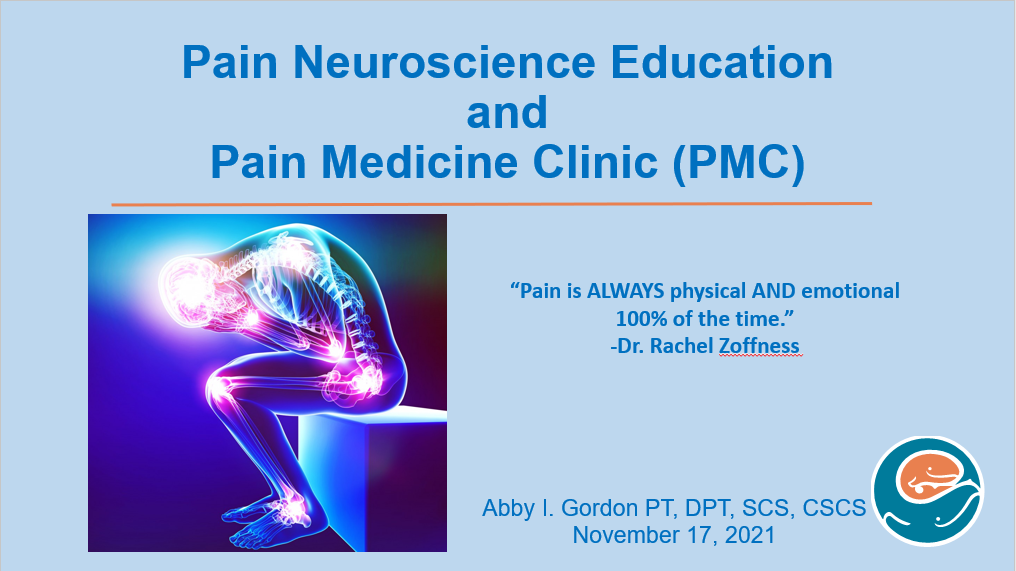
"Pain is ALWAYS both physical AND emotional 100% of the time."

As a Sports Physical Therapist at Seattle Children's Hospital and a member of their Pain Medicine Team, I work with many kids experiencing chronic pain. Most often, that includes seeing teenagers who can't tolerate going to school, hanging out with their friends, or participating in their favorite extracurricular activities. Sometimes it's even worse: kids who haven't been able to put a shoe or sock on (or walk) for many months because of chronic regional pain syndrome, which means a very long road back to their previous level of function.  Their pain could have started long ago with an injury or illness, and will hopefully improve with graded exposure to movement while learning about pain.  These patients can experience massive improvement in their lives if things go well.  I'm not crazy enough to think I can help everyone, but I've grown to embrace this work, including when I can't help my patients break their pain patterns.  To help kids with chronic pain with any success has required a commitment to collaboration with other healthcare providers and dedication to learning about pain neuroscience and pain management. To do that, I read. A lot. 

I also read a lot when I'm preparing to give a presentation.  This week, I was invited to talk about Pain Neuroscience and the Pain Medicine Clinic to the Seattle Children's Regional Rehabilitation Team. I like presenting because it requires me to focus learning on a specific subject and makes me seek out new resources. Educating clinicians is very different than patient care and it helps me consider my own beliefs, biases, and treatment approach.  I was fortunate to be partnered with Hematology/Oncology Physical Therapist Dr. Jacob Ross, who spoke about the intensive Pain Rehabilitation Program (PReP) where I sometimes refer patients when they need more care than 1 or 2 hours per week in my clinic will achieve.  If you're seeing Jacob at PReP, you're undergoing rehab or mental health or some school work Monday through Friday from 8AM-4PM for anywhere between two and four weeks! Based on this website, there are 83 pediatric pain clinics around the world, mostly (65%) in the United States, existing in 25 states plus Washington, D.C.  That means half of the states and the majority of the world doesn't have this available at all - and if you consider that the states who do offer these type of services only have it in a small number of places, tons of kids with chronic pain have no access to this care! In Seattle, I've worked with families from Alaska, Montana, Idaho, and Washington - and there are probably patients from many more places that my team members have worked with. 

If you're interested in learning about pain, I recommend you start with the work of Lorimer Moseley.  I've previously written about his books: Explain PainExplain Pain Supercharged and the Graded Motor Imagery Handbook, and I wrote about hearing him lecture and meeting him at the University of Washington, here. The NOI Group, who published those books, announced a new one coming out in December, "Pain and Perception: A Closer Look at Why We Hurt" which will be my next pain-related read.  From a different perspective, I also wrote about The Gift of Pain, which describes what happens when people are without the ability to experience pain. You don't pull your hand away from a hot pan or stop walking on a broken leg if you can't experience pain - a very dangerous scenario.  If you came upon this post looking to learn about pain management, any of those resources would be great places to start, but they're more about educating clinicians and, though they may be helpful for patients, I've now read a workbook more specifically intended for patients and think it's a great addition to this list.  

$19.95 on Amazon!
In preparation for our presentation, Jacob asked if I had heard of Dr. Rachel Zoffness. "Why yes, Jacob, I have. I follow her on all the social media and listen to her podcast episodes (OMG listen here or here or here or definitely my favorite: here), and I just finished reading one of her books."  The Chronic Pain &Illness Workbook for Teens was published in 2019 and was the first new resource I read for my presentation. Dr. Zoffness is a Pain Psychologist who teaches for multiple higher education institutions, she is the Co-President of the American Association for Pain Psychology, and she is on the Board of Directors for the Society of Pediatric Pain. Oh, and she treats patients experiencing chronic pain and has written two books. (She also wrote The Pain Management Workbook which I'm currently reading.) She's also released an $80 Workshop "Foundations of Pain Psychology" and more from that series are coming soon! Hopefully I'm not starting to look like a creeper because I've been fan-girling and re-sharing all her posts, podcast episodes, and books, so writing a blog about her work is probably the icing on the cake. When you find someone who can directly impact your patient care and knowledge, with easily digestible tools and clear, consistent messaging, I think you have to tell everyone.   

If this is your first time reading one of my blogs, you might not know that I write to organize and synthesize information I'm learning to refer back to or share with others.  Today's post starts with a look at a few of my favorite points from Dr. Z's Teen Workbook paired with information from two of the research papers I read for my presentation and it wraps up with a look at another pain management workbook from Dr. Greg Lehman. 

If you're a person living with chronic pain OR a clinician who works with patients experiencing chronic pain, in-person multidisciplinary care is the best treatment option, but that isn't available or affordable or feasible for so many people. The Teen Workbook could be a solution for patients who need something they can do independently.  It doesn't replace physical therapy or mental health counseling (or the many other treatments that may be appropriate and necessary), but it can certainly help educate patents and initiate behavior change that may be life changing.  

Jull 2017
1) Let's start with my favorite quote from Dr. Zoffness:"Pain is ALWAYS both physical AND emotional, 100% of the time."  This is the biopsychosocial (BPS) model at its heart and connected well to this image from Jull 2017 that I spent a lot of time discussing in my presentation. The Jull paper is a commentary on the BPS model and shows the idea that 3 different patients may have different amounts of biological - psychological - and sociological needs.  But also, the same patient at time 1, time 2, and time 3 has different amounts of these domain needs, too.  Today, for example, I might have a mild headache and I'm hungry but my mental health is good and I got to spend some time with friends so my social bucket has been filled, but my biological bucket may need more attention (maybe a sandwich for my blood sugar).  Tomorrow, I might have eaten enough for breakfast but be stressed about my pain presentation at work and spending a longer day at the office missing out on game night with friends - so my biological needs have been met, but not the social pieces that keep me going. You can't just look at your patient and think they only need biological care or mental health care at your evaluation and then assume it stays the same for all of their treatment.  I

The Workbook is clear about the role of the mind-body connection with regard to pain and explains what parts of the brain are involved.  It provides concrete examples, intentional questions for patients to consider, and a roadmap of strategies to try to better understand your own pain triggers from each of the three circles and identify solutions to try to reduce your pain volume.  Some of the pain books I mentioned above were really complex but this one is, without question, the easiest to understand and most user-friendly option for the general population, particularly when considering teenagers.  Too often the "Bio" portion is treated alone, with Physicians and PTs attributing pain to tissue damage or disease, but that (biomedical) approach ignores two major domains that impact the patient's presentation (Psych and Social circles). The unity of physical and emotional care is essential to patient success and Dr. Zoffness is screaming this message from the rooftops for everyone to hear.  I'm happy to amplify her message as often as possible to whoever will listen.  I actually ask my patients  "How's your mental health today?  Anything stressful going on?  When are your exams?  Have you done anything fun with your friends lately?"  If it's OK to ask them how their ankle is after they've sprained it, it should certainly be OK to also ask these questions.  Clinicians: please consider adding this to your day to day interactions with family, friends, and patients - and I don't just mean handing them the depression questionnaire and glancing at it.  Look them in their eyes and ask them how they're doing.  And mean it!

Tale of Two Nails
2) Metaphors, Analogies, and Stories help teach pain. It's no surprise that Lorimer Moseley is a mentor to Rachel Zoffness (and Greg Lehman) because they all use many of these to get their points across. I presented a few in my talk, also, but have a few favorites I use with patients.  One example that I liked from the Teen Handbook is about practice.  Think about an activity you wanted to learn. She uses playing piano, but I'm using basketball. At first, your hands struggle to dribble without staring at the ball and using your palm instead of your fingertips and the ball might bounce off your foot or miss the rim when you take a shot.  As a novice the task is more difficult and requires more effort and concentration.  So you practice.  And over time, you get better and better, until at some point, you've stopped looking at the ball and can run while handling it and can make shots from farther away and your form looks more consistent as it becomes automatic.  Your brain has developed new patterns that have been repeated enough times that the task is now easy.  With chronic pain, you're unintentionally practicing pain and your brain develops patterns that make it easier or more automatic to have pain.  The beauty of this is that with the appropriate treatment, the pain and learning can change.  Another example Dr. Z has written about, is "The Tale of Two Nails" which tells two really great stories that can inform our understanding of pain - but you should read those directly from her - so check out the article or buy her other book, because it's in there!

When Dr. Z is talking about practicing pain, she's explaining central sensitization, a phenomenon that I previously was struggling SO MUCH to understand. Central sensitization is a common characteristic of chronic pain, where you have an increased response to sensory stimuli resulting in hyperalgesia (increased sensitivity/bigger pain response to the same sensory input) AND allodynia (painful response to something that is normally not perceived as painful like hurting when you're touched by a feather on your skin.) Your nervous system changes when you experience pain for a long time. 

For my presentation, this 2011 Clifford Woolf paper depicts normal sensation compared to central sensitization.

Normal Sensation: On the left side there is an input - either something noxious (potentially dangerous - top) or a light touch (feather, bottom). Notice the black arrows for the top path (pain) and the bottom path (touch) don't converge and the brown blob (brain) is the same color as the rest of the  nerves.
Central Sensitization: Here, the same sensory stimulus occurs at the far left, but now the black arrows merge to the same destination (brain) and the color has changed because the system has adapted resulting in hyperalgesia and allodynia responses. 

3) It's a workbook: there are pages for you to do work.  This isn't just a book of education about pain. This is a guide with explanation of a key pain-related concept followed by actionable items to help improve your experience.  Sometimes I feel like patients who have had pain for a really long time are desperate for a physical therapist to DO whatever we can TO THEM hoping to dull the pain for just a few minutes.  What we really need is to serve as a guide, showing patients what THEY can DO on their own to turn down the pain.  They have to take control of their lives and do the work for any success to occur.  Physical therapists in chronic pain management should be cheerleaders, rooting on our patients as they make 1% progress day after day. People don't need to be 100% to live their lives fully, and often a really small amount of progress gets the ball rolling for a lot more progress to occur. I don't think patients realize how much control they have over their pain until someone empowers them to trust the process and themselves to get moving.  

Link

So, let's say you like the idea of a workbook and want to have multiple options to choose from, or you're an adult and want something a little deeper into the science. As I mentioned, I haven't yet finished Dr. Zoffness's other book, but I expect it might target that audience a bit more. There's another workbook I really like and was using prior to reading Dr. Zoffness's book. Dr. Greg Lehman's "Recovery Strategies" Pain Guidebook is available for patients or clinicians to access online.  I've previously written about attending his "Reconciling Biomechanics with Pain Science" course here and have appreciated learning from him both at the course and from his online presentations and social media. 

The workbooks are similar in their intent and both include key focus on the BPS model, describe how pain works, and provide action items for you to follow.  And both have many metaphors, analogies, and stories.  In particular I liked his metaphor for what happens to the brain with chronic pain: Consider that our brain is like a map of our body, and that a good map would be really clear, showing all the roads and rivers, but that with pain, things get smudged, almost as if you've spilled coffee on the map and the details get a little fuzzy.  The details of our body can get a little fuzzy with chronic pain, but with exercise and movement, we can clean up the coffee mess and the map gets clearer.  Overall, though, they're really quite different.  Dr. Lehman's book is written as a series of infographics, almost a choose your own adventure graphic novel, where you can take a single page out of it to educate your patient.  It includes pages of mythbusters, examining common misconceptions about various topics like "bones out of place," or how tissue damage found on imaging like an MRI doesn't always correlate with pain.  I think Greg's goes into more detail on how pain processes occur, looking deeper into the science of the nociceptive system, the spinal cord, and the brain, but he also acknowledges that it's meant to be used for patient and provider together because of its level of complexity. 

Also, I think that because Greg is a biomechanist, chiropractor, and physiotherapist, his handbook comes through from a more musculoskeletal lens. Though he fully emphasizes the BPS model, he's more from a bio background and gives adequate attention to the other bubbles.  Rachel is a pain psychologist who comes from a more psycho-social background, and thoguh she gives adequate attention to the bio, it's super interesting to look at their two workbooks and consider how they're trying to reach the same outcome for patients from different angles.  I think that patients would absolutely benefit from both. 

That's all for now.  December's blog post is about grief.  It's another long one and recommends several books on that topic, too. So if you're looking for holiday gifts that are books on pain, start with Dr. Zoffness's books - or if grief books might help one of your loved ones, there are several being reviewed next month.  Stay tuned!

TL;DR:

1) "Pain is ALWAYS both physical AND emotional, 100% of the time." 

2) Your nervous system changes when you experience pain for a long time.  This is called central sensitization which is characterized by hyperalgesia and allodynia. 

3) Teaching people about why we have pain and how the pain process works has been shown to help improve pain.  Multiple resources are listed to learn more about pain, often using metaphors, analogies, and stories to demonstrate complex concepts and make them more easily understandable.

4) The biopsychosocial model indicates necessity in attention to the biological, psychological, and social domains in treatment of chronic pain. 


Thursday, September 23, 2021

The CALU Summit

Hey followers!  It's been a little while. How are you all doing?  Have you checked in with yourself to make sure you're taking time to relax, breathe, eat, sleep, and move?  If you have any nurses or doctors in your life, send them a nice note or bring them a coffee because they're working so much harder than they've ever had to.

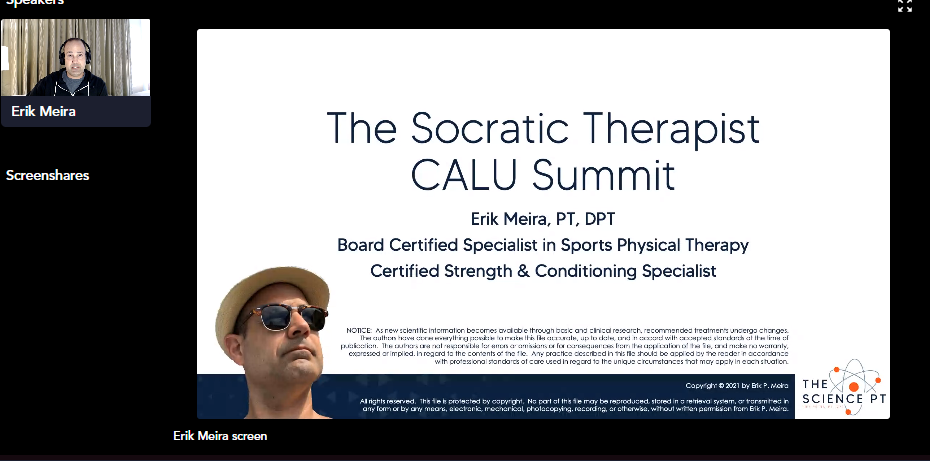
Today I'm writing about the CALU Summit which I recently attended virtually.  The name CALU comes from the combination of Clinical Athlete and The Level Up InitiativeI've attended A LOT of continuing education courses over the past seven years as a PT and I'm certain this was the most fun learning I've ever experienced.  This was my first CALU Summit - their second time holding the event - but I have interacted with both groups in different ways for many years.  In the past, I went through the Level Up Initiative's mentorship program and then served as a mentor and am planning to again. I've previously written about them here. Clinical Athlete puts out podcast episodes that I've listened to and I've participated in some of their journal clubs.  Both groups have loads of social media worth following and are led by super smart physical therapists who believe in educating healthcare providers.  These two networks have impacted my patient care and helped me develop as a physical therapist. In my opinion, both groups are MUST FOLLOW accounts for physical therapists, strength coaches, athletic trainers, and any new grad healthcare provider - but would also be great options for sport coaches, athletes, and parents of athletes to check out! (Specific names to search for on Instagram include: @thelevelupinitiative @clinicalathlete @zakgabor.dpt @stephallen.dpt @quinn.henochdpt @jared.unbreakablestrength @rebuild_stronger - sorry if I missed anyone!) Here are some of my favorite take-aways from the Summit! (Disclaimer - this is what stood out to me, not direct quotations.)

Each day of the Summit had a theme: barbell athletes, endurance athletes, and ACL rehabilitation, with two presentations on each topic.  There was key focus on the biopsychosocial approach, communication, and on case study discussion. The keynote speaker kicking off the weekend was Erik Meira, The Science PT whose talk was "The Socratic Therapist." He quoted Socrates, "What I do not know, I do not think I know," starting us off with philosophical thinking and the understanding that healthcare providers who dedicate themselves to continuous learning are simply working to be "Less Wrong" every day.  None of us can really ever know for certain that what we're doing is the absolute best option for our patients, but with scientific experimentation and consideration of evidence, we can get closer to being right by increasing our knowledge. There were several moments during the course where I had the chance to think back to how my practice has evolved based on what I've learned.  This was the first instance of that reflection. Erik offers his own courses, both online and in person, one of which I'm about to start after I finish ACL Study Day (there aren't enough hours in the day!).  Definitely check him out.  (IG: @erikmeirapt)

Day 1: The Barbell Athlete:  

Presenter  #1 was Stefi Cohen - a super strong woman, competitive powerlifter, and physical therapist who founded the Hybrid Performance Method and coauthored the book Back In Motion.  She described her experience with a low back injury with consultations from from both Stu McGill and Greg Lehman - well known Canadian practitioners in the rehab space who have different approaches despite Greg having been a student of Stu's.  Stefi shared the outcomes and her take-away understanding from those providers.  She discussed that she spent four hours doing special tests with Stu McGill and ultimately was in a lot of pain for an extended period of time after her examination and that his approach to avoid certain movements and take time away from her sport didn't resonate with her - but that she appreciated his estimate on the amount of time it would take for her to get back to her previous level of competition.  His timeline turned out to be fairly accurate, from what Stefi described.  In contrast, she saw Greg Lehman virtually and found a rehab approach that aligned with her own beliefs and with the understanding of finding safety in movement and progressing from there.  

Presenter #2 was Quinn Henoch - founder of Clinical Athlete, competitive weight lifter, podcaster, presenter, coach, and physical therapist.  Quinn's talk, "A process to help barbell sport athletes get back to those gainzzzzz" described a roadmap to coach/rehab barbell athletes.  The path has bookends starting from where an athlete's current physical function is and working towards what's "done" for them. Initiation of the plan requires the physical therapist (or coach) to define their role and set expectations based on the stated goals of the athlete.  Completion of training needs to be valuable to the patient - not the therapist.  For some clients, "done" with a program is able to complete 1 activity or task or be able to tolerate a certain position or load.  When an athlete has a specific goal in mind, we as practitioners should understand the target and guide to that.  It's just like all the kids are saying these days: "Understand the assignment."  It doesn't matter what I think "done" should be for my patients - if they haven't reached their goal, I've missed the mark.  I definitely have fallen into this trap in the clinic where I've wanted someone to be capable of doing something that they're not interested in doing.  Or, right now, I'm working with a teenager whose parent wants them to start running after an injury, but the kid wants nothing to do with running at all. Done for this patient is walking, going up and down the stairs, and participating in PE without pain.  The approach has to fit the goals of the patient - not their parent and certainly not what I think matters.   
Throughout the weekend, there was an ongoing chat that allowed participants to interact with each other.  I particularly enjoyed the witty banter between the powerlifters and the weightlifters throughout the weekend.  As a person who likes to deadlift but who is fearful of destroying my living room if I try to snatch in my home gym, it was easy to see which side of those discussions I was on.  

Day 2: The Endurance Athlete
Presenter #3: was Ellie Somers (IG: @thesisuwolf), owner of Sisu Physical Therapy and Performance,  physical therapist, coach for running, strength, and businesses, and I'm proud to say, my friend, whose talk was "Communication with the Endurance Athlete." She previously worked at Seattle Children's Hospital. Ellie paired her own wit with the wisdom of Ted Lasso.  Ellie also emphasized the need to have a plan with a specific purpose that is meaningful to your clients and encouraged practitioners to highlight the strengths of their patients.  Too often in medicine we look at our patients and find all the things that are wrong with them.  That has to change!  Why can't we look at our patients and observe all the things that are great and empower them?  I've emphasized this approach in my patient care and loved the quote she shared "You're not in pain because you're weak, but getting stronger can help change your pain."  

Ellie also shared this article "The enduring impact of what clinicians say to people with low back pain" which I've read in the past and which is essential for young clinicians to read.  It's a 2013 study from New Zealand summarizing open-ended interview questions regarding healthcare interactions and beliefs from 12 patients with acute low back pain and 11 patients with chronic low back pain.  One theme was that patients had high trust in their clinicians and their beliefs were strongly influenced by what their medical providers said.  However, some patients did not find their clinicians to be competent or found the medical message to be a mismatch to their beliefs and rejected what the medical providers advised.  Almost subtle, a heartbreaking anecdote is a response from a study participant who shared that so many providers kept telling her back pain came from a weak core, she had an abortion because she thought she was too weak to carry and deliver a healthy baby. 


Presentation #4 was Chris Johnson, owner of Zeren Physical Therapy, triathlete, presenter, running coach, and physical therapist who performed a spoken word presentation which was a unique alternative to typical presentations.  Talking about running injuries, he dropped some true gems like "Tendons love tension; tendons take time (to rehab/heal)"  He talked about bone stress injuries with clinical pearl: Pain with unloading the leg should evoke a high index of suspicion for a bone stress injury (BSI) and when BSI is a potential diagnosis, no progression to running should occur until walking is pain-free. Another pearl was to stop worrying so much about footwear and foot strike position with running and consider other variables such as the sound of running instead.  I'll be very honest - I'm not an auditory learner, so I'm looking forward to re-reading the presentation when it gets sent out so I can further internalize the key messages and expand even further.  

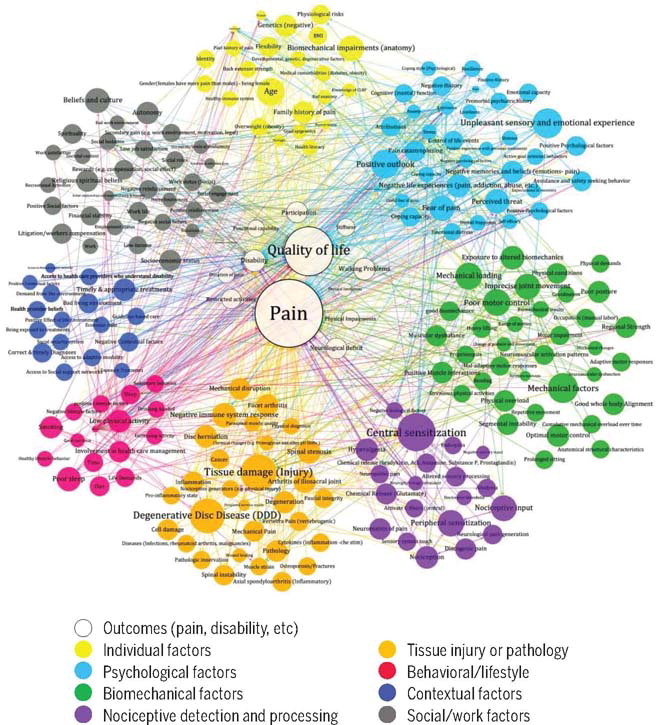
Throughout the Summit, this same image appeared three times.  Isn't it nice that the presenters were so like-minded that this could happen?  The picture shows contributors to low back pain (and likely applicable to most pain) from this JOSPT paper from 2019. Too hard to read?  Doesn't that emphasize the point that pain is incredibly multi-factorial and the orange colored tissue-related factors are a relatively small contributor when you consider the big picture?  

In my opinion, the virtual format was excellent because no travel was needed, however that does lose some of the in-person benefits like networking events and dinners.  The organizers tried to combat that with a virtual Happy Hour on Day 2 where many clinicians hung out and chatted about whatever we wanted - which of course included the sports teams we support, where we're all at in the world, and lots of other interesting topics. 

Day 3: ACL Injury and Rehabilitation

Presenter #5 was Derek Miles a physical therapist with Barbell Medicine who is well known for his posts about pieces of meat (representing the human body) being poked, prodded, needled, scraped, taped, or treated with other common rehab approaches to demonstrate how some of these approaches are not doing what we think they are. (IG: @derek_barbellmedicine).  Derek kicked off day three's focus looking at the biopsychosocial approach for ACL injury.  He reiterated the need to have a plan with rehab, outlining that the first step after an injury is to get the patient back to being a human, then an athlete, and last should be consideration for their specific sport.  Walk, then run, then play basketball.  How do we achieve this? Post ACL injury or surgery, there's a long list of things that people can't do. Patients should know that, but clinicians can direct their attention and focus on all the things they CAN do.  Keep your athletes around their teams and with their teammates as much as possible.  Send them to practice with clear understanding of what they are able to participate in.  It's hard because there's a lot of discussion about what they shouldn't do, but make the injury an opportunity to learn the sport in a different way. 

Early ACL rehab may be boring, but it's the foundation to the later steps and often these athletes can do more than they think they can.  The ACL injury only directly impacts one limb... but there is another leg, two arms, a torso and a head that all need to continue functioning and training and should not be ignored.  If your clinic doesn't have sufficient equipment to load these athletes and get them stronger, sufficient space to get them moving, and have a way to test the athlete - you probably don't have enough to adequately rehab an ACL injury. The key takeaway: LOAD HEAVIER!  As Erik Meira so eloquently puts it, "It's the quad until it's not the quad."  Derek said he tells his athletes to do quad sets ALL THE TIME and then, when you hate them, do 5 more, and repeat again tomorrow.  No reps and sets.  Just constant.  I think I'll just writing 1,000,000 sets on my Medbridge HEP sheets from now on!

Presenter #6 was Laura Opstedal, owner of Build Physio in Montana who does lots of ACL Rehab and research and also previously worked at Seattle Children's Hospital. Laura reiterated Derek's points about quad strengthening and how important that is to athletic movements as well as the importance of testing athletes who have had an injured ACL prior to allowing them to return to activity.  For me, one particular quote stuck out from this presentation. "Look at your entire ACL rehab program as preventing a hip strategy and forcing a knee strategy.  Keep the trunk upright." I know I valued quad strength and testing before seeing this presentation, but I definitely was not doing a sufficient job avoiding the hip strategy.  In fact, I've been guilty of encouraging it sometimes, but Laura addressed the inferior patella pain that some patients feel with a knee strategy that I previously was avoiding, acknowledging that sometimes these athletes are going to have a little bit of pain and we need to know when that should matter and when it's ok to continue. ACL hip strategy study. It's only been two weeks and I've already changed this in the clinic. Also encouraged were achieving passive terminal knee extension within 10 days of surgery, having at least an 80% LSI before returning to run, don't ignore calf strengthening in our patients with knee injuries, and do more open chain knee extension. There were considerations for the slow stretch shortening cycle compared to the fast stretch shortening cycle and training them separately... yup, I never thought of my rehab in those terms before, though I do have some drills I like that focus on both, the new perspective is going to make a big difference for my patients. 


I definitely didn't do these presenters justice, but hopefully this "small" taste will encourage those of you who are rehab providers to start following some new clinicians and those of you who aren't in rehab who, for some reason, like to see what I have to say, hopefully learned about the complexity of pain and can gain some appreciation for the effort that any of your medical providers are putting in to maintain their licenses through continuous education and growth.   

One final note: "When a measure becomes a target, it ceases to be a good measure."  Using certain tests which are meant to be used to show progress and not to show culmination of progress is not the best approach.  I know I often feel like my return to sport tests are the end of my rehab.  This might be fine for some injuries like an ankle sprain where the athlete has been playing their sport without issue and I'm looking for a way to determine if symmetry has been restored.  But in the case of an ACL injury, the RTS testing often occurs to allow the athlete to start playing their sport.  This isn't good enough - and it's another chance to be less wrong tomorrow. 


Monday, August 31, 2020

Book Alert! The Gift of Pain

Gift of Pain, The
Hello, blog readers!  I'm realizing now that I never concluded the cross country road trip blog posts several weeks ago.  I must have been so excited to arrive in Connecticut to see my family, it slipped my mind.  Kristen posted about the end of our journey here for anyone who thought we fell off the face of the Earth.  I flew back cradling a container of Clorox Wipes like they were my newborn baby, extensively cleaning my whole seating area, and, because I had no alternative, an entire bathroom of the plane. I'll send you the cleaning bill, Alaska Airlines!  Now I'm back home in Seattle, and I returned to a huge stack of books and audiobook CDs waiting for me at the library pickup as the world is slowly starting to open back up!

On January 6, 2020, before we knew about the COVID-19 Global Pandemic and had masks perpetually glued to our chins, while there was still air in the lungs of Breonna Taylor, I wrote my first blog post of 2020 entitled "I'm a Book Nerd."  I outlined six books I wanted to read this year related to PT and was already underway reading "The Graded Motor Imagery Handbook" - which I highly recommend to PTs, particularly those who work with patients experiencing chronic pain.  On my list were five more books, but with the closure of the library and my decision to buy a condo during a global pandemic limiting me from spending money to buy books, I couldn't get the books I intended to read.  I've been reading A LOT of alternative books since then, and with the re-opening of the library, I finally dove into "The Gift of Pain: Why We Hurt and What We Can Do About It" by Dr. Paul Brand and Philip Yancey, previously titled "The Gift Nobody Wants." 

The introduction was written by Dr. C. Everett Koop who served as the US Surgeon General from 1982-1989.  Dr. Koop starts the book off with a quote that resonated with me - and which I whole-heartedly believe in as a clinician - "When you examine an abdomen, watch the patient's face, not his belly."  I'm not the right person to say if the eyes are truly the window to the soul, but for sure I believe that the eyes are a window of truth with regard to pain.  My patients experiencing pain show their experience with a crinkled brow or looking away, sometimes covering their eyes, and on the rarest of occasions, tears.  

I must not have read a synopsis about the book prior to adding it to my list, because I was surprised to read the first pages of the book... a heartbreaking story about a little girl who genetically could not experience pain. Dr. Paul Brand was a hand surgeon whose career focused on patients with leprosy, a condition characterized by the absence of the pain experience.  Pain, after all, is an experience.  It is interpreted differently by each person and is dependent on unique understandings of- and interactions with- the environment.  And so, a four year old girl who could not experience pain tries to find ways to interact with her environment, ultimately participating in self-mutilation of her fingers and stepping on nails without awareness and continuing to walk on them.  For so many people, we try to find ways to get rid of pain, but as I've learned working in the Seattle Children's Pain Medicine Clinic, the goal often needs to be to better understand pain and learn how to optimally function despite it.  Too many people need to learn how to embrace their pain because rejecting pain allows these negative sensations to dramatically interfere with life.  

The book is a memoir of Dr. Brand's life in parallel to his journey to understand pain.  He begins with his childhood experiences in India, watching his father serve as a Missionary who also provided medical care to the local villagers.  Later he describes his schooling and career, in London during war time, and developing into a hand surgeon ultimately devoting much of his career to patients with leprosy. There are cultural influences of different world regions and comparisons between medical and community practices in India versus the United States, interactions with nature and animals and their use in scientific research, and vivid descriptions of Dr. Brand's unique interactions with pain.  In some ways it reminded me of the book we read in PT School for Cultural Competency called "The Spirit Catches You and You Fall Down," which was also an interesting approach at looking at the American Medical Model and how it conflicts with the beliefs and practices of different cultures. 

Free photo 96827 © Chrisharvey - Dreamstime.com

This book was published in the 1990's, but it's describing Dr. Brand's understanding of pain from at least 40 years of patient care.  I was repeatedly surprised at how deeply he understood pain, and the ways he tried to apply his knowledge to various conditions such as the peripheral neuropathy commonly observed in diabetics or HIV/AIDS. The book explores fundamentals about how the brain and nervous system interact, stigmatization of people who look different than "the norm," how Dr. Brand learned to conduct surgeries by operating on cadavers because the procedures didn't yet exist to help his patients, and some incredible medical successes. The stories are simultaneously heart warming and gut-wrenching, the full spectrum of emotions.  I'm six years into my PT career and this book helped me to see how I'm really only beginning to touch the surface of learning about pain and how important the biopsychosocial model of practice truly is.  How different my patient care could have been if I had known sooner! It's no wonder groups like the Level Up Initiative have been pushing for healthcare transformation... healthcare education too frequently misses the mark on the importance of therapeutic alliance and bedside manner. Medicine and the understanding of the human body has advanced considerably since the time Dr. Brand treated patients, however we, the modern day healthcare providers, have so much to learn about these foundational concepts. 

Several stories were memorable, but one that fit closely into physical therapy was when Dr. Brand's patients had successful surgeries on their hands, restoring function previously thought to have been permanently lost, only to come back a few months later with severe wounds on their newly functioning extremities.  Dr. Brand would carefully bandage the patients and they would heal, but then they would have recurring wounds, often in similar patterns.  He took the time to observe their daily activities - noticing that one gentleman was using a hammer that had a splinter in its handle that he could not feel - so the repeated use of the hammer was breaking down his skin.  Another instance found that a man was reading in his bed at night time and would go to turn off his lamp, night after night brushing some of his knuckles against a hot piece of glass on the lamp, and that this was slowly burning his flesh.  In a third instance, one that Dr. Brand felt was most challenging to figure out, some of the patients had rats chewing on their fingers in their sleep, which through the introduction of cats into their housing fixed the problem of their hand wounds.  All of these patients - and the world at large - thought that having the diagnosis of leprosy meant that fingers and toes would spontaneously fall off, that the tissues were somehow bad, and that the disease was highly contagious.  Dr. Brand was able to solve so many problems for his patients to improve their quality of life and provide hope to this patient population.

The book goes into some detail with regard to Dr. Brand's three stages of the pain system - how first a "danger" message must be received from the environment, then this signal is transmitted to the spinal cord and lower portion of the brain to be filtered and assessed - ultimately reaching the higher portion of the brain where a response is decided upon.  Pain occurs when "the entire cycle of signal, message, response has been completed."  He provides examples of how pain can be "stopped" by interrupting the cycle at each stage, and how much the mind and learned experiences can impact the third stage and  recovery from pain.  

I think reading this book will certainly improve my understanding of pain, though some of the newer materials I have read go into some different detail, this is a much simpler read with memorable anecdotes.  I can't recommend it highly enough for newer physical therapists to emphasize a different way of thinking than our classical training likely provided. If you have any interest in science, medical stories, pain, and human compassion - check it out.  Brand includes the definition of Compassion early in the book: latin roots are com + pati meaning "to suffer with."  A compassionate healthcare provider truly does suffer with their patients. We may not feel your physical pain, but our hearts connect to your experience, and we care about you.  To some degree, suffering has an element of choice. I hope to help reduce the suffering of my patients, and I'm so glad this book was recommended to me!


Thursday, November 21, 2019

The Level Up Initiative

with permission from the Level Up Initiative
The healthcare industry, including the field of physical therapy, is experiencing a revolution.  A paradigm shift. A wave of new thought. A reform. A change in perspective. An upgrade, in my opinion. Despite Dr. George Engel defining the biopsychosocial model in 1977, it has only recently become more common for clinicians to consider this form of practice. Chronic pain as a health condition is costing a ton of money in the US, and I think that this is one of the drivers for change. Healthcare providers and researchers are looking for ways to improve our treatment approach for people who are suffering.  The Level Up Initiative is trailblazing the path for young clinicians to better learn this model and tools for patient-client relations that the model inherently requires, which is not the typical model taught in healthcare education programs. If you're a physical therapist - new grad, student, or even a veteran - and you haven't heard of the Level Up Initiative, click that link and check it out.

Zak Gabor with me in 2017
I met Zak Gabor, founder of the Level Up Initiative, in November 2017 at his "Hip Hinge 101" course which I blogged about here. He included a patient case (who happened to be my friend from high school). She was experiencing low back pain and Zak showed her MRI along with cartoon images of a stick figure bending forward and an explosion coming out of its back. The MRI showed disc herniations and the patient had been told her back was "destroyed" and that she shouldn't bend over to pick up her kids. Imagine being a young mom with two active little boys and being told you can't pick them up because you could risk damaging your back! What would you do? When this type of message comes from a medical provider, a patient will often take the advice to heart and follow it with blind faith. This is why healthcare providers have a HUGE responsibility to consider the impact of the words we use with our patients. (Click here for JOSPT "Sticks and Stones" article on this topic.)

The Level Up Initiative strives to educate physical therapists (and other healthcare providers) on a biopsychosocial approach to patient care focusing on soft skills and therapeutic alliance in addition to the anatomical tissue healing factors and movement patterns we learn in school. The goal is to teach clinicians ways to interact with their patients with critical thinking, to connect, to prioritize using positive language and a growth mindset, and to focus less on a medical diagnosis and more on the whole person. Increased consideration for mental health and psychology, far more than what I learned in PT School is a factor of the paradigm shift.  My school taught the biomedical model with primary consideration of anatomy and biomechanics without much attention to the psyche or nutrition or sleep or a whole host of other stressors that impact our patients.  Most schools are just like this, though as the shift continues, more programs are giving attention to these considerations.

Ellie leading our Mentorship Group
As a company, The Level Up Initiative puts out content on various social media outlets including Facebook and Instagram posts, as well as having a podcast, a recently initiated blog, and a free mentorship program. I participated in the third cohort of their mentorship program where my mentor was Ellie Somers, owner of Sisu Sports Performance. ***Sign up for the next cohort NOW!  Enrollment ends November 24, 2019*** I enjoyed my experience working through this program and wanted to explain what it was like for those who are unfamiliar with it. Again, I can't recommend checking out their website strongly enough. It has impacted my patient care in only positive ways and I hope I'll have the chance to serve as a mentor in their program in the future.

The mentorship program lasts four months and, as already mentioned, is free. Free! These skills will immediately impact your patient care, but you have to put in the effort to go through their materials. They send you the full course syllabus in advance which outlines the recommended books, podcast episodes, TED talks, and publications to go through over the program and you can really dive in at your own pace. The course is organized with themes that help to focus the group discussions, but going out-of-order with the reading didn't impact my experience.  I chose to complete all the tasks on the syllabus, but I could see that if your schedule didn't allow for that, you could take it as a reading list to work through in the future while still getting a lot out of the discussions and watching the modules.

I won't tell too many details about the specific resources because you should participate in it to get the full experience, but I do want to share some of my favorite parts and describe the structure hoping that it will encourage you to sign up for their next cohort (HERE). The three key topics explored in the mentorship program are Growth Mindset, Critical Thinking, and Communication. Even as a PT for the past five years, I learned new things with each topic, and regularly wished I could have had this knowledge as a new grad. Each topic had discussions amongst our assigned mentorship group as well as reflection questions to consider for personal growth.

Photo from Module 1 with permission from Level Up
Module 1 examined "Growth Mindset."  If you're not familiar with this concept, start reading about it! Once I learned it, I could easily identify when this was an issue with a patient and there are some simple strategies on how to approach this problem to optimize patient care. Our group had an awesome discussion about failure during this module. I personally have experienced some professional failures this year... I submitted a manuscript for publication that was rejected, worked on a project for the WNBA that seemed to crash and burn.  With a growth mindset, I can look at those failures as opportunities rather than disasters. One of my personal favorite strategies is to encourage the use of the word "yet."  Working in pediatrics, it is a frequent experience that my patients may not have done an activity before - so when I ask them to try, sometimes they default to "I can't."  And I tell them, they need to try.  Maybe they can't complete that task, yet - but they need to try, and maybe they'll surprise themselves!

Module 2 dove into Critical Thinking. If we want to see change across PT and across healthcare, we have to start changing how we practice so that the field can catch up to our individual change.  We need to challenge the things we learn in school and we need to challenge our own thought processes in order to grow.  Critical Thinking is an umbrella term that really encompasses many concepts - including an open mindset (like module 1) and communication (the next two modules), but for me, the biggest part of critical thinking is to recognize our own biases and look for ways to disprove our own opinions and beliefs.  When I took Greg Lehman's "Reconciling Pain Science with Biomechanics" Class which I wrote about last week here, I asked him how he organized his learning because he reads SO MANY articles.  He told me that he will pick a topic and then collect several resources on that same topic looking for ways that his beliefs can be changed while reading the collection.  That is intentional critical thinking.

with Permission from the Level Up Initiative
Module 3 and 4: Communication
One of the recommended books for this topic was the toughest book I've read since "Explain Pain Supercharged," but once I got past the big words I needed to learn, I was really impressed by the brilliance of the book and by the importance of the concepts outlined in it.  Where does vulnerability fit into our careers as heathcare providers?  How much can we tolerate uncertainty?  We need to reflect on the care we provide so that we can identify our personal areas with room for growth.  We also need to recognize that our interactions with our patients are directly impacted by our own beliefs and the patient's beliefs.  The motivation of a patient will impact their participation in your home exercise program.  If it looks relevant to an activity they strongly want to return to, that's different than if your recommendations seem arbitrary and unable to help them achieve their goals.  If I believe that jumping up and down is going to help my patients and I can convince them to do it with intelligent rationale of how it will help them return to running, they're going to do it.  If my coworker uses a different approach, they're going to use an alternative treatment technique. Potentially neither of us wrong, but if the patient thinks my way is better, it will impact their care. Because of this, earning a patient's trust can really outweigh other things in care.  Remember, we're not treating robots.  To focus entirely on the objective and ignore what the patient thinks is going on with their own body, aka the subjective, leaves holes in their story and makes it harder for you to effectively treat patients.

So after four months and lots of new learning, I'm excited to share about the experience with you, and hope that if you're a new graduate PT, you'll consider participating in this mentorship program in the future.  Sign up this week, or wait until the next round.  Follow the Level Up Initiative on their social media sites, all linked above.  And then let me know what you think.  Tell them I sent you.