Friday, September 6, 2019

Volunteering in Tanzania

Africa was never really on my bucket list. It's SO far away from Seattle and pretty expensive and I didn't see the point in taking so much vacation time to go somewhere that is portrayed the way Africa often is.  And on top of that, why would I take a vacation to work somewhere else for free?  I thought I was going to a very poor place, a desert that would have been all brown, ugly, and dirty, with people who I knew nothing about whose circumstances don't impact my life. I've heard that safaris were amazing, but I despise zoos because they make me sad for the animals and I thought that a safari would feel the same way.  So what reason would I have to put this on my bucket list?

Me and Kristen
A year ago, I met Kristen, my coworker at Seattle Children's Hospital and an East Coast transplant who says Florida like every other New Yorker ("Flaahhrida") and won't eat at a pizza restaurant that doesn't sell by the slice because that isn't the true New York way.  She exudes an incredible passion for life and is a really talented physical therapist.  And she LOVES Tanzania.  LOVES.  She invited me - and several of our coworkers- to go along with her as she supervised a group of PT students from her alma mater, Stony Brook University.  So with the above reasons I had identified not to go, among several others, one key reason on my "yes" list ultimately won: I realized that I wanted to.  It hadn't been on my bucket list because people weren't talking about it, because it's not a top travel destination, because I don't know anyone from Tanzania or even anyone who had ever visited. But I wanted to travel to a new place. I wanted to meet new people, experience new cultures and eat new foods.  I wanted to see an elephant and a giraffe and a zebra in the wild and see that it wasn't like the zoo.  I wanted to connect with my coworker outside our office - because we had already started to become friends - and what better way to really explore a new friendship than spending every minute together for two weeks?  I wanted to give my time to people who needed it more than those I usually give it to.  And I wanted to confirm or dispute all of my preconceived notions.

Mt. Meru
I learned that in many cases I was wrong.  I wasn't in the desert at all.  In fact, Tanzania doesn't have desert.  The Sahara doesn't cover the entire continent of Africa.  Yeesh...There were tons of sunflowers and trees and our hotel had this AWESOME view of Mt. Meru easily visible in the afternoons when the clouds had dissipated.  It even rained despite being the dry season.  The safari animals are truly free.  Lions out in the wild are breathtaking.  There are birds with so many bright colors, they gave Costa Rican parrots and exotic rain forest ornithological creatures a run for their money.  They cooked foods with curry and I didn't really have to eat that much rice, which was good, because I don't really like rice, but for some reason expected to be eating it all the time.  

In some cases I was also right.  I was eaten alive by mosquitoes despite bathing in bug spray and sunscreen.  If you've seen any of my Facebook posts where I'm wearing a bandana or a headband - those weren't for fashion.  They were bathed in permethrin in an effort to reduce my bug bites.  I think it helped - my face didn't suffer nearly as much as my arms and legs did.

Traveling Pharmacy
Our group collectively did need most of the pharmacy that I brought with me.  I exclusively consumed bottled water including for brushing my teeth, but many meals did not agree with  my digestive tract. I got a nasty cut on my finger that required first aid care. Others in my group experienced some illnesses. Plus, the anaphylactic reaction I wrote about here.  

Our work and the things we saw were emotionally intense and left my mind wandering into the wee hours of the night, limiting how much sleep I was getting. (I would never blame late night chats with Kristen for the lack of sleep... ) I over-estimated what was available to the people of Tanzania, and as such, was a bit shocked by what I saw and what I learned.  Now I've been back home for just over two weeks and I'm still processing the experience. When it came up in conversation today at work, a wave of emotions flushed over me, just as it did while I was there.  The number of times "how was your trip" gets asked declines exponentially, but the feeling hasn't changed yet. 
Sandals made from recycled rubber tires
I've really been struggling to write and talk about my experience volunteering in Tanzania.  As much as I have tried to explain it, my words and photos are insufficient.  It's far easier to talk about the animals on safari and pretend like the volunteer work never even happened.  The zebras don't really elicit my emotions.  But talking about my volunteer work sometimes comes out as if I saw a world of poverty, despair, and sadness.  This was not the case.  

The people I met in Tanzania were a wonderful community who prioritize hospitality, traditions, family, and kindness and who happen to live in a place that simply has less.  Less of pretty much everything.  Less material "stuff" available to them than where I come from. Like shoes - where multiple times I saw these sandals made from recycled car tires.  Less money (Tanzania has .03% of the world's wealth averaging $2716 per adult - 2nd from the bottom of this list - compared to the US which has 25% of the world's wealth and $201,319 per adult - 3rd from the top - and consider that we have 607 billionaires in America according to this article averaged in along with the Americans living beneath the poverty line).  Less opportunity.  Less healthcare (269 hospitals in the country for 50 million people over 365,000 square miles (5.38 hospitals per million people) compared to the US 6200 hospitals for a population around 320 million spanning 3.7 million square miles (19.375 hospitals per million people) which just means both countries have areas where people have to travel far for a hospital, but in Tanzania, there are many more people trying to use less facilities.  Shorter life expectancy: 61.8 years compared to the US 79 years. Less schooling for children with disabilities - we learned about every single school for children with disabilities and how many students they accommodate and how many teachers they had in less than 45 minutes.  For all of Tanzania. Less infrastructure.  Less electricity.  Less drinkable water.  Less education (27 universities and 15 colleges versus 4298 higher education institutions in the United States.
Shanga Employee Wheelchair

So they have less... but does that make it bad?  No. And in some cases, cases that really matter, they also have so much more.  They have more family time.  Families live in close proximity with one another and honor their past traditions as they try to be a little bit current while simultaneously adhering to their tribal laws.  They have more respect for their elders - in fact they even have a specific greeting intended to be used with elders rather than for peers. They have more kindness.  They have more generosity.  They have more sharing.  I'm pretty sure they have more work ethic than many of us, working in more labor intensive work than many of us face.  They have more connection to their land and to their animals and to their religion.  They have more healthful food that does not contain the chemicals and processing we add to ours. They have more national holidays.  They have better maternity leave (12 weeks fully paid). They have the same sun, moon, and stars in the sky, but less pollution obstructing your view to see them.  They have the benefit of waking daily to the crow of the rooster, rather than those annoying ring tones installed by Apple set to go off every 9 minutes.  I really started to like waking up to the roosters.

Despite what you may have heard, there may be one planet Earth, but the world is not the same everywhere.  Tanzania is nothing like the United States.  But that does not make the United States better.  It just makes us different.  And, at the end of the day, we're all human beings who bleed red and breathe the same air.

Glass beads made at Shanga
The group of volunteers I went with were four Physical Therapy students from Stony Brook, one of their professors, Kristen, and myself.  Seven Americans split between two facilities volunteering in Tanzania.  One of the facilities was a school for children with disabilities called Step by Step where Kristen supervised two students.  My team was at Shanga which is basically a workshop and store that makes and sells crafts from recycled products and employs people with physical disabilities.  Shanga provides employment and salaries to individuals who would otherwise have much more difficulty finding work  Through sale of their products, visitor donations, and their larger parent company, they can feed their families and have support with access to medical care and equipment.

George teaches group exercise class
At Shanga, we assessed the needs of the employees.  A year before us, they had been visited by Stony Brook students who had developed an exercise program that the staff would participate in about twice per week.  They embraced their new program last year and were eager for some upgrades.  The previous program had some limitations such as a key focus on mobility, but not very much on strength.  We were able to update the program and we taught the leadership team basic concepts of exercise and ways to modify the program to try to give them more ownership and ability to have variety.

We also did one-on-one evaluations of several employees experiencing pain or with mobility issues they were hoping to improve.  There were some employees who had amputations who needed assessments of their prosthetic limbs, something I never do at Seattle Children's but had done on my clinical affiliation in New Mexico during PT school.  Other employees had experienced injury or been having some health issues they wanted checked out like cardiac concerns.  Some had seen last year's PTs and wanted an updated program, as well.

And so, I've described my volunteering experience.  But really, I've tried to explain that the way we view the world from here is through a distorted lens.  I, too, am guilty of this.  It isn't gone now, I'm just a little more aware, now.  Our pre-occupation with money and objects in the United States may be holding us back from some of the other beautiful values seen around the world.  I pray that this experience helps me reflect on what is truly important and embrace those things more in the future.  

Tuesday, August 27, 2019

Lions and Tigers and Peanuts, Oh My!

I just spent two weeks volunteering in Tanzania, Africa through a company called EDU Africa.  For sure there will be other posts describing the work we did and the impact being in Africa had on me, but I'm just starting to process those thoughts at this point.  Intertwined with our volunteer work were various cultural immersion experiences - learning some traditional African dance, tasting African cuisine, a canoeing trip where we were able to see many of the birds native to East Africa, and we finished our visit with a two-day safari. Who would have thought that after two days on safari where an elephant crossed the street right in front of our tour vehicle and we saw several prides of lions close enough to take my breath away - that a peanut would be the most deadly thing we would encounter on this trip... but alas, it was! This post is about one of my fellow volunteers experiencing an anaphylactic reaction to peanuts on our last night in Tanzania, some stats about anaphylaxis, and what to do if you find yourself in this situation.

Rice, Stew, and Ugali.  Photo: KConn
Prior to our arrival in Africa, the EDU Africa staff gathered each volunteer's dietary concerns.  The company organized almost all of our breakfasts and dinners at our hotel as well as providing us boxed lunches at our volunteer sites each day - interesting meals such as spicy carrot sandwiches and tomato paste coated french fries or cooked meat/vegetable dishes flavored with curry eaten using ugali - a traditional African corn-based dish that reminded me of polenta but that you roll up into a ball and depress a divot into it and basically make yourself a tostito scoop to gather up the stew.  We also had the opportunity to order off menus at a few restaurants which was a constant adventure... I tried to get mozzarella sticks at a restaurant called Bravo Pizza but the mozzarella sticks were basically limp string cheese rolled in dough that was floppy...more like the consistency of soggy fish sticks and were mostly good for a few laughs.  Because there is a high risk of water contamination with parasites, we were strongly advised to avoid consumption of fresh fruit (unless you can peel it like a banana) or any fresh vegetables (because of them being washed in the unsafe water), so there were a lot of carb-heavy meals and cooked vegetables and potatoes and eggs.

With regard to food restrictions, our group of 7 people had several.  For me, I have a strawberry allergy that, to my knowledge, is not very severe - though after this experience, I can guarantee I'll be getting that re-checked.  I also don't eat red meat - but had told them I didn't eat beef, so when pork chops were offered to me, I requested a vegetarian meal along with a fellow volunteer who is a true vegetarian. We had a member with a gluten allergy - try explaining that in Kiswahili - the official language of Tanzania - repeatedly - when they don't know what gluten is.  They use a lot of corn and rice, but to be certain that wheat wasn't in any of the foods was impossible.  And lastly, we traveled with a young woman with a severe nut allergy - who despite her constant efforts and a group of people looking out for her - managed to consume nuts on our last night as they were in a chicken dish with curry that had no evidence of hidden poison.  She had identified her allergy to the hotel, but whether a language barrier was the problem or the serving staff being unaware of what was in the food - it didn't matter. So... we had just finished our second day of African safari and are in the middle of Tanzania in a town I don't know the name of, when we were faced with a potentially awful situation.

Fortunately, there were seven of us PT students and PTs and, after seeing us run out of the dining hall to get closer to her EpiPen and medications, an Australian resident physician joined us and provided her recommendations, which ultimately led to our new friend of two weeks spending the night in a Tanzanian emergency room getting doped up on corticosteroids.  

I'll start with what you should do if you already know you have an allergy to which you have an anaphylactic reaction and you come into contact with the allergen.  In this case, you should have a prescribed EpiPen, which contains epinephrine, also known as adrenaline.  Epinephrine is a medicine that increases your heart rate, helps improve breathing, reduces swelling and hives, and can increase a dropping blood pressure.  Our friend knew she had the allergy but had never had to use an EpiPen because her previous exposure was her first and resulted in a trip to the emergency room home in the USA, ultimately resulting in her carrying an EpiPen and avoiding nuts at all costs.  She hadn't used an EpiPen yet, and there is always risk of having a negative reaction to an EpiPen, in addition to the reaction  you're already having to your allergen.

Our travel buddy had four EpiPens on the trip with her, but only one available while we were on safari, the others packed away in the city with the rest of our luggage.  After she started noticing symptoms, she immediately went to her room and decided to try antihistamines first, wanting to avoid use of the EpiPen.  Truthfully, it delayed the inevitable, though at that time we didn't have our driver on-site yet so it was a good thing that she delayed using it.  About 30 minutes after ingesting the nuts, her symptoms started to get worse.  She threw up her dinner, started breaking out in hives, began to cough and having some difficulty breathing.  Wanna know what happens when you start having trouble breathing?  You panic.  The major problems with anaphylaxis are that it can elicit constriction of your throat, which can be a medical emergency, as well as dropping your blood pressure, which can make you pass out.  Fortunately, our group acted quickly and had initiated the emergency chain to get our driver back to our hotel to be ready to take her to the hospital once things progressed - which they ultimately did - and the hotel manager contacted the nearest hospital to alert them of our situation.  When the Australian medical resident checked her out, and a transport was ready, she was ultimately given the EpiPen and taken to the hospital.  It was a scary situation for about two hours while the rest of the group remained at the hotel waiting for updates on her status, but the end result was a sore arm from weird techniques of placing an IV with a big bolus of corticosteroid making her sore.   Our terrible situation worked out in the best possible way.  Our friend is fine, and now knows what it's like to have to use her EpiPen.

But what if you don't know you have such a severe allergy?  If you find yourself in a situation where you think you have eaten something that could be causing anaphylaxis, the first thing - and also the most difficult - is to try to remain calm.  Panic and increased heart rate don't help if you're experiencing restrictions with your breathing.  Find someone to help you, so you're not alone, and start the emergency chain ASAP.  Either call 911 for an ambulance or get to the hospital quickly.  Anaphylaxis generally does not stop on its own, though it may seem to take a pause and then later return, which can be misleading and cause more trouble if you decide to delay getting medical attention.

According to this website from the American Academy of Allergy, Asthma, and Immunology,
(AAAI) anaphylaxis can be fatal, particularly if there is a decrease in blood pressure, difficulty breathing, or loss of consciousness.  Our friend definitely had difficulty breathing and was coughing by the time she left the hotel to go to the hospital.  We kept an eye on her pulse - but did not have means to check her blood pressure.  The most common causes of anaphylaxis are foods (all different types of nuts, fish, milk, eggs, and preservatives), medications (particularly antibiotics and anti-seizure medications), and insect stings.  In some cases, exercise can induce anaphylaxis, and there is a correlation between those who experience anaphylaxis and those who have asthma, as both tend to present with similar respiratory complications.  The AAAI site advises that if you have a reaction, you should always go to the hospital - even if you feel improvement in symptoms with your EpiPen or another medication.  EpiPen treatment is for emergency response in order to get you to the hospital for appropriate care.  They tend to last around a half an hour, though they may only last ten minutes, so people often carry more than one, particularly if they'll be far away from medical care, so that they can re-administer if symptoms worsen as it weans off.  EpiPen should be administered to the soft outer portion of the thigh and can be done through clothing.  It should be held in place for about 3 seconds and has an indicator on it that changes color to let you know that the medicine is being administered into the body.  Once an EpiPen is used, it cannot be re-used.

And so, the scariest part of my African adventure was a peanut.  Though there are no tigers in Africa, which this article explains, so if I had seen one on this trip, it probably would have scared me quite a bit, too.


Monday, August 5, 2019

The Government is After Me!

Photo Credit: Michelle Vieira at London 2012 Olympics
This morning I have a long layover at JFK airport en route to Africa!  As I've been observing TSA, watching the news sitting in horribly uncomfortable chairs, and seeing what's going on in the world, it got me thinking a little bit about our government. Earlier this year, I was home in Connecticut visiting my family when I received a letter stating that I had been selected for Jury Duty.  In the State of Connecticut.  Where I have not lived for the past 4.5 years.  Fortunately, it was easy for them to verify that I no longer live there and was able to get out of it - but that's my second Jury Duty Selection and some people have never been picked!  How does this happen?  What fortunate - or unfortunate - thing have I done to put me on a list saying I should serve when others have not been chosen?

My first jury duty selection was in the summer of 2004, right after my freshman year of college.  It was a trial where a man had been running in the early morning and he had been struck by a car resulting in severe, long-lasting injuries.  The runner was suing the driver of the car, who happened to be the newspaper delivery guy.  He was also suing the newspaper company and their insurance company.  I spent 5 days in the New Haven County Courthouse listening to testimony, reviewing medical bills and photos of the injuries. This was long before I was a physical therapist, so while I was a bit annoyed to be missing my summer vacation, my job paid me for the time and it was definitely a better learning experience than being at work in the bakery at Everybody's Supermarket would have been.

Anyways, I returned to Seattle after a great snowy East Coast trip and arrived to find a letter from the State of Washington Department of Health that my PT License was being audited and that I needed to show proof of all of my continuing education.  I was certain the government was out to get me!

So... for my fellow PTs - in or out of Washington State, here are a few pointers, should this happen to you, because I found the letter indicating my audit - and the details of what was needed- to be quite lacking.
1) Keep track of your continuing education!  Names of courses and the presenters, dates and locations of where you took them, number of hours, a list of objectives for the course, and keep the copies of the certificates.  My certificates are in a binder and I have a google doc with my annual course titles/hours already, but I didn't have all the required information that was asked of me.  For example, I've talked about the courses I took with Mike Reinold and Lenny Macrina a few times on the blog like here and here, but I couldn't have told you their credentials and didn't have access to written objectives for the two courses I took from them.  Fortunately, their credentials were listed on the certificates and they were more than willing to send me a list of objectives since their classes have been approved by continuing education review boards.  Medbridge also supplies all this information on all of their certificates.
2) Know the rules of your state.  Washington does not require verification of your courses for PT.  Neither does Connecticut.  Three states (Maine, Massachusetts, and South Dakota, which I wrote about here do not require continuing education at all.  But if you practice in those states and then try to switch states, this may cause you some problems in transitioning your license elsewhere. (Also- how are you practicing physical therapy without participating in continuing education?!? My education was great at UConn but seriously- you’re left needing to know so much more!) You may have specific things you need to have specific education for, varying by state. Examples of unique circumstances that some states have for continuing education:
  • Suicide prevention training - required in Washington, course is available on Medbridge - probably a really good thing for any physical therapist to have!
  • Spine manipulation - can get a special endorsement in the state of Washington, which I hold, and which has its own continuing education requirements. If I had to guess, this is the reason why I was audited... but maybe it's just random.
  • Dry Needling - not permitted in Washington, but is allowed in many other states.  My understanding is that dry needling certifications tend to be regulated carefully in some states.
  • Somewhat related - if you are a Certified Strength and Conditioning Coach through the NSCA, you cannot use almost any physical therapy courses for your continuing education for your CSCS.  They have a list, here, which includes First Aid/CPR as an option - which we cannot claim for continuing education for our PT licenses.
If you're in Washington, the letter for audit basically says you should read the laws and see what applies to you and submit sufficient information to cover your own requirements.  Here's where you would go to find that information:
1) Physical Therapy Requirements: here for your initial license and here for continuing education requirements
2) Spine Manipulation Endorsement Requirements: here
3) Dry needling is not permitted in the state of Washington under the Physical Therapist practice act,, so we don't have regulations for it. 

I asked a lot of PTs if they've ever been audited... zero coworkers or PT friends have been, but some had friends or family members who've had to submit their information.  Overall, the process wasn't really that difficult because I have all my certificates and track my hours - plus I have more than enough hours for everything I need.

Ultimately, this is my PSA that you should keep track of - at the very least - the minimum requirements you need for your license to remain active - because this is a real thing and to track those things down later would have been much more difficult. 

Abby 2 - Government 0.   See ya in two weeks, America!

Monday, July 29, 2019

Vaccination for Africa!

In just a few days, I’m departing on an adventure, heading to Africa!   I’m headed specifically to Nairobi, Kenya for a day followed by two weeks in Arusha, Tanzania ending with a Safari!!!!  Thanks to my coworker pal Kristen who writes this blog (even more specifically, has several posts from her previous trips to Africa, here)... and we’re joining one of her PT School professors and 7 students from Stony Brook University to do some physical therapy-related work. I don’t have the details of what we’ll be doing yet- so stay tuned for the post-Africa blog posts for that... but the preparations for the trip have been very interesting and I thought I’d write about the medical preparations for the journey - along with some thoughts on vaccination.

From: http://pcwww.liv.ac.uk/epidemics/MAL_geography.htm
Let's talk about medications.  Thanks to Virginia Mason’s Infectious Disease Department- not only was I able to receive the shots and prescriptions I needed, but they also explained many of the possible risks and made recommendations for me. They collected my dates and destinations of travel in advance, prepared a stack of pamphlets for me, and had the shots and prescriptions I needed ready to go.  I now have a whole pharmacy packed based on things that my body might encounter that it doesn't generally experience at home. Specifically- Tanzania is in the malaria belt and Kenya has an escalated risk for contracting yellow fever. And so- I have malaria medications and I had a yellow fever vaccine this week. The provider who organized all my medical care for these travels, Lisa Roberts PA-C was very thorough and presented the options for all the medications - such as discussing my choices for malaria medicines because some of them can be hallucinogenic.

Some interesting facts about these diseases:
Malaria:
1) Link: There are five types of malaria parasites called plasmodium.  One type, Plasmodium Falciparum, can be life threatening and induce liver failure, kidney failure, and coma.  This is generally the type that you take preventive mediation for when traveling.
2) Link: Malaria is transmitted by mosquitos, so using bug repellent containing DEET, long sleeves and pants, and taking preventive medications are all useful preparations. The particular type of mosquito, the Anopheles Mosquito, cannot survive in climates cooler than 68*F, so since central Africa is so warm, this is a common region for the disease.  As global warming continues, the malaria belt is expanding.  Even though the United States has successfully managed to reduce malaria cases, we do house these mosquitos, so there is always the risk that malaria can become a bigger problem here at home.
3) Link: There is a malaria vaccine, but it has a low efficacy and requires four injections... so I'm not immunized, I'm taking preventive medications. The reason for this is that the DNA of that plasmodium reproduces so fast, it can build resistance - just like we've seen with antibiotics resulting in things like methicillin resistant staphylococcus aureus (MRSA - the SuperBug) which, by means of evolution do not respond to the usual medications.  I'm so glad I read "The Origin of Species" by Charles Darwin, and wrote about it here.

Yellow Fever:
1) Link: Yellow Fever is also transmitted by mosquitos.  About 15% of those who are infected will have severe symptoms including shock, organ failure, and possible death.
2) Link:  The vaccine against yellow fever is considered to be life-long protection and 99% effective.  and is a live vaccine, which means that scientists took the actual disease, weakened it, and then it gets injected into you to build up immunity to it. There is also a shortage of the vaccine with limited number of places where you can go to get one - so if you're looking to travel, plan ahead!  You need a specific yellow card marked with your immunization in some cases - for example if you spend time in Kenya before going to Tanzania, like we are, you need the shot.

In addition to malaria and yellow fever, we also discussed risks for hepatitis, rabies, measles, mumps, rubella, influenza, and diphtheria, along with multiple symptoms that could require treatment, particularly related to gastro-intestinal distress which I won't go into detail about but which also included some shots and medicines.

What is a vaccine, anyways?  A vaccine is a medicine used to prepare your immune system to fight a disease in case it ever comes into contact with it.  Our body fights off disease by using a system that requires exposure to something to build up a defense system.  The vaccine is the first exposure to a disease, usually a weakened or dead version of it, so the body can recognize invaders and be prepared to fight.  There is considerable controversy around the country with some parents believing that vaccines are dangerous - or they don't believe in inoculation for a variety of reasons.

While I've been going through these preparations and getting additional immunizations beyond the ones I've had for public schooling, college, graduate school, working on an ambulance and now working in a hospital-based system, Seattle Children's and many other places around the country, have been facing increased episodes of cases of measles. Seattle Children's publicized exposures there here and this article describes the over 1,000 cases identified in the US this year, a considerable increase since measles was considered to be eradicated in 2000.  Measles is a highly contagious disease spread through coughing or sneezing or bodily fluids of infected people and does not have a cure.  A contagious person will likely infect 90% of the non-immunized people they come into contact with.  There is a high risk of fatality from measles because of the complications of the condition - immune compromise and opportunistic infections like pneumonia.  The vaccine is only 97% effective, so even those who are immunized aren't perfectly protected, but because of the high risk, it's essential that people vaccinate their children.  I urge everyone to read about the signs and symptoms of measles, particularly if you are in an area where there has been a spike in cases as it looks like there is a current epidemic occurring or if you are a healthcare provider.

Volunteering Emergency Response in Israel in 2006
Several cases of measles in Washington have been linked back to being at Seattle-Tacoma International Airport, where I'll be headed to depart for Africa in just a few days.  Interestingly, I also found this article looking at the measles epidemic occurring on the east coast, reporting cases in New York in Orthodox Jews who do not inoculate their children and who had recently traveled from Israel (which has been having an outbreak as well).  This article also discusses the Orthodox Jews having this increase in cases.  Having been to Israel several times and lived there as a volunteer EMT in 2006, knowing that they're so advanced in their medical and technological developments, this shocked me!  Over 500 of the cases in the US are in NY in this population, and Washington is 2nd on the list.  As a Jew myself, I can't understand why the Orthodox aren't taking care of this.  It seems that some believe vaccination is against Jewish law, which is of course an interpretation of something, though I'm not sure what, because vaccines obviously did not exist at the time Jewish law was written. What is for certain part of Jewish law is to do anything that may save a life, and since vaccination can save lives, it seems to me that more Jews would support vaccination.

Even the APTA has a position on this.  Physical therapists are in a prime position to encourage families to get their immunizations as part of their regular health care.  The risks of not doing so many times could include fatality - to your own family member or to someone else.  The benefits far outweigh the risks.


Thursday, July 18, 2019

Ways to Move This Summer

Earlier this week, I had a unique opportunity to do some work with a small child, maybe about 3 years old? She wasn't my patient... it was a special circumstance...  and, though she was very, very cute, this was entirely out of my comfort zone.  Though I do work at Seattle Children's, my patient population is between ages 5-21, with the majority of them between ages 9-15.  That's right, I spend most of my day with teenagers. It's awesome.  The younger kids will still talk about Disney princesses or super heroes and the older ones can discuss books I read when I was a kid, sports, movies... nothing deep, nothing life shattering.  It is a rare occasion that an older patient comes in and discusses politics or religion or their job - though several of the younger kids talk about their church camps or youth organizations or really interesting volunteer projects they work on and some of the teenagers do work.  It's entirely different from the conversations I used to have when I worked with adults who had stress from jobs, older parents or younger children, money woes, car break downs, or deeper interests that required me to think.  A 3 year old was uncharted waters.

One does not simply sit and have a conversation with a child of this age.  This particular child didn't even really sit at all. She was constantly on the move, excited to explore the world around her, touch everything colorful in the Seattle Children's Rehab space.  I'm not sure how parents do it!?!  I'm not sure how my coworkers who do work with children this little do it!?!

Anyways, I was tasked with finding things for this little girl to do for about twenty minutes.  Fortunately, I had just read a new Community Education flyer from the Seattle Children's Sports Medicine Department entitled "35 Ways to Move Your Body This Summer."  My awesome colleagues - a rock star physician and three incredibly talented physical therapists (also team #StrongWomen) - collaborated on this project to provide families with ideas to keep moving.  (Message me or comment with email address and I'll send you the whole PDF!)  This list came in handy when trying to identify things to use with a small child - but could easily be applied to all ages - kids through adults - to find ways to stay active during the summer time - and beyond!  Here are some of my favorite suggestions from the list, and some that I used to survive working with a tiny kiddo!

1) Make an obstacle course: in the clinic we have access to lots of cool things to climb over, jump on and off of, balance on, and even a tunnel to crawl through. This is an easy thing for children to help build and then use to keep moving, and then rearranged.  Or, perhaps you're going to the playground and using the items there to make an obstacle course.  Either way - so much delight from that little girls face with crawling through the tunnel and jumping onto colorful circle dots.
https://www.amazon.com/Discovery-Kids-Adventure-Removable-Lightweight/dp/B07BR83L6J/ref=sr_1_55_sspa?keywords=crawl+tunnel&qid=1563483750&s=gateway&sr=8-55-spons&psc=1
2) Water Play: this could be in a pool or at the beach or running through the sprinkler in your back yard.  At the beach, you can bring various toys to play with - like a beach ball or shovels and pails to build a sand castle with a moat.  If the water isn't too cold where you are, and you're going in to swim - you can also play water games, swim races, hand stands in the water, or see how long you can balance on one foot while in the water.  For me, water play is kayaking.  In fact, I wish I was in my kayak right this minute.  But there are so many other options good for kids!  In Seattle, you can rent Canoes near UW, link  or rent kayaks or paddle boards at Green Lake or multiple places on Lake Union.  Tons of the teenagers coming into the clinic have been trying out paddle boarding this summer because it's so popular here.  Endless options to get outside and keep on moving.

3) Boot Camp or 4) Circuit Training and 5) Stretching: Attached to the "35 Activities" is a list of exercises and a list of stretches. But these additional lists can be organized in tons of different ways.  For example, boot camp directs you to choose a few exercises such as jumping jacks, push ups, sit ups, running in place and you do as many as you can for a minute, and repeat the routine a few times.  This idea is similar to circuit training, a technique I commonly use in the clinic, though the intensity is a bit different.  Using a variety of stretches, you could create your own home yoga class!  Even more fun, lay a towel out in the yard and do it outside!  I've previously written about my affinity for yoga here and strongly feel that though the intent is usually stretching, several stretches require you to work hard and also improve your strength and overall fitness. The list goes on with many ideas for games using these exercises such as assigning each one a letter, and then spelling out your name or a word.

So many great suggestions, and I've only touched the surface of the list from my coworkers!  This resource is really great - I can't wait to share it.  Don't forget about the tons of ways you can make walking fun: go somewhere different to explore a new neighborhood, make a list of objects to find (scavenger hunt) and see how many you find, walk your dog, go with friends, do it in the woods or at the beach, or make a game out of it like dancing every time you see a car drive by you.  Ride your bike or a skateboard or a scooter.  Also, a pack of sidewalk chalk makes your driveway into an endless number of games - like four square or hop scotch or into a race track.  My niece and nephew used to make a race track in their driveway with lava areas they had to avoid or stop signs or change of direction arrows that they drew before riding scooters or bikes or skates on it.

All these suggestions are a great follow up to my post last week about the negative impact of early sport specialization.  That post discussed concerns with athletes starting to play only one sport too young.  Though there is varying information, it is recommended that kids should play multiple sports until at least finishing middle school, probably somewhere around age 14.  This 3 year old had NO problem with wanting to climb on things, jump on things, stack cones, hop, skip, jump, squat, throw, kick... you name it, there was a TON of variety.  I don't think you need to be participating in multiple organized sports - you just need to move in more ways.  For example, strength training in an organized manner rather than playing your sport year-round could be a great way to improve your fitness and make a more skilled athlete.  Or, have a dance party with your friends... it's certain to look different than your usual sports.

Friday, July 12, 2019

Megan Rapinoe Used to Hoop, too!

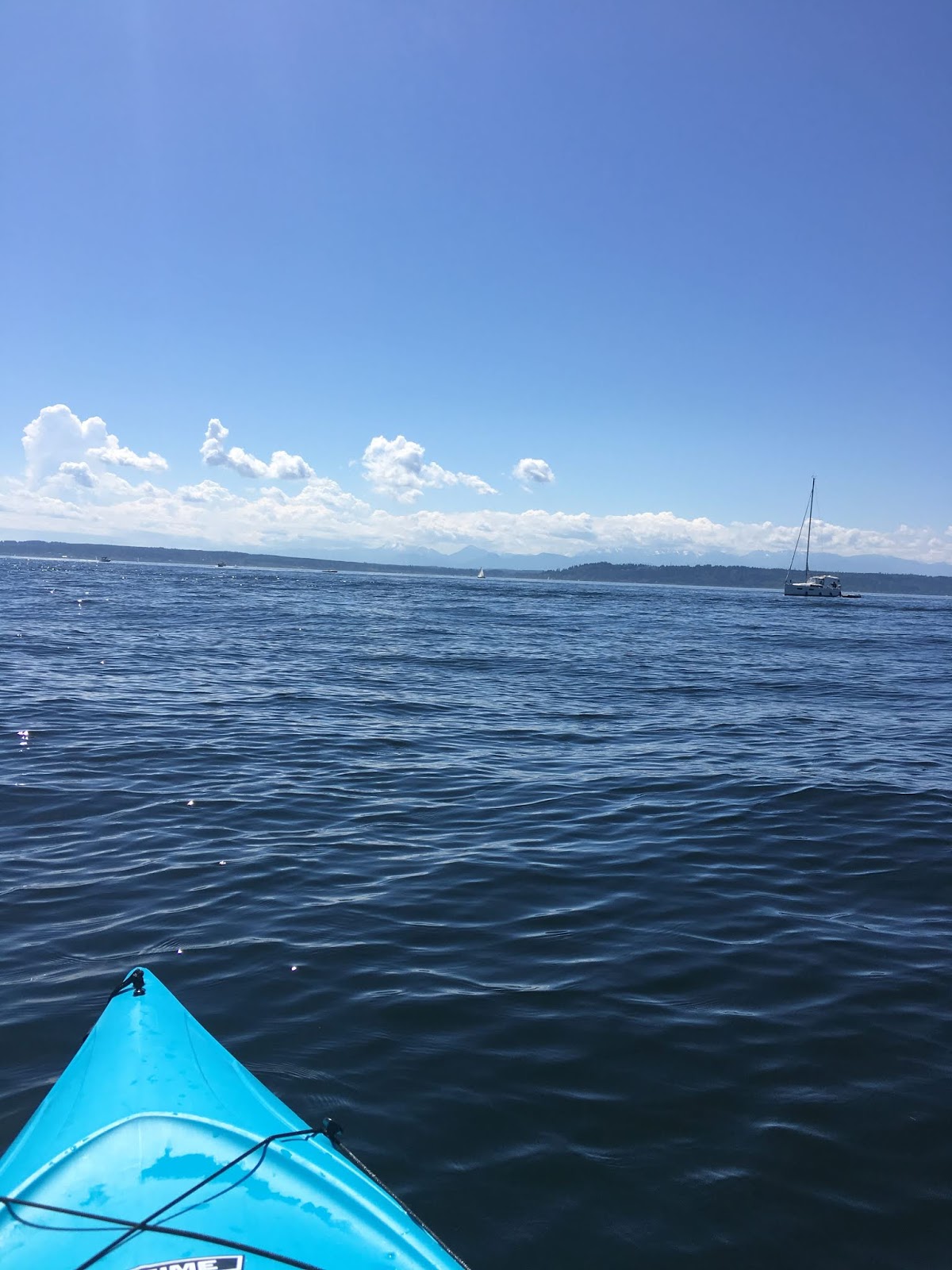
Summer is here!  The barbecues are starting, fireworks and mini American flags are on sale everywhere, and the sun is finally shining in Seattle with WNBA basketball under way.  I've taken the kayak out already and saw some seals and I've lost and found my sunglasses at least three times with the bipolar nature of the weather in Seattle. I've been working on a blog post about sport specialization for a while, and it has been  moving too slowly for me - primarily because I've been spending a lot less time at my computer and a lot more time in the sunshine when it comes out, but also because other topics just keep popping up that I want to write about. And then I decided I really wanted to write about the United States Women's Soccer Team this week, but... that's what everyone else has been doing.  And so, I decided to combine the two.


First,  I'll start with a definition.  In 2002, Jayanthi et al defined sport specialization as "intensive, year-round training in a single sport at the exclusion of other sports."  This came along with: “The American academy of pediatrics and the American medical society for sports medicine have both discouraged sport specialization before adolescence but acknowledge that this recommendation is largely based on expert opinion...” What does it mean?  It means that medical professionals are supporting playing multiple sports, moving in multiple different ways, participating in unorganized play that isn't a sport at all - just like playing games of tag or riding bikes around the neighborhood, or climbing a tree - so that the body moves in different ways.  


There are considerable benefits to playing sports.  Health benefits, of course, including improved heart rate and blood pressure, cardiovascular endurance, and muscular strength.  There are also mental health benefits, particularly with team sports - but also with individual sports - like community interactions, competitive spirit, sportsmanship, and having a support system.  But there are also risks.  That same article from Jayanthi also found that youth athletes with a higher socioeconomic status were more likely to sport specialize and were also more likely to experience more serious overuse injuries than lower socioeconomic status athletes.  It was also found that those youth athletes who participated in team sports tended to have less frequent overuse injuries than individual sports.

Myer et al provides some interesting statistics about the success from sport specialization: Approximately 30% of American kids specialize in one sport with the goal of earning a scholarship and reaching the professional level in that sport, but only .2-.5% make it to the elite levels. Many parents and, more dangerously, coaches believe that focusing on one sport is the way to reaching this goal.  But using the same patterns over and over again may not help develop resiliency and strength in other movement patterns. 

Some quotes from that paper:

"Single-sport specialization was first reported in Eastern Europe with athletes involved in individual sports such as gymnastics, swimming, diving, and figure skating."

"Vaeyens and colleagues59 reviewed the training history of 2004 Olympians and found that the mean age of sport initiation was 11.5 years."

"At the collegiate level, a study of National Collegiate Athletic Association (NCAA) Division 1 athletes at one university found that 70% did not specialize in their sport until at least age 12 years, and 88% had participated in more than one sport."

Since I had already been doing research for a blog post on sports specialization, I looked into the roster of the USWNT and all the other sports those athletes played - other than soccer.  Here's what I've found.

Morgan Brian played varsity basketball through her senior year of high school before specializing in soccer.

Adrianna Franch was an all star high school basketball player.
Ashlyn Harris liked to surf and skateboard with her brother.
Tobin Heath reportedly likes tennis and surfing.
Jessica McDonald played four years of high school basketball and was a state champion and record holder in the 400m in track, also participating in the same three sports for two years of junior college before heading to North Carolina where she specialized.  The USWNT has a really long list of Tar Heels and a few Penn State Nittany Lions and Stanford Cardinal grads...I guess those would be the college power houses for women's soccer the way UConn is for women's basketball. 
Alex Morgan is listed as a multi-sport athlete.  As one of the most recognized athletes on the team, I think it's important to note that she tore her ACL when she was 17 and recovered to the extremely high level of play that she currently is at. In this chat, she says she started playing soccer around age 7 or 8, but played volleyball, basketball, and softball as well and didn't start playing club soccer until she was 14 years old.
Alyssa Naeher, my fellow Connecticut native, also played basketball in high school. 
Christen Press, (who I was insanely lucky to sit next to on a flight from Hartford to Chicago last summer in which the entire USWNT was on the plane and Sam Mewis sat behind us) played tennis and ran track before heading to Stanford for college. 
Megan Rapinoe played basketball and ran track.  
Becky Sauerbrunn also played basketball and volleyball. 


Megan Rapinoe celebrating the Storm Championship
Abby Dahlkemper, Tierna Davidson, Crystal Dunn, Julie Ertz, Lindsey Horan, Ali Krieger (did you know Krieger is German for warrior?!), Rose Lavelle, Carli Lloyd, Allie Long, Sam Mewis, Kelley O'Hara, Mallory Pugh, and Emily Sonnett - are not listed to play another sport on wikipedia, though that doesn't mean they didn't or haven't.  It most likely just means they didn't play another sport in high school and specialized before then, perhaps even playing something else through middle school.  Having ten out of 23 players noting what other sports they played until about age 18 has to help demonstrate the value in playing multiple sports!

So, what should we do about it?  We need to advocate for kids to play, to have recess, to move more, and to support participation in more than one sport.  My mentor from PT School, Lindsay DiStefano refers to this as Sport Sampling.  (I'm not sure if she coined this term, but it's the first place I ever heard it, and I like the idea - sample different activiites, find the ones you like, and move more!)  "Parents and educators should help provide opportunities for free unstructured play to improve motor skill development and youth should be encouraged to participate in a variety of sports during their growing years to influence the development of diverse motor skills" again Myer et al. 

And so, it's summer time.  Let your kids go out and play.  Run at the beach, play tag, kick a ball around, throw a frisbee, swim!  Don't let them play the same sports all year round.  And watch other sports too... like basketball, because now it's game time, and I'm off to go watch the Seattle Storm in action, hopefully with soccer star Megan Rapinoe in attendance!


Thursday, July 4, 2019

WNBA Injury Summary

Hey everyone!  Happy Fourth of July! Yesterday the Seattle Storm played their "Kid's Day" game, a tradition around the WNBA hosting games early in the day - always a rowdy event with lots of children attending games and singing along with what's going on in the arena.  Today was the first time I've ever head "Baby Shark" at a WNBA game.  I certainly hope it's the last.  If you don't know what that is, it's here for your viewing pleasure, but know that you have been warned: your day is about to be ruined. 
As the Storm Physical Therapist, I have the opportunity to work with some of the players who are injured while they rehab to get back to playing.  This season, the Storm seems to be battling a curse that started in the off-season when Breanna Stewart's ruptured Achilles which I wrote about here, followed by Sue Bird having a knee surgery that was written up in the Seattle Times here. And the list continues after that. There are articles here about Jordin Canada's injury, which she has returned from, and an article here about Jewell Loyd's ankle injury, and an article here, about Kaleena Mosqueda-Lewis injuring her ankle earlier today.  What a mess!  
But I'm not here to write about the Storm Players' injuries (affter all, there are laws against that).  Watching another player getting injured today made me reflective on the woes of the Storm this season and then start looking into the other teams to see how they're faring.  There is a site which lists WNBA injuries, here, which I used for the starting point of this research.  And so, without further ado, my research findings of injuries from around the WNBA.

ATLANTA: 
Angel McCoughtry, a 2x Olympian and WNBA All-Star tore her ACL in August 2018.  Based on typical rehab timelines, I'm not really sure why she hasn't made it back to the court by now - this article and this one from last week both say it's due to strength deficits, which would definitely be a reason to delay returning.  I previously wrote about Angel here when I saw a video of her rehab in the off-season that I found appalling.  I hope things have gotten better for her recovery since they filmed that session.  Earlier this season, Tiffany Hayes had an ankle injury that was written about by High Post Hoops here, but she's been playing through it for the past eleven games.

CHICAGO:
Katie Lou Samuelson has missed all but three games with a broken right wrist.  I recently read this article about her injury where she was working with my long-time friend and the Sky Strength and Conditioning Coach Ann Crosby about all the cardio "Lou" has been doing while she's been casted, hoping to stay in good shape for when she's cut out of the plaster and allowed to start dribbling again.  High Post Hoops also covered Katie Lou and her teammate Jamierra Faulkner who had a knee injury in this article. Faulkner tore her right ACL last July (her left ACL was injured in 2017), and like Angel in Atlanta, appears to have had some complications with her recovery delaying her return to the court.

CONNECTICUT:
Last week, Layshia Clarendon underwent surgery on her ankle, putting her on the injured list for several months.  The Sun, the team I worked for from 2007-2010, posted the news here.  If she recovers on the fastest timeline for her particular surgical procedure, she might be able to step on the court by the end of the WNBA playoffs.  But basically, she's going to be watching a lot of basketball and not playing, which is unfortunate, because she's fun to watch!  With Connecticut winning lots of games right now, if they can manage to stay healthy, I think they'll still be playing in September.  And they have one of the most experienced (and also long-time friend) Head Athletic Trainers in the WNBA, Rosemary Ragle.    

DALLAS: 
It bothers me a little bit that pregnancy is included on the injury list - but they also list players who are unavailable to their teams for overseas basketball commitment, so maybe the list should be called "players who won't dress" rather than being an injured list?  Anyways, Skylar Diggins-Smith had a baby boy in April and is set on returning to the court this season, but hasn't yet.  The team has had so many issues with players being unavailable (Skylar, Glory Johnson in the Eurobasket, and Tayler Hill about to have knee surgery - all listed here) that they were ultimately able to add NCAA WBB Player of the Year Megan Gustafson about three weeks ago.  Even USA today had a little blurb about Tayler Hill having surgery here- and they didn't have a single article during the WNBA Finals last year.  (At least they had no articles in print - maybe there were some online that I didn't see.) And Dallas has Isabelle Harrison back after suffering two concussions early in the season. 

INDIANA: 
Victoria Vivians is out with an ACL injury from overseas during the off-season and Natalie Achonwa missed a game or two with a finger injury, but otherwise, I haven't seen anything about Fever injuries. 

LAS VEGAS: 
Aces center Liz Cambage came in for the season with Achilles tendinitis but has returned to playing.  Point guard Sydney Colson also had a concussion in June but has since returned.  Another crew that's overwhelmingly staying healthier than most. 

LOS ANGELES: 
Team Super Star Candace Parker sat out the first several games of the season after a hamstring injury during a pre-season game, but has returned to the team. Alana Beard also missed about a month of the early portion of the season with a leg injury.  That's two key players missing the first month of the season - so now that they're getting back into the swing of things, it will be interesting to see if LA can turn some of their early season woes around.

MINNESOTA:
Things got so bad in Minnesota, they were approved TWO roster exemptions so they could add players because they are facing multiple season-ending injuries. Two new players on the roster after more than a third of the season is over is incredibly challenging to teach your basketball system and try to build chemistry.  They're having a lot of knee troubles.  Karima Christmas-Kelly hurt her knee and underwent surgery two days ago and is listed as out for the rest of the season. Jessica Shepard is also out for the season with an ACL injury and Seimone Augustus has not yet played in a game this season from a May knee surgery - but she is expected to return at some point.  Damiris Dantas is also out with a calf injury expected to return in about two weeks.  And we don't have to mention the absence of Maya Moore, who is not injured but is pursuing some personal ventures this season... (OK of course I had to mention her)  

NEW YORK:
The NY Liberty mostly has personnel issues due to several team members playing overseas, though they'll be returning shortly.  Rebecca Allan has a finger injury keeping her sidelined and she did not play against us in Seattle yesterday.  New York has had a lot of front office struggles in the news in past years which hopefully are improving now that they have new ownership - so maybe they deserve a break from the injury bug while they try to make positive changes in one of the few remaining cities to have an original WNBA team despite their move away from Madison Square Garden.

PHOENIX: 
In my opinion, the greatest basketball player of all time is Diana Taurasi.  She's also an exceptional human being.  Unfortunately, Diana has been sidelined all season so far following spine surgery, but is tentatively expected to return to the court this week.  Sophie Cunningham had back pain two weeks ago that limited her playing and DeWanna Bonner had an ankle injury last week, but both have returned.

WASHINGTON:
Kiara Leslie underwent a meniscus surgery at the end of May with expectations of about 3-4 months of rehab.  Kristi Toliver had an injury to her right quad and Aerial Powers had an injury to her left glute, but both have made it back to the court.  Superstar Elena Delle Donne has had some lingering issues with her knee since injuring it during the 2018 playoffs, but only missed the earliest games of the season. 

I'm sure I missed other injuries.. and the ones listed above are just the ones I found when google searching - which means these are the athletes that missed a game - or many.  Having been around teams for so long, it's easy to say that most WNBA players are battling nagging aches and pains and are getting regular treatment - either massage or chiropractic care or acupuncture or just spending time in prehab/rehab with the athletic trainer and strength and conditioning coach.  Or in the unlikely event, as I wrote about here, with their physical therapist.  

TAKE HOME MESSAGES:
1) The WNBA is experiencing a lot of injuries this season, and reviewing these articles, they're not just small injuries like ankle sprains removing athletes from 1-2 games.  These are surgical interventions and months-long rehabilitations including year-long recoveries when you consider the Achilles tear for Breanna Stewart and the ACL injuries of Angel McCoughtry and so many others.  

2) It's really hard to know if this rate of injuries and the number of "severe" injuries is more than previous years or not. It looks to me like it's definitely more, at least here in Seattle.  But, from what I've learned in the past two years having had discussions with league representatives about my interest in researching WNBA injuries is that the system by which the league collects injury data has not been monitored or really enforced in many of the previous seasons and there isn't anyone with access who can put this information together into a report. I don't have access.  Teams have to submit their injuries.  Some teams are really good about it.  Others are less diligent.  In my dream world, I'd be taking the data from all the WNBA seasons with injury information in the past and I'd be analyzing it to see what kinds of trends can be identified to try to help with injury prevention programs at the youth, high school, and collegiate levels, with particular focuse on female athletes, but it certainly would not hurt males.  I'd also be working to compare it to the NBA because their work conditions and medical equipment and support staff limitations are so different, it would be interesting to see if any correlations could be found.  Someday I'll figure out how to take this project on and develop meaningful data that can be used to help future WNBA players - and elevate the world of women's sports. Someday.  

3)  How awesome is it that there are so many more news sources reporting on the WNBA!?!?!?!  LOVE THIS!  CBS Sports even posted this article about the Connecticut Sun soaring while all the other teams are figuring out how to deal with their injuries. 

4) There are a lot of former UConn Huskies on this injury list... and while that probably isn't relevant, it is apparent.  Maybe that's because there are so many in the WNBA - or it could be several other reasons.  I won't try to suggest what it could be, but watching UConn basketball players getting injured in college and the WNBA is what drove me to go to PT School in the first place.  I'm feeling a little disheartened that there hasn't been enough progress in injury prevention in these athletes, and potentially we're doing worse in the WNBA.

5) When the Seattle Storm won the championship last season, many of the medical providers felt that the WNBA season is a marathon - not a sprint - and that the team with the least severe and least number of injuries during the season would be the last team standing.  This is part of the game in all sports.  But I'd prefer it if the last team standing, hoisting that awesome WNBA Championship trophy overhead, was the one who had the most talented basketball players with the best chemistry and showed us all how beautiful this game really can be.